In this week’s edition of The Prototype, we look at building a virtual fusion plant, a major quantum breakthrough, AI for drug discovery and more. To get The Prototype in your inbox, sign up here.
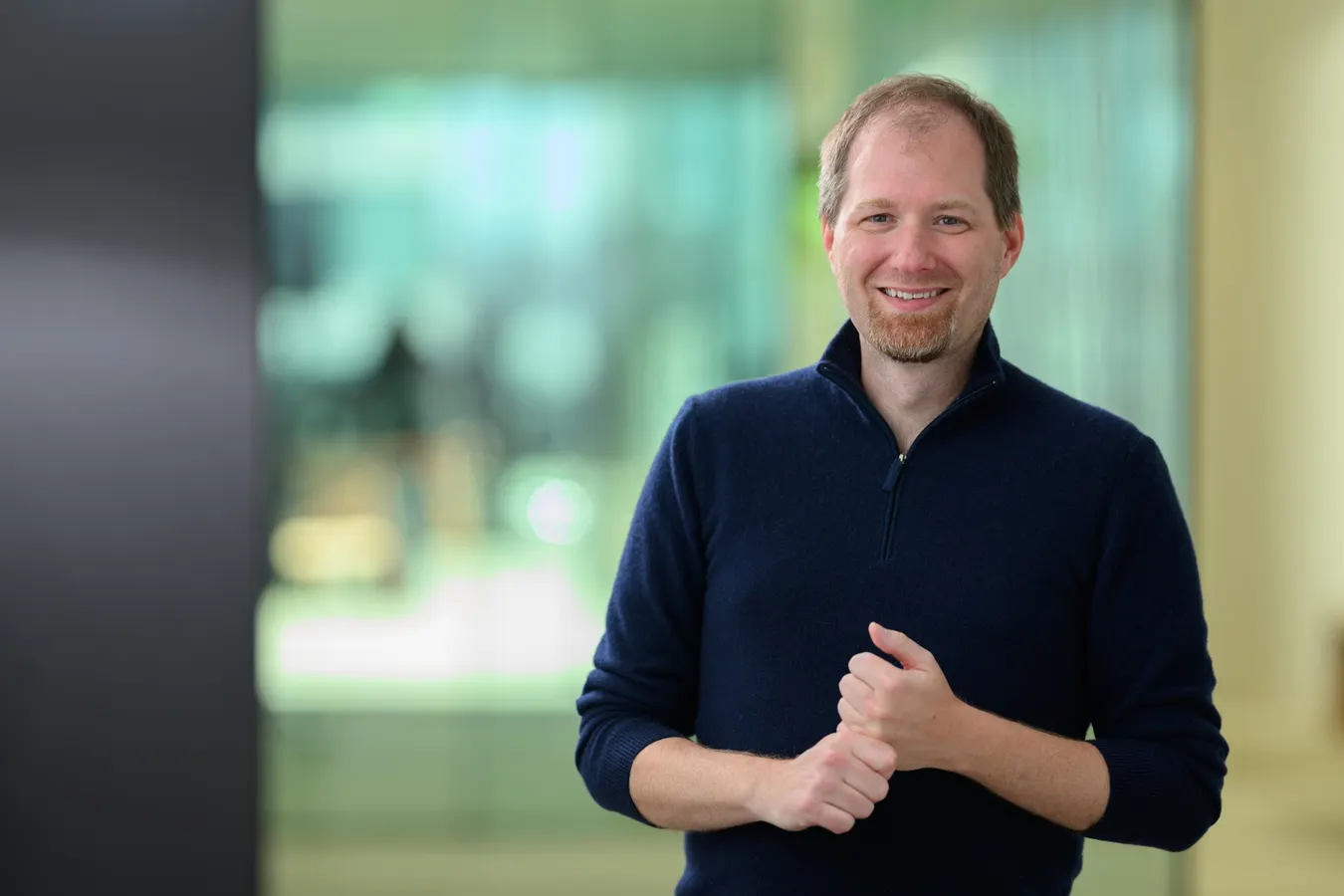
Commonwealth Fusion Systems CEO Bob Mumgaard
Commonwealth Fusion Systems
Bill Gates-backed Commonwealth Fusion Systems, which is aiming to develop commercial fusion power, is partnering with Nvidia and Siemens to accelerate development of its power plant.
The companies are doing this by creating a “digital twin” of Commonwealth’s project using Siemens’ datasets and Nvidia’s AI models. This virtual version of the fusion power generator will be used in simulations to revise designs, which can then be tested with the real thing to see how closely it matches its counterpart.
This process will enable the company “to compress years of manual experimentation into weeks of virtual optimization,” CEO Bob Mumgaard said in a statement.
Tech companies are increasingly looking at nuclear power—both conventional fission and fusion—to help support the massive energy needs of the data centers fueling the AI revolution. OpenAI is working with fusion power startup Helion (CEO Sam Altman is an investor), for example. And just today Meta announced a series of deals with different nuclear power companies.
Discovery Of The Week: Quantum Cloud Computing
Diagram showing how encryption enables quantum copying.
University of Waterloo
The cloud revolution of the past couple of decades has been enabled by a simple fact: It’s easy to copy and store information on a computer. For quantum computing, however, this isn’t the case. This is because the information stored on quantum bits (qubits) is fragile on a physical level, so the act of reading it to make a copy causes it to collapse and the data is erased.
Until now, that is.
In a new paper published this week, researchers at the University of Waterloo think they’ve found a workaround that enables quantum information to be copied. The key, as it turns out, is encrypting the qubit. This hides the information and prevents it from being read—so it doesn’t collapse—meaning an encrypted qubit can be copied as much as needed, then decrypted when it needs to be read.
“This breakthrough will enable quantum cloud storage, like a quantum Dropbox, a quantum Google Drive or a quantum STACKIT, that safely and securely stores the same quantum information on multiple servers, as a redundant and encrypted backup,” researcher Achim Kempf said in a statement.
Finding next-generation obesity drugs with custom AI and biotech
Thanks to GLP-1s, weight loss drugs have become one of the hottest areas of the pharmaceutical market, with sales expected to hit over $150 billion by the end of the decade. And while the market is dominated by Eli Lilly and Novo Nordisk for now, other companies are making moves of their own. One of those is Pfizer, which recently won a bidding war for biotech startup Metsera, which is developing one.
This week, Pfizer entered into a deal with another company, San Francisco-based Gordian Biotechnology, to find new potential targets for the next generation of weight loss drugs. The startup has developed a unique technology that enables it to test molecules on gene targets in a single cell of an animal, so that multiple potential drugs can be tested at once with less risk of harming them. It uses that data as the foundation of its AI models, which then helps predict how the drug will work in people.
The upshot of this technique, CEO Francisco LePort told me, is that his company can not only screen hundreds of potential drug targets in a short period of time, the data gathered also improves the company’s machine learning systems. “It gets smarter with every step,” he said.
SCIENCE AND TECH TIDBITS
Congressional appropriators released a budget for NASA that largely ignores the steep cuts sought by the Trump Administration, providing funding at a slightly lower level than the past two years.
The National Weather Service released a weather forecast riddled with errors, highlighting concerns over the use of generative AI for government communications.
Space surveillance startup Digantara raised a $50 million investment round to bolster the use of its satellites for missile detection and tracking.
Strategies for the ancient board game Go can help AI develop effective precision cooling for data centers, electrical grids and other infrastructure, according to a new study.
Researchers engineered new antibodies that trigger the immune system to kill cancer cells, which could lead to new treatments.
Pro Science Tip: Check Out Three-Star Books
If you’re using Goodreads to help pick your next book, don’t overlook those with a three-star rating. That’s according to a new study from researchers at Aahrus University, who compared hundreds of three-star rated books to other measures of quality. They found that around 30% of them were considered classics, won awards or had some other cultural significance. What gives here? It turns out that the more people who rate significant books, the bigger the disagreement between them—readers love ‘em or hate ‘em, and that results in a score that’s right in the middle. So it pays to look a little more closely at those three-star books before you dismiss them.
What’s Entertaining Me This Week
Netflix’s new miniseries Death By Lightning is one of the best I’ve seen in ages. It follows the unlikely rise of President James Garfield (played by Michael Shannon, stellar as always) from his nomination for the presidency to his assassination by Charles Guiteau (my favorite Matthew Macfadyen performance since his time on MI-5). It’s a well-written and (mostly) truthful account of the history with a positively stacked cast, though for my money it’s Nick Offerman who steals the show in his portrayal of Chester A. Arthur’s (real life) change from corrupt politico to reform-minded president.

