Published on
February 4, 2026

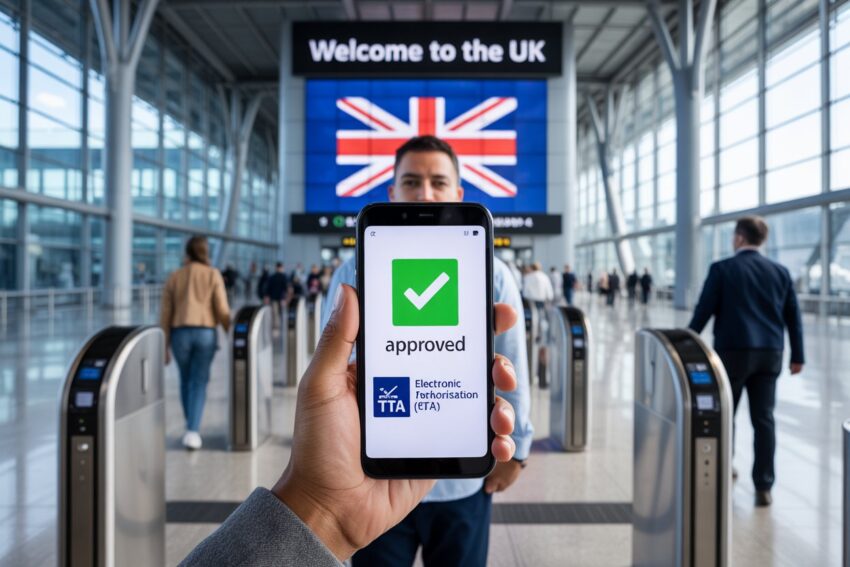
For decades, travelers from countries like the United States, Canada, and France have enjoyed the luxury of “turning up” at London Heathrow or the Eurostar terminal with nothing more than a valid passport. However, that era of spontaneous entry is coming to a firm conclusion. Starting February 25, 2026, the United Kingdom will move from a “soft launch” to strict enforcement of its Electronic Travel Authorisation (ETA) scheme.
The message from the Home Office is clear: No permission, no travel.
A Digital Revolution at the Border
The enforcement of the ETA is not just a bureaucratic change; it is a fundamental shift in how the UK manages its borders. By digitizing the immigration system, the government aims to create a “fuller picture” of who is entering the country. This move follows in the footsteps of the United States’ ESTA and Canada’s eTA, shifting the security burden from the arrival gate to the point of departure.
Minister for Migration and Citizenship, Mike Tapp, emphasized that this transition is about both security and efficiency. “ETAs give us greater power to stop those who pose a threat from setting foot in the country,” Tapp stated. Beyond security, the goal is a “contactless” border where pre-screened travelers can move through gates with minimal friction.
Advertisement
Advertisement
Who Needs an ETA?
The new rules apply to 85 nationalities who previously enjoyed visa-free access to the UK. This includes citizens of major tourism markets such as the USA, Canada, Australia, and most European nations.
If you are a non-visa national, you will now require digital permission to:
Advertisement
Advertisement
- Visit the UK for up to six months (for tourism, visiting family, or short-term business).
- Transit through a UK airport—even if you aren’t passing through border control.
Since its initial pilot launch in October 2023, over 13.3 million visitors have already utilized the system. While enforcement was previously relaxed to allow for an adjustment period, that leniency ends in February 2026. From that date, carriers (airlines, ferries, and trains) will be legally required to verify a traveler’s ETA status before allowing them to board.
The Cost and the Process
One of the most frequent concerns regarding new travel permits is the cost and complexity. The UK has positioned the ETA to be competitive and user-friendly.
Advertisement
Advertisement
- The Cost: £10 (approximately $13 or €12).
- The Duration: Once granted, an ETA is valid for two years or until the traveler’s passport expires—whichever comes first. It allows for multiple entries.
- The Application: Most travelers can apply via the official UK ETA app. The process involves scanning a passport and taking a “selfie” for identity verification.
While many applicants receive a decision within minutes, the Home Office strongly advises applying at least three working days in advance. This accounts for the small percentage of cases that may require manual review by a caseworker.
The Exemption List: British and Irish Citizens
British and Irish citizens do not need an ETA. This also extends to those with a legal right to live, work, or study in the UK. However, there is a specific warning for dual citizens.
The UK government has issued a strong advisory for dual British nationals: to ensure a smooth journey, you should travel on your British passport. If you choose to use your other nationality’s passport, you must ensure it has a “certificate of entitlement” or you may find yourself denied boarding at the gate because the system does not recognize your right to enter.
Why Now? The Road to a Contactless Border
The global travel landscape is moving toward automation. By requiring an ETA, the UK joins a growing list of nations using “e-gates” and biometric data to process millions of people. For the traveler, this means shorter queues and a more predictable entry process. For the state, it means a more robust defense against illegal migration and security threats.
While the “No permission, no travel” policy might feel like an extra hurdle, it is part of a broader vision for a seamless, digital-first travel experience. The “soft” period is over; it’s time for travelers to update their checklists.
Final Advice for 2026 Travelers
If you are planning a trip to the UK after February 2026, don’t leave your ETA to the last minute. Treat it like your flight ticket: essential, non-negotiable, and best secured well in advance. Download the app, pay the fee, and ensure your “permission to travel” is secured before you pack your bags.