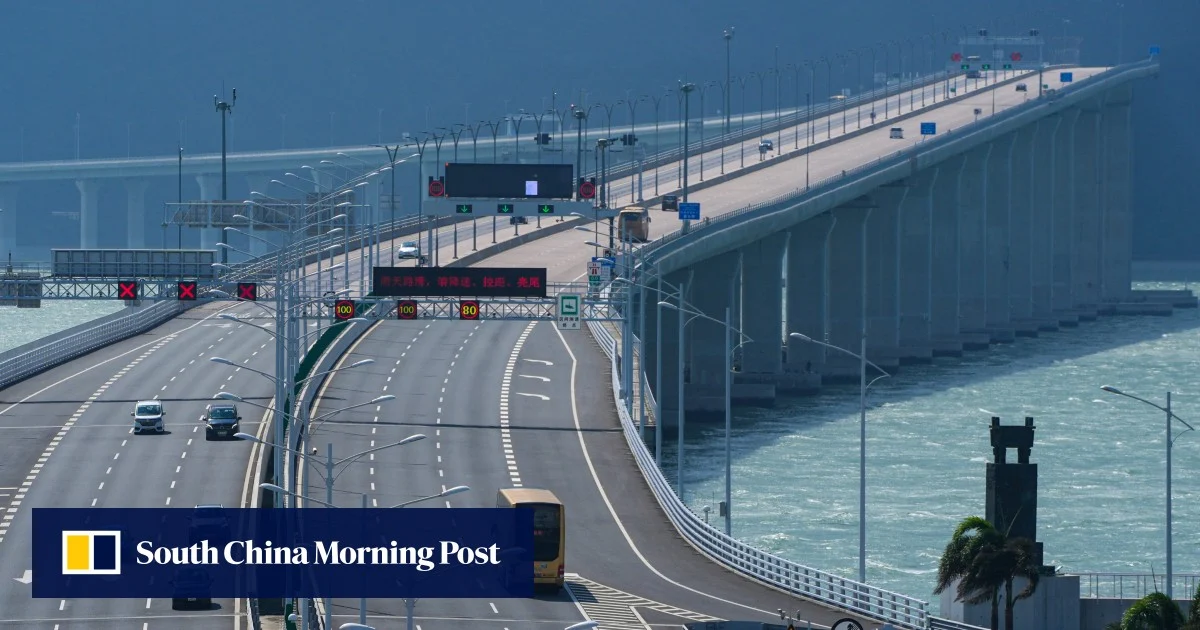
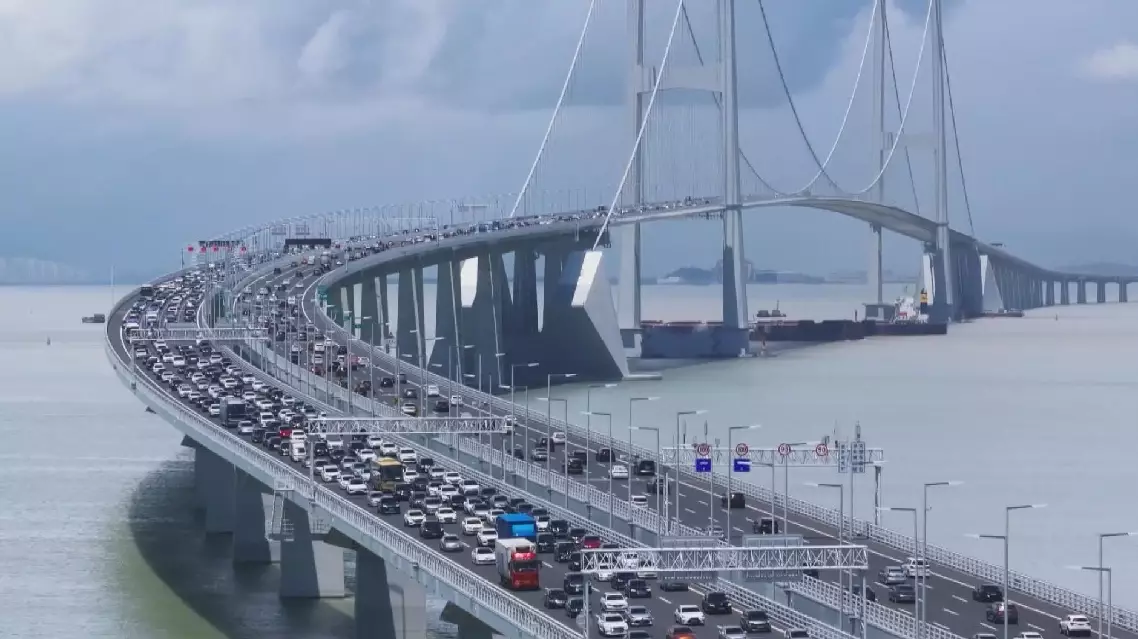
The “Southbound Travel for Guangdong Vehicles” scheme was officially launched on Friday, allowing vehicles from Guangdong Province on the Chinese mainland heading south to the Hong Kong Special Administrative Region.
The policy marks a major step toward Hong Kong’s deeper integration into the Guangdong-Hong Kong-Macao Greater Bay Area. It complements the existing “Northbound Travel for Hong Kong Vehicles” scheme, which has allowed Hong Kong residents to drive into Guangdong without holding a mainland license plate since July 1, 2023.
The new “southbound” initiative consists of two phases: first, access to parking facilities at Hong Kong’s border checkpoints, and second, entry into Hong Kong’s urban areas.
In the initial rollout, private vehicle owners from four cities in Guangdong, namely, Guangzhou, Zhuhai, Jiangmen, and Zhongshan, will be eligible to participate. The program will expand to all other cities in the province six months later.
Starting Saturday, the Airport Authority Hong Kong will start accepting online reservations from eligible Guangdong private car owners for parking spaces at the airport’s automated parking facility. From Nov. 15, approved drivers may enter Hong Kong via the Zhuhai Port of the Hong Kong-Zhuhai-Macao Bridge and park their cars in the designated lot.
Starting Dec. 23, 2025, the first batch of approved Guangdong drivers will be permitted to drive beyond the border zone and into Hong Kong’s urban areas, provided they have secured a valid reservation.
The scheme will significantly facilitate the movement of people and vehicles between Hong Kong and the mainland.
New scheme launched to allow Guangdong vehicles drive into Hong Kong
A swearing-in ceremony for volunteers of the upcoming 8th China International Import Expo (CIIE) was held at the Shanghai Exhibition Center on Wednesday, marking the official launch of volunteer services for this year’s CIIE.
The volunteer team comprises 114 long-term management volunteers and 3,668 event-period service volunteers, with an additional 71 volunteers recruited from the Hong Kong Special Administrative Region, the Macao Special Administrative Region, and the Taiwan region.
These volunteers will serve in nine major categories, including on-site guidance and consultation, registration management, and guest liaison and reception.
“For this year’s volunteer training program, we adopted a three-tiered approach: university-level basic training supplemented by city-level specialized training, combined with on-the-job practical training. This integrated model established a comprehensive training system covering the volunteers’ service knowledge framework, position-specific skills, service etiquette, emergency response protocols, and other essential competencies,” said Tang Zhiyu, deputy secretary of the Shanghai Municipal Committee of the Communist Youth League of China.
To better provide multilingual services for exhibitors and buyers, the organizers for the first time partnered with nine universities to establish a talent pool for less commonly taught languages and launched a volunteer alliance for these languages.
A total of 129 volunteers who are proficient in less commonly taught languages were recruited to provide services in 12 languages, including German, French, and Spanish.
“I want to use my professional expertise to build bridges of communication and effectively address issues for foreign guests at the venue, so that they can experience the warmth and enthusiasm of China’s youth through my efforts,” said Wu Siyu, a Russian language student from Shanghai University of Political Science and Law.
The eighth CIIE will take place in Shanghai from Nov. 5 to 10.
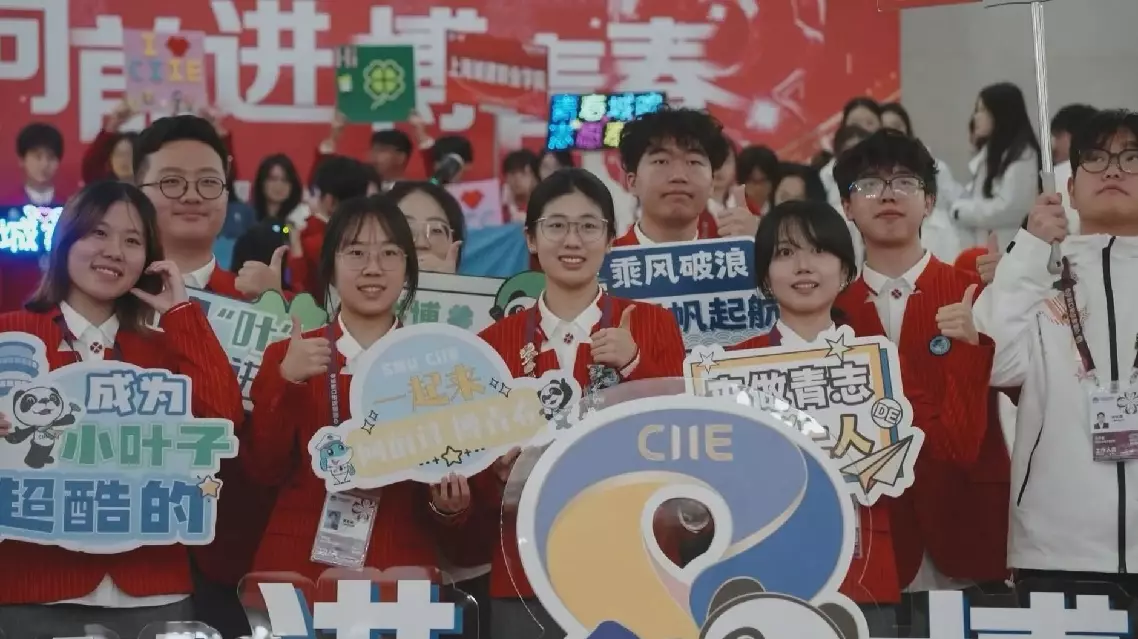
Swearing-in ceremony for volunteers of upcoming 8th CIIE held in Shanghai