At a glance
Expert’s Rating
Pros
- Excellent display performance
- Slim design
- Comprehensive camera experience
- Long software support
Cons
- Bloated software
- Messy AI experience
- Divisive curved display
- Limited battery life
Our Verdict
The Motorola Signature pairs a stylish, slim design with a great display and flagship-grade hardware. There’s no lack of power and performance – with a great camera experience – but bloated software, chaotic AI and sub-par battery life might make you think twice.
Price When Reviewed
This value will show the geolocated pricing text for product undefined
Best Pricing Today
Best Prices Today: Motorola Signature

Motorola has a new flagship phone carrying the Signature name and separating itself from the portfolio of Edge devices that previously made-up Moto’s top tier. This model – just called “Signature” – is the first of the Signature series, with Motorola describing it as “a new ultra premium franchise”.
That pitches this model high: in previous years, we’ve seen Edge Ultra and Edge Pro models, but Signature sits above those. That’s reflected in the spec sheet, but Signature is also about design, but at a reasonable price of £899. Having started the 2026 models with the Moto Edge 70, the Signature continues the slim trend.
That leads to pros and cons and while Motorola is talking about Signature as a new series of phones, there’s something incredibly familiar about it.
Design & Build
- 6.99mm and 186g
- Textured finish with two Pantone colours
- IP68/69, MIL-STD-810H protection
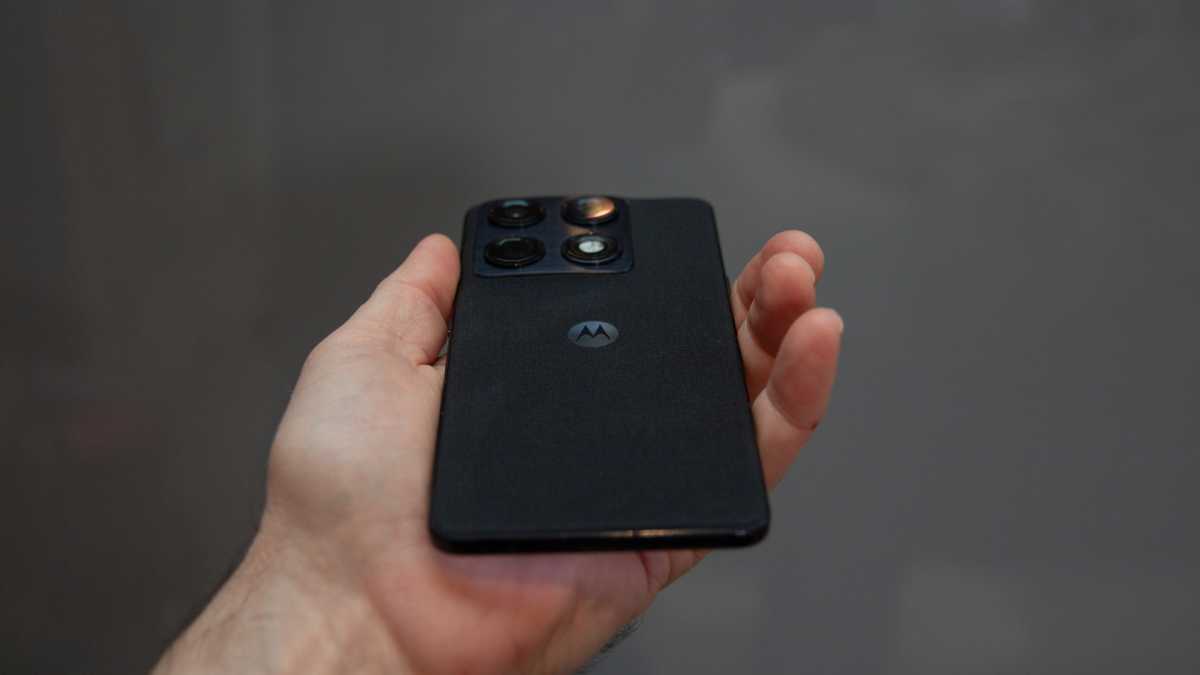
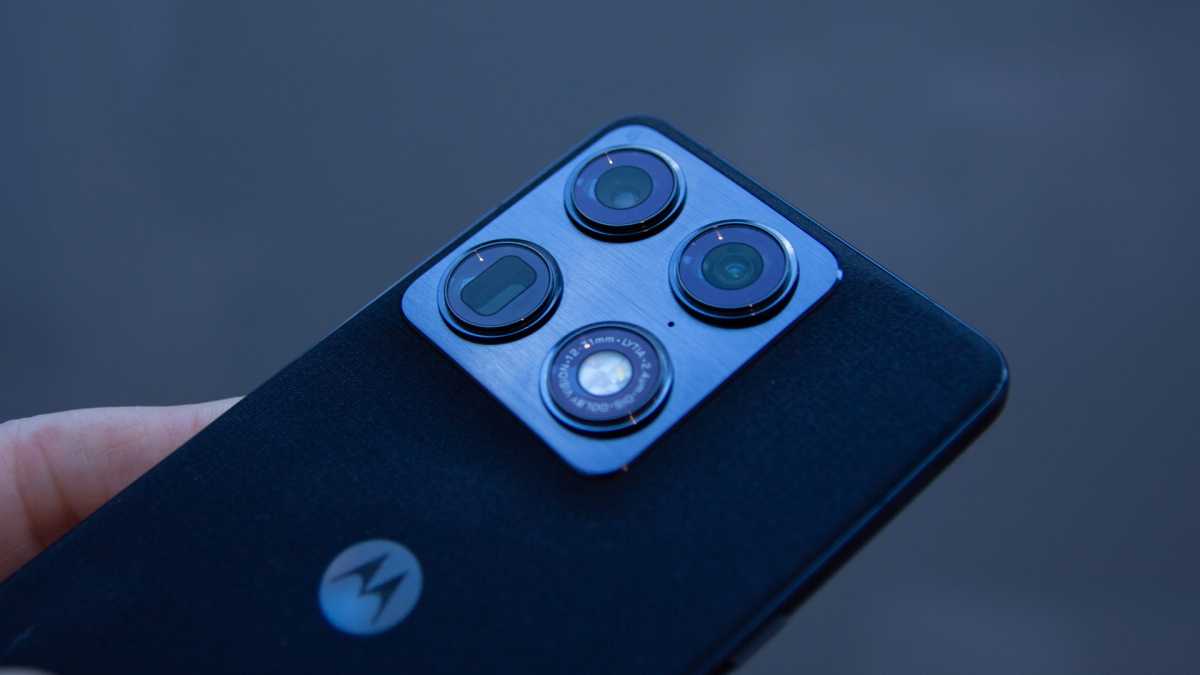
Despite being a ‘new’ series of phones, the Motorola Signature design is exactly what you’d expect: it has a textured finish to the rear, the large camera array in the top left corner and curved edges smoothly transitioning into the aluminium frame.
The 6.99m thickness is reminiscent of the Edge 70, while the overall design looks very much like other Edge phones from the past year.
In that sense, not much appears to have changed when it comes to the design, but the Signature slots in nicely above the Edge 70, with slightly better credentials over previous Pro and Ultra models.
The textured rear is unique, where most phones on this level are glass
Chris Hall / Foundry
The slim design and those curves make this larger phone a little easier to hold one handed, but with most devices opting for a flat back and flat front these days, you might accuse this phone as looking slightly old-fashioned. However, if you’re a fan of Motorola design, then you’ll certainly find it here.
The textured rear is unique, where most phones on this level are glass. It again provides some grip, but during my testing time, I also found it got a bit grubby – it’s a little harder to wipe clean than a glass sheet.
Mattias Inghe
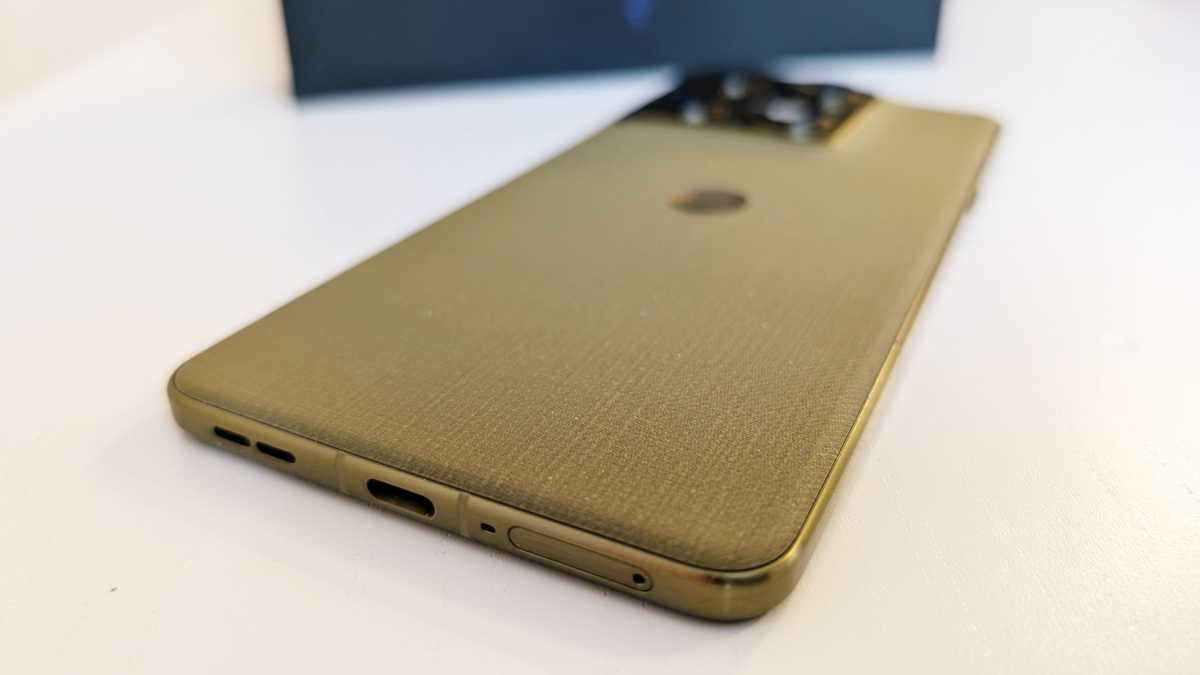
It comes in just two colours: Pantone Carbon (tested here) and Pantone Martini Olive (above via our sister site). Both of which feel quite grown-up compared to some of the loud colours coming from Apple, Google and others.
Despite the svelte lines, there’s no shortage of protection credentials: IP68 and IP69 certification, as well as MIL-STD-810H drop protection, while the screen is finished with Gorilla Glass Victus 2. That should give some reassurance that it will withstand the rough stuff.
Chris Hall / Foundry
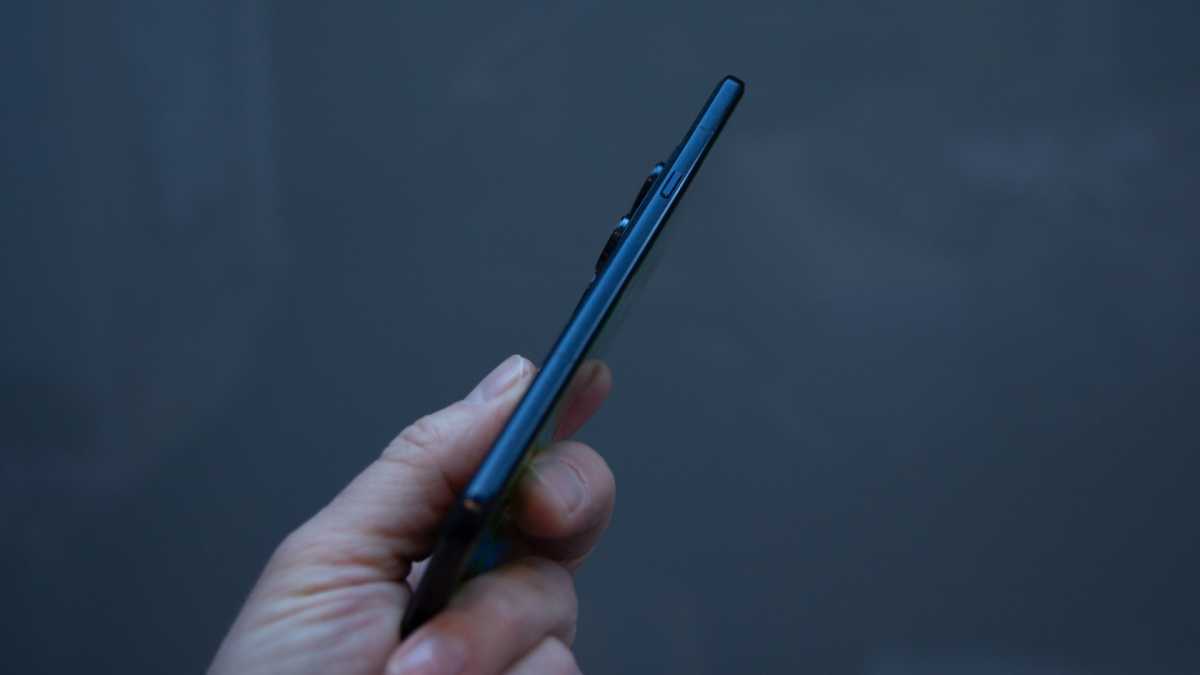
While it’s easy to accuse this phone of looking a little dated, it’s slimmer than average: the OnePlus 15 is 8.1mm thick, the Galaxy S25 Ultra is 8.2mm – so Motorola has taken nearly a full millimetre off that, although there is a compromise, as I’ll explain below.
Screen & Speakers
- 6.8-inch, 2780 x 1264 OLED
- 165Hz LTPO
- Stereo speakers
Motorola has thrown everything into this display, which on paper, is one of the best screens you’ll find on a modern phone. The 6.8-inch size puts this towards the larger end of the spectrum, while the 165Hz refresh rate definitely puts this at the top of the pack.
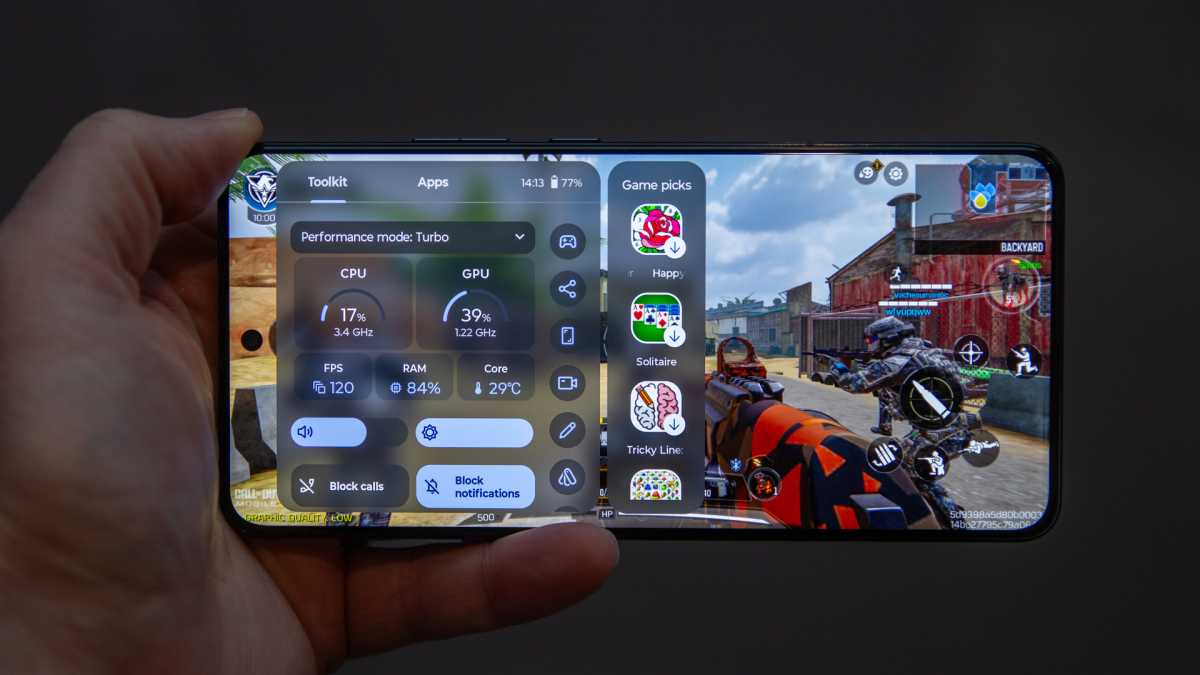
That 165Hz mode is only available when gaming and using Moto’s Gametime app and even in those conditions, I was still only able to get Call of Duty Mobile to run at 120fps. This is an LPTO display, so will give a variable refresh rate depending on what you’re using it for – down to 1Hz – which is great for efficiency.
Not only does this phone screen have a high resolution – with 450ppi – while there’s also a reported 6200 nits peak brightness. That’s there to drive the impact of HDR and you won’t get those retina-searing highs across the whole screen in general use.
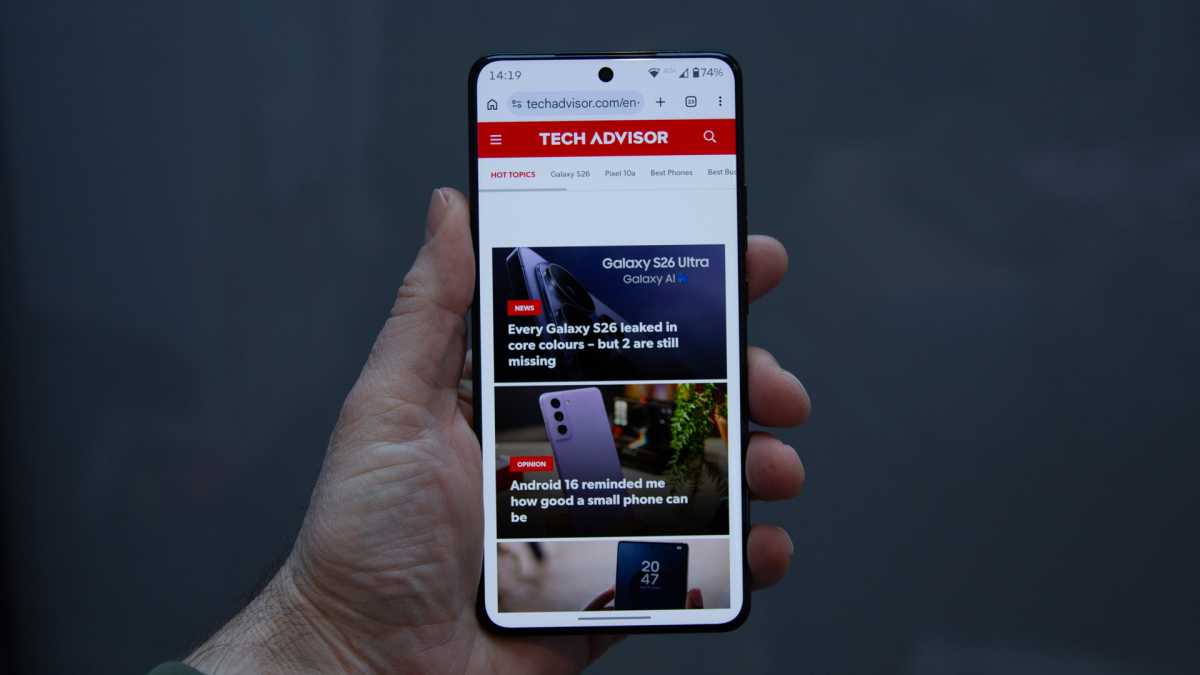
The display on the Motorola Signature is impressive and a pleasure to use
Chris Hall / Foundry
That’s most noticeable in the delivery of Ultra HDR content in Google Photos where images look great. This phone also has a trick up its sleeve with Dolby Vision video capture which looks great on the display – although while the highlights get to take advantage of that HDR punch, Dolby Vision can reduce the overall brightness of the picture to increase the dynamic range.
The display on the Motorola Signature is impressive and a pleasure to use. I’ve found it detailed and colourful, with options to tweak the visuals to your preference. The only complaint I’d have is that as a gamer, a flat screen offers a better experience.
There’s Dolby Atmos labelling on the Motorola Signature with the stereo speakers attempting to spread that audio for a more immersive experience. The speakers have decent volume, but can get a little shrill at higher volumes, while there’s not a huge amount of bass.
Still, for ad hoc video watching and gaming, it’s fine.
Specs & Performance
- Snapdragon 8 Gen 5 chipset
- 16GB RAM
- 512GB storage
this hardware offers a good compromise between top performance and value for money
Where the Motorola Signature steps up from the Edge 60 Pro (the previous top-tier device with a MediaTek 8350) is in the chipset. Packing the Qualcomm Snapdragon 8 Gen 5, this is flagship-level hardware, but a notch down from the Snapdragon 8 Elite Gen 5 found in the likes of the Honor Magic 8 Pro or the OnePlus 15.
That makes a minor difference to the performance, but playing Call of Duty Mobile and PUBG I really didn’t notice any difference, although the inability to hit those 165Hz frame rates, which the OnePlus 15 can, is perhaps indicative.
For the majority of users, this hardware offers a good compromise between top performance and value for money – and it’s one of the reasons why this phone is £899 rather than around £1,000.
Chris Hall / Foundry
But Motorola has packed this phone with 16GB RAM and 512GB storage (there are no other models), so it’s well specified and that plays out in the general performance of this phone. It feels and behaves like a flagship phone; everything is slick and fast.
I also found the connectivity to be good, installs and app opening to be fast, as well as swift data downloads when within games. There’s support for Wi-Fi 7 and Bluetooth 6, so this is a phone that offers the latest connectivity too. I found calls to be clear, too.
Cameras
- 50Mp, f/1.6 main rear lens
- 50Mp, f/2.0 ultrawide with 120-degree field of view
- 50Mp, f/2.4 3x telephoto
- 50Mp, f/2.0 selfie
There are not less than four 50Mp cameras on the Motorola Signature and this is one area where the phone wants to make a statement.
All the cameras perform well, so on a surface level, the mission has been accomplished. In good light, the Motorola Signature will produce great shots that look realistic with plenty of detail and great HDR results.
The main camera has a wide f/1.6 aperture to let in a lot of light and that leads to a narrow depth of field when taking photos of things too close to the lens, so the auto switch to the ultrawide lens for macro shots is welcomed. Fortunately, there’s good consistency between lenses, so when switching the colours look very much the same.
Chris Hall / Foundry
The ultrawide also offers good results without much blurring towards the edges of the frame, which is a common problem. Not so here – obviously there’s distortion, but generally the results are great.
There’s a 3x optical periscope telephoto supporting the other cameras, offering up to 100x digital zoom, with AI used to provide some correction once you get over about 20x zoom. There is a difference in the textures that will result, but it can make zoom photos in the middle of the range sharper. As you reach the ends, it looks more generative – if you don’t like it, you can toggle it off in the settings. I compared it to the Pixel’s Super Res Zoom and I think Pixel has the edge here.
The colour tone of photos from the Motorola Signature is generally good – there’s a little more pop than you get from a Pixel, but it doesn’t go as far as Samsung in boosting those greens and blues. However, if you want this, there’s the option for “Natural” or “Signature” styles, the latter offering “a unique Moto colour style”.


Signature style basically boosts the saturation across an image. It doesn’t look natural, but some might light the results. I found that it meant that Super Zoom Pro doesn’t then work, so if using Signature style and long digital zoom, your photos will look a little worse.
The Motorola Signature isn’t quite as adept in lower light conditions as the Pixel: on gloomy days, I found it taking darker images while losing contrast in cloudy skies, where the Pixel managed to boost the darker scene while keeping the contrast and texture in clouds. That points to processing that’s not quite as skilled.
That’s true of low light selfies, which want to use the display flash to bring the light, so the results in low light aren’t the best. However, in good light, the front camera takes decent shots, with good edge detection for portrait modes. Again, if using the Signature style, I found it changed the colour of my skin, making me look like I was wearing makeup.
There’s support for 8K Dolby Vision video (although with 8K TV seemingly in decline, you might not get much advantage from that. The results look great on a Dolby Vision display, although typically darker than when viewed with normal HDR, as Dolby Vision aims to boost the highs, so drops the brightness across the entire scene to boost the dynamic range.
Again, it’s the sort of thing you need to test to figure out exactly where your preference lies.
Battery Life & Charging
- 5200mAh silicon-carbon battery
- 90W wired charging
- 50W wireless charging
The compromise for having that slim design becomes apparent now we’ve landed in the battery section.
Motorola has used silicon-carbon tech, but it’s still only a 5200mAh battery. That’s average for a flagship phone (it’s similar to the Galaxy S25 Ultra), but it’s by no means exceptional, not in the era of 7000mAh+ batteries like the OnePlus 15.
I found the Moto Signature to last easily through the day, but it won’t give you the multi-day experience that some phones will now offer
So while Motorola has made a slim phone, you get less battery life than if it was a fat phone. It’s a conscious decision from Motorola and a bit of a gamble: phone buyers consistently ask for more battery life, so choosing design over endurance takes some guts.
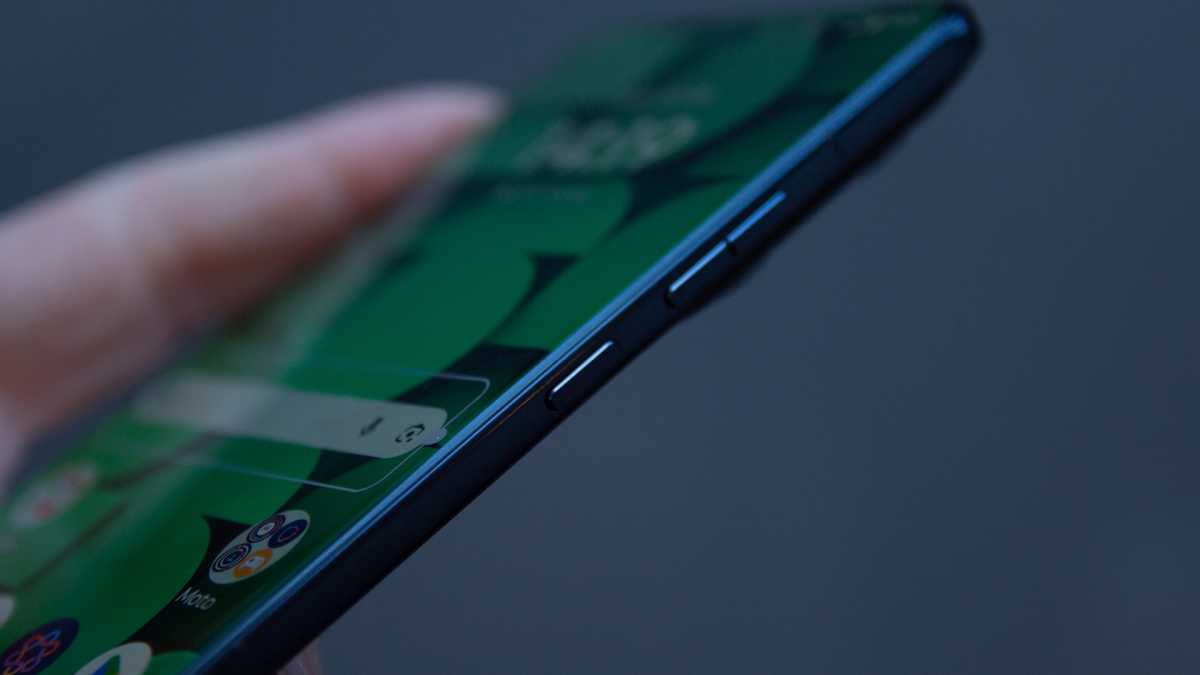
The performance, as you’d expect, is pretty average. I found the Moto Signature to last easily through the day, but it won’t give you the multi-day experience that some phones will now offer. The sweetener – especially compared to the likes of Google and Samsung phones – is the 90W charging support.
Chris Hall / Foundry
This isn’t the fastest that Motorola has offered, but it means that the phone can be topped up in a flash. It doesn’t come with a charger, although you probably have a high-power USB-C charger already. I connected it to a 100W Anker charger and found that a 30 minute charge got it from 18% to 94% – which is a huge 76% in half an hour.
The Signature also supports 50W wireless charging, although you’ll need a compatible Motorola charger to take advantage of that. There’s also 10W reverse wireless charging and 5W reverse wired charging.
To manage the charging there are plenty of options in the software, meaning you can reduce the aging effects of fast charging and so on.
Software & Apps
- Moto Hello UI and Moto AI
- Android 16
- 7 years of software updates
With the launch of the Signature, Motorola made one of its biggest commitments: it has moved to offer 7 years of support for this phone. That brings Moto’s position up to match rivals like Samsung and Google.
This means the phone will be updated until June 2032.
The phone also launches on Android 16, so it’s up to date, running the Hello UI with Moto AI. Motorola’s reputation in Android was forged on the back of a fairly clutter-free interface, close to stock Android.
From the 2013 Moto G (when Motorola was owned by Google) up until 2024, Motorola offered this clean experience. But then things changed.
While the core of Android remains, Motorola is adding more and more clutter into its devices
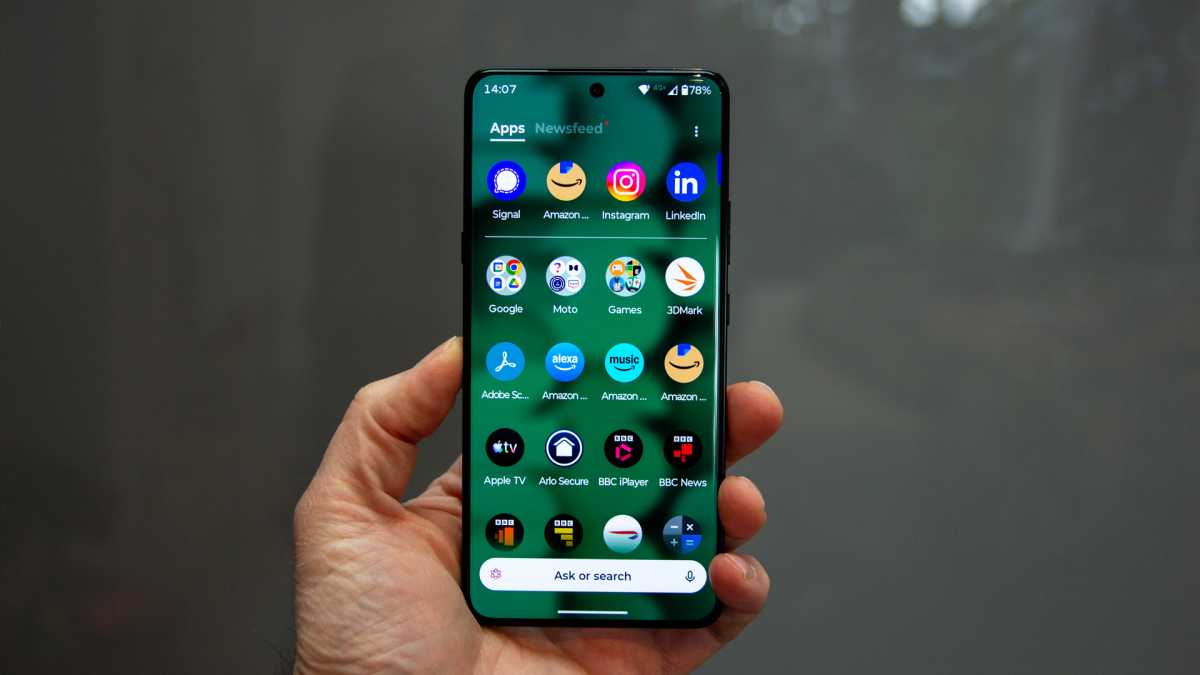
The Motorola Signature suffers where Motorola’s 2025 models did. While the core of Android remains, Motorola is adding more and more clutter into its devices. That’s seen in an increase in pre-installed apps, an increase of pushing other apps to install and a confusing AI offering.
The big thing that drags this phone away from a regular Android experience is a number of changes to the apps tray. First of all, there’s a Newsfeed added (which is no way near as good as Google Discover), while searching in the apps tray is also triggers AI searching or Google searching, depending on what you tap. It’s messy and it’s confusing.
While much of the bloat can be uninstalled and extraneous features turned off, the apps tray degrades the experience. You could change the launcher, but you shouldn’t have to move away from the manufacturer’s launcher to avoid the extras they are piling in.
Chris Hall / Foundry
All phones are now giving us more AI experiences and as this is Android, Google’s Gemini is ready and available and integrated into Google apps – and offers the fastest experience.
But Moto AI unnecessarily duplicates Gemini, offering CoPilot and Perplexity. It doesn’t seem to be a cohesive AI strategy in its present form – and the software experience is easily the biggest downside of this phone.
Price & Availability
The Motorola Signature costs £899.99 in the UK and there’s only one variant, with 16GB RAM and 512GB of storage. There’s a hefty offer on it with a free Moto Watch and Moto Buds Loop worth a total of £260.98 when buying direct from Motorola.
The Moto Signature is currently not available in the US.
That price brings the Signature in under a number of flagship rivals like the Pixel 10 Pro XL (£929), but it faces stiff competition from the likes of the OnePlus 15 (£849). It’s likely that cheaper Snapdragon 8 Gen 5 phones will appeal through 2026.
Should you buy the Motorola Signature?
The Motorola Signature makes a couple of moves to justify its billing as Moto’s new flagship, packing in powerful Snapdragon hardware, offering good performance and a great display, in a design that’s thinner than most. It’s a little more affordable than some mainstream rivals and with 7 years of software updates, it can compete with the best for support.
Motorola’s camera offers a flagship experience with a full selection of useful lenses, giving solid results, although it’s not the best phone for photography around this price point. But the battery is small compared to some rivals and the software experience is messy – and needs plenty of management to turn off or remove the annoying additions.
The Motorola Signature is a good phone, but it doesn’t quite stand out enough.
Specs
- Android 16
- 6.8-inch,165Hz Extreme AMOLED display
- Snapdragon 8 Gen 5
- 16GB RAM
- 512GB storage
- 50Mp, f/1.6 main camera with OIS
- 50Mp, f/2.0 ultrawide camera
- 50Mp, f/2.4 3x telephoto camera
- 50Mp, f/2.0 selfie camera
- 5200mAh battery
- 90W wired charging
- 50W wireless charging
- Stereo speakers
- IP69 water and dust resistance
- Gorilla Glass Victus 2
- 5G
- Bluetooth 6
- 162.1 x 76.4 x 6.99mm
- 186g