Most people link liver damage with heavy drinking. But doctors now see a different pattern. People who rarely drink are also landing up with serious liver disease. The reason lies in everyday habits, food choices, weight gain, unmanaged diabetes, and long hours of sitting.Liver cirrhosis does not begin with dramatic symptoms. It creeps in slowly. By the time the signs become obvious, the damage is often deep and difficult to reverse. That is why doctors call it a “silent killer.”As Dr Waseem Ramzan Dar explains, “Liver cirrhosis has been misconceived as a disease that is brought about by alcohol alone but nowadays it is closely associated with lifestyle diseases like poor diet, obesity, diabetes and fatty liver disease.”
What exactly is liver cirrhosis?
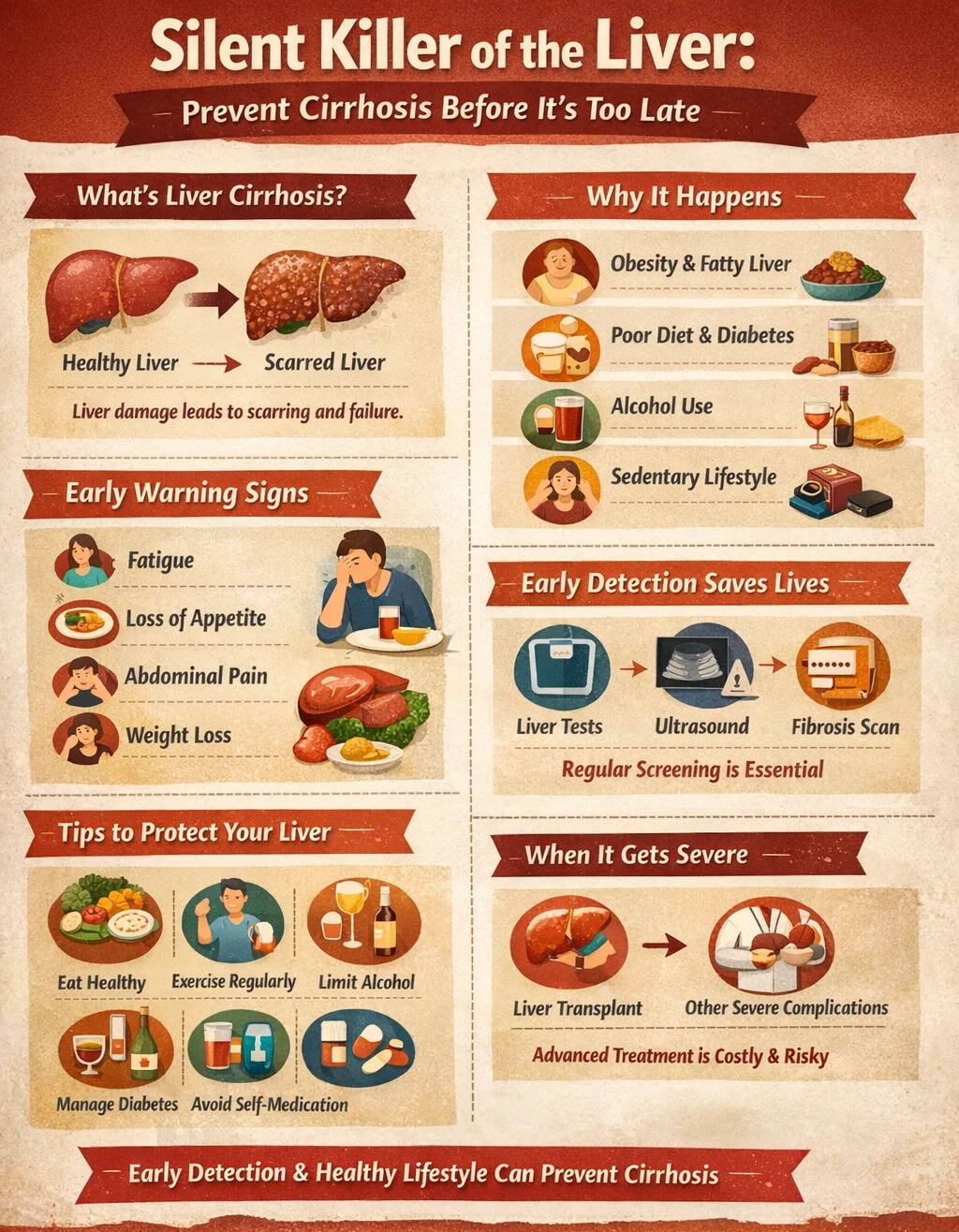
The liver is one of the hardest-working organs. It breaks down food, filters toxins, and helps regulate metabolism. But when it is repeatedly injured, by fat buildup, alcohol, or infections, it starts forming scar tissue.This scarring is called cirrhosis.Unlike a small cut on the skin, the liver cannot heal properly once scarring becomes extensive. Over time, healthy liver cells get replaced by stiff, non-functioning tissue. Blood flow slows down. The organ begins to fail quietly.Dr Dar puts it simply: “Cirrhosis is a slow process that may silently destroy the liver over time.”

The disease develops silently, with mild early symptoms that are often ignored.
Why it happens: Not just alcohol anymore
There was a time when cirrhosis was mostly seen in heavy drinkers. That is no longer the case.Today, the biggest triggers include:
- Fatty liver disease linked to obesity
- Poor diet high in sugar and processed food
- Type 2 diabetes
- Sedentary lifestyle
- Long-term misuse of medicines or supplements
India, in particular, is seeing a surge in non-alcoholic fatty liver disease (NAFLD). According to a study by the NIH, nearly 1 in 3 urban Indians may have fatty liver.This matters because fatty liver can quietly progress to cirrhosis if ignored.
The signs people ignore
The early symptoms rarely feel alarming. That is what makes cirrhosis dangerous.Many people notice:
- Constant tiredness
- Loss of appetite
- Mild abdominal discomfort
- Unexplained weight loss
These signs are easy to dismiss as stress or poor sleep.Dr Dar notes, “Most individuals do not pay much attention to the initial symptoms… thinking that they are minor problems.”As the disease advances, symptoms become more visible:
- Swelling in the abdomen
- Yellowing of the skin or eyes
- Frequent infections
- Weakness
Dr Shankar Kumar Gupta explains, “Liver cirrhosis is not merely a liver disease—it impacts the whole body… affecting digestion, immunity, and blood circulation.”
Why early screening can save your life
Here is the uncomfortable truth: cirrhosis often shows up late. But it can be detected early through simple tests.Routine screening may include:
- Liver function tests (LFTs)
- Ultrasound scans
- Fibrosis assessment (to check scarring)
Early detection gives the liver a fighting chance. Damage at this stage can often be slowed or even partially reversed with lifestyle changes.As Dr Dar says, “Education and early detection are the most important in safeguarding the liver.”
Regular screening and simple lifestyle changes—healthy eating, exercise, and avoiding self-medication—can significantly reduce the risk. Early action remains the most effective way to protect liver health.
Lifestyle changes that truly protect your liver
Prevention is not complicated. But it does require consistency.
Start with small, realistic shifts:
Eat smarter, not stricterFocus on home-cooked meals, whole grains, vegetables, and healthy fats. Cut back on sugar-heavy drinks and processed snacks.Move every dayEven 30 minutes of brisk walking can reduce liver fat and improve metabolism.Manage weight and diabetesLosing even 5-7% of body weight can significantly improve fatty liver.Be cautious with medicinesAvoid self-medication. Many over-the-counter drugs and supplements can harm the liver when misused.Limit alcohol intakeIf consumed, keep it minimal and occasional.Get regular check-upsEspecially if there is obesity, diabetes, or a family history of liver disease.Dr Gupta emphasises, “Simple lifestyle changes can go a long way… Early detection and management through regular screening… result in better health outcomes in the long term.”
When treatment becomes complicated
If cirrhosis progresses, treatment becomes difficult and expensive.In advanced cases:
- Fluid may build up in the abdomen
- Internal bleeding can occur
- Liver failure may develop
Dr Gupta explains, “In severe cases… liver transplantation is the only life-saving procedure.”These treatments are not always accessible. That is why prevention is not just better, it is often the only practical option.
An organ that deserves attention
The liver rarely complains. It keeps working, even under stress, until it can no longer cope.That silence can be misleading.Paying attention to small signs, making mindful lifestyle changes, and getting routine tests done can prevent years of suffering later. Cirrhosis may be a serious condition, but in many cases, it is also preventable.Medical experts consultedThis article includes expert inputs shared with TOI Health by:Dr Waseem Ramzan Dar, Attending Consultant – Gastroenterology, ShardaCare Healthcity.Dr Shankar Kumar Gupta, Consultant – General Surgery, ISIC Multispecialty Hospital.Inputs highlighted how liver damage can progress silently due to lifestyle factors, and why consulting a doctor and undergoing regular screenings are essential to prevent cirrhosis before it becomes life-threatening.