That spotlight has moved on, but advocates of the idea are still pursuing. Israeli officials have sounded out their counterparts in half a dozen countries and territories including Libya, South Sudan, Somaliland and Syria about taking in Palestinians who agree to leave Gaza, people familiar with the matter said.
Israel and the U.S. have also been pressing Egypt to resettle people from the enclave in the Sinai Peninsula, some of the people said. Egypt, which once controlled the Gaza Strip, has strongly resisted the idea. Its border with Gaza makes it a logistically attractive destination, in the eyes of the idea’s proponents. The pressure has led to a number of contentious meetings, including shouting matches between Israeli and Egyptian officials, some of the people said.
“President Trump has long advocated for creative solutions to improve the lives of Palestinians, including allowing them to resettle in a new, beautiful location while Gaza rebuilds,” White House spokeswoman Anna Kelly said. “However, Hamas must first agree to disarm and end this war, and we have no additional details to provide at this time.”
Juba, South SudanMartyrs’ Square in Tripoli, Libya
Israel’s talks to resettle Gazans in South Sudan or Libya are continuing, some of the people said. Earlier talks to settle Palestinians in Syria or Somaliland—a breakaway region of Somalia—didn’t make much progress, one of the people said.
Most of the destinations under consideration have their own problems with civil strife and economic dislocation and would likely struggle to absorb hundreds of thousands of migrants. Their battered conditions, however, have opened the possibility of deals that might confer economic support or other benefits in exchange for taking in people relocated from Gaza or elsewhere.
The Trump administration deported a handful of migrants in the U.S. to South Sudan last month and has pressed a number of African countries to also take in U.S. deportees. South Sudan, officials said, has been eager to reset ties with Washington, leaving it open to taking additional U.S. deportees and engaging in discussions with Israel on accepting Palestinians.
The issue of relocations is sensitive. Legal organizations, humanitarian groups and some governments have questioned whether exits would be truly voluntary. Some including Malaysia, the United Nations and Human Rights Watch have warned the idea could be tantamount to ethnic cleansing.
South Sudan’s Foreign Ministry said claims that it is in such talks with Israel are baseless. A representative of Somaliland’s government said no talks are ongoing. Libyan and Syrian officials didn’t respond to requests for comment.
Current and former U.S. officials said the U.S. wasn’t involved in the discussions between Israel and African countries on resettling Palestinians.
At the White House in July, Israeli Prime Minister Benjamin Netanyahu said Israel and the U.S. are trying to find homes for Palestinians who want to leave Gaza.
“We are working with the United States very closely about finding countries that will seek to realize what they always said—that they wanted to give the Palestinians a better future,” Netanyahu said, as Trump sat in front of him.
Israeli officials had advocated transferring Palestinians out of Gaza long before Trump floated his idea for a “Riviera of the Middle East.” Within a week of the deadly Hamas-led attacks on Israel on Oct. 7, 2023, Israel’s intelligence minister at the time, Gila Gamliel, presented the cabinet with a plan to promote migration from Gaza with the goal of getting 1.7 million to leave, she said in a post on X in May.
Palestinians, displaced by Israel’s offensive, at an encampment in Gaza City.Mourners carry the bodies of Palestinians in Gaza City.
The most enthusiastic supporters have been far-right officials such as Finance Minister Bezalel Smotrich and National Security Minister Itamar Ben-Gvir, who have pushed for this idea for years.
“Encourage migration! Encourage migration! Encourage migration!,” Ben-Gvir said at a conference for Jewish settlement of the enclave in October. “Honestly, this is the most moral and correct solution. Not forcibly, but tell them: We are giving you the option to leave to different countries. The land of Israel is ours.”
When Trump announced the idea of moving Palestinians out of Gaza, Netanyahu and his government were quick to adopt it and praise it. In February, Israeli Defense Minister Israel Katz set up a new division in the ministry to oversee the voluntary departure of Gazans.
Forcible displacement is a crime under the Geneva Conventions, to which Israel is party, and is permissible only in narrow circumstances such as temporary evacuation for civilian safety or military necessity. The bar for meeting those criteria is high and Gaza’s war-torn environment complicates arguments that transfers would be voluntary, Israeli and international legal experts said.
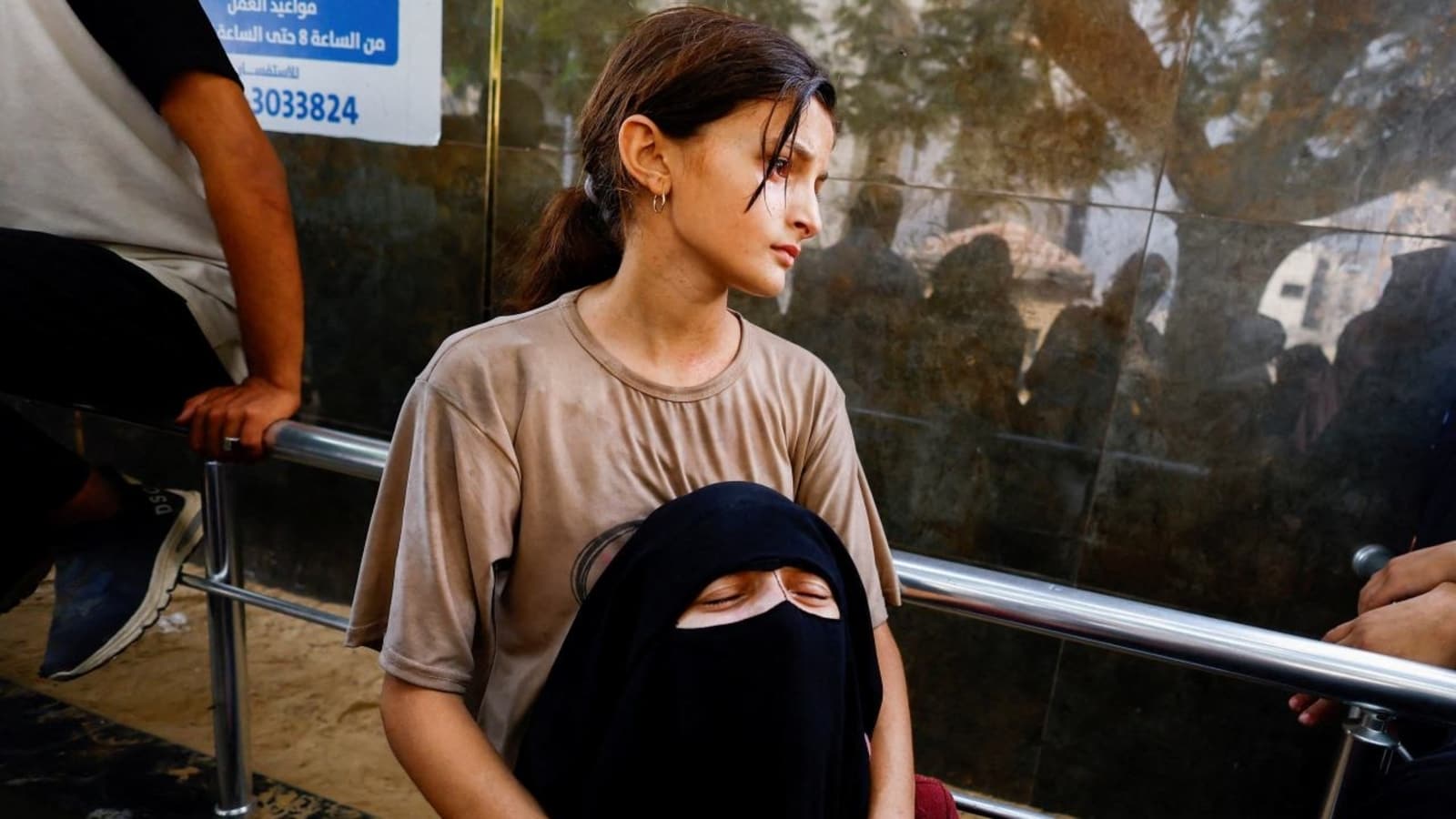
The effort to encourage departures creates a dilemma for many Palestinians stuck in the enclave, where food is in short supply. Many have been displaced from their homes, most structures are damaged, and more than 61,000 people have been killed, according to Palestinian authorities, who don’t say how many were combatants.
Many Gazans, particularly young people or families with children or relatives suffering from disease, would like to leave. But the decision now carries political overtones, as well as the risk that they won’t be able to return. Humanitarian groups and regional governments who might want to help Palestinians leave face a similar dilemma.
“The issue is that Israel needs to guarantee that people will be able to return if and when they would like to,” said Tania Hary, executive director of Gisha, an Israeli human-rights and legal organization. “These voluntary emigration schemes or other plans to deport people don’t have anything to do with the safety or humanitarian needs of Palestinians.”
Among Gazan Palestinians reached in a May survey by the Palestinian Center for Policy and Survey Research, 43% said they would be willing to emigrate after the war.
Khalil Shikaki, director of the center, said the most likely demographic to leave are young, educated men, which could contribute to brain drain in Gaza.
“Among this group, based on surveys from before the war, two-thirds to three-quarters expressed willingness to leave Gaza to go elsewhere for economic and security reasons,” he said. Many showed interest in moving to Europe, the U.S., Canada, Arab Gulf states or Turkey, he said.
Most Palestinians in Gaza haven’t had the ability to leave the territory even if they wanted to during the war, with crossings into Egypt and Israel largely closed. Those who could leave often had a second passport or a close relative who left, or were among the thousands of Palestinians selected for outside medical treatment in countries such as Egypt, Jordan and the United Arab Emirates.
Ramez Musmar, a 24-year-old Gazan, was accepted to Trinity College Dublin last spring. The university and the Irish government intervened to help him leave, he said. His father died during the war and he fears for the safety of his mother and siblings, who remain in Gaza.
“I had applied to the university mainly so I could leave Gaza and eventually get my family out,” he said. “My mom told me, ‘Go for your future. Don’t worry about us. Hopefully you can bring us later.’ ”
Write to Summer Said at summer.said@wsj.com, Robbie Gramer at robbie.gramer@wsj.com and Omar Abdel-Baqui at omar.abdel-baqui@wsj.com


