Dovish. Judicious. A chameleon.
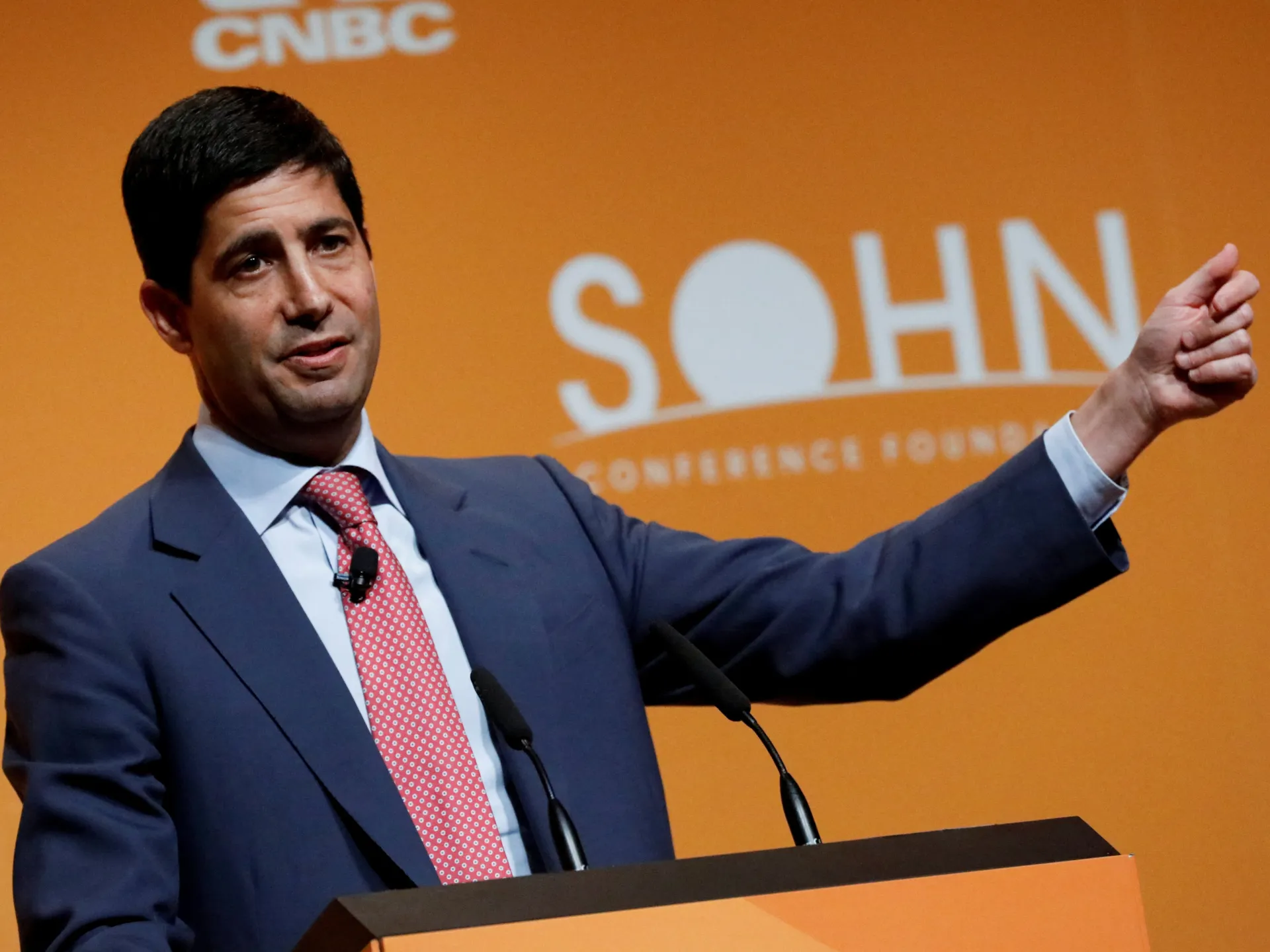
Those are just some of the terms being used to describe Kevin Warsh, President Donald Trump’s pick to be the next chairman of the Federal Reserve, the central bank of the United States.
Recommended Stories
list of 4 itemsend of list
If confirmed by the US Senate, Warsh, a former Federal Reserve governor, will replace Jerome Powell after his term ends in May. Trump announced Warsh as his nominee on Friday.
“I have known Kevin for a long period of time, and have no doubt that he will go down as one of the GREAT Fed Chairmen, maybe the best,” Trump posted on his Truth Social site. “On top of everything else, he is ‘central casting,’ and he will never let you down.”
Over the past year, Trump has repeatedly lambasted Powell for not lowering interest rates at a pace and to a level of his liking. Warsh is expected to have a smoother experience – at least initially.
That’s partly because he comes from a Republican milieu. His father-in-law is Ronald Lauder, heir to the Estee Lauder cosmetics fortune and a longtime Trump donor and ally.
Warsh is also currently serving as a fellow at the right-leaning Hoover Institution, a think tank at Stanford University, where he also lectures as a visiting scholar.
But more importantly, critics say, Warsh has shown a willingness to align with Trump’s policies. After years of supporting high interest rates to control inflation, Warsh has made recent statements arguing for lower rates, in line with the president’s views.
A history of ‘shape-shifting’
It is this flexibility that has prompted a mixed bag of reactions to Warsh’s nomination.
“He’s a very good chameleon,” said Skanda Amarnath, executive director of Employ America, a policy research organisation. “He comes across as informed and intellectual, but when you unpack what he says, there’s not a lot there.”
Amarnath’s criticism was based on years of observing Warsh’s policy stance.
Warsh, 55, joined the Federal Reserve’s Board of Governors in 2006 at age 35, after serving on former President George W Bush’s National Economic Council. He remained at the Fed until 2011, during which time he worked with then-Chair Ben Bernanke to address the 2008-2009 global financial crisis.
That crisis saw the collapse of financial services firms like Lehman Brothers and Bear Stearns. Warsh notably objected to some of the low-interest policies that the Fed was pursuing at the time to stave off the impact of the crash.
During that period, he “spent most of his time worrying about inflation”, according to Amarnath. “Even in August 2008, he was talking about inflation as Lehman Brothers failed. He missed the whole boat on that.”
Amarnath said Warsh appeared to downplay the unemployment at the time as well, even though the jobless rate was headed towards 10 percent. Today, unemployment in the US is at a healthy 4.4 percent.
Warsh started softening his stance on inflation in 2017, when Trump began his first term as president. Amarnath told Al Jazeera that Warsh’s seeming partisanship gives him “some concern” about what might happen in case of another financial crisis.
“His track record speaks to someone who is pretty partisan and political in his views and mocks data dependence,” he said. “The shape-shifting depends on who is in office.”
A ‘political’ record
Some experts, however, were more optimistic about Warsh as a candidate for the top seat at the Federal Reserve.
Economist Robert Rogowsky, a professor of trade and economic diplomacy at Georgetown University, is among those who think that Warsh is a “solid pick, albeit not a stellar one”.
“He is obviously extremely bright and has a solid record of accomplishment in the area,” he said.
That said, Rogowsky acknowledged that Warsh could be seen as a political opportunist. “His record does seem a bit political – a monetary hawk under a Democratic administration and being promoted by Trump to be Trump’s monetary dove.”
Still, Rogowsky said he is not too worried about Warsh falling in line with Trump’s aggressive push to lower interest rates.
While the Fed chair is a very powerful role, it only represents one vote on a board of seven, and it cannot override the majority vote. And though Warsh “may sound Trumpy”, Rogowsky believes he will ultimately refuse to implement Trump’s “extreme and extremely harmful” interest rate cuts.
“He is smart enough – and, I pray, honorable enough – to be driven by his economic training,” Rogowsky said.
Trump has called on the Federal Reserve to slash interest rates from their current level – about 3.75 percent – to 1 percent, a major drop.
Rogowsky said Warsh is aware that such a policy move would result in “a medium-term inflationary disaster”, which, in turn, could lead to “an immediately disastrous decline in the dollar and a five-alarm fire in the global trading system”.
Trump’s trade policies will already pose a big challenge for any incoming Federal Reserve chair, according to Rachel Ziemba, a senior fellow at the Center for a New American Security, a think tank.
Ziemba pointed out that Trump has pursued an aggressive international trade policy and immigration crackdown that could send shudders through the US economy. Currently, while economic growth is “OK”, there is little job growth, she added.
“Rate cuts are unlikely to solve those issues,” Ziemba told Al Jazeera.
For now, it remains unclear whether Warsh will ultimately take up the post. He faces a Senate confirmation hearing in the coming months, where Trump’s policies could also be a hurdle.
Already, at least one Republican senator, Thom Tillis, said he would not back any Trump nominees to the Federal Reserve until the president drops his criminal investigation of Powell.
That probe, announced this month, was widely seen as Trump’s latest attempt to browbeat the Federal Reserve into compliance with his demands.