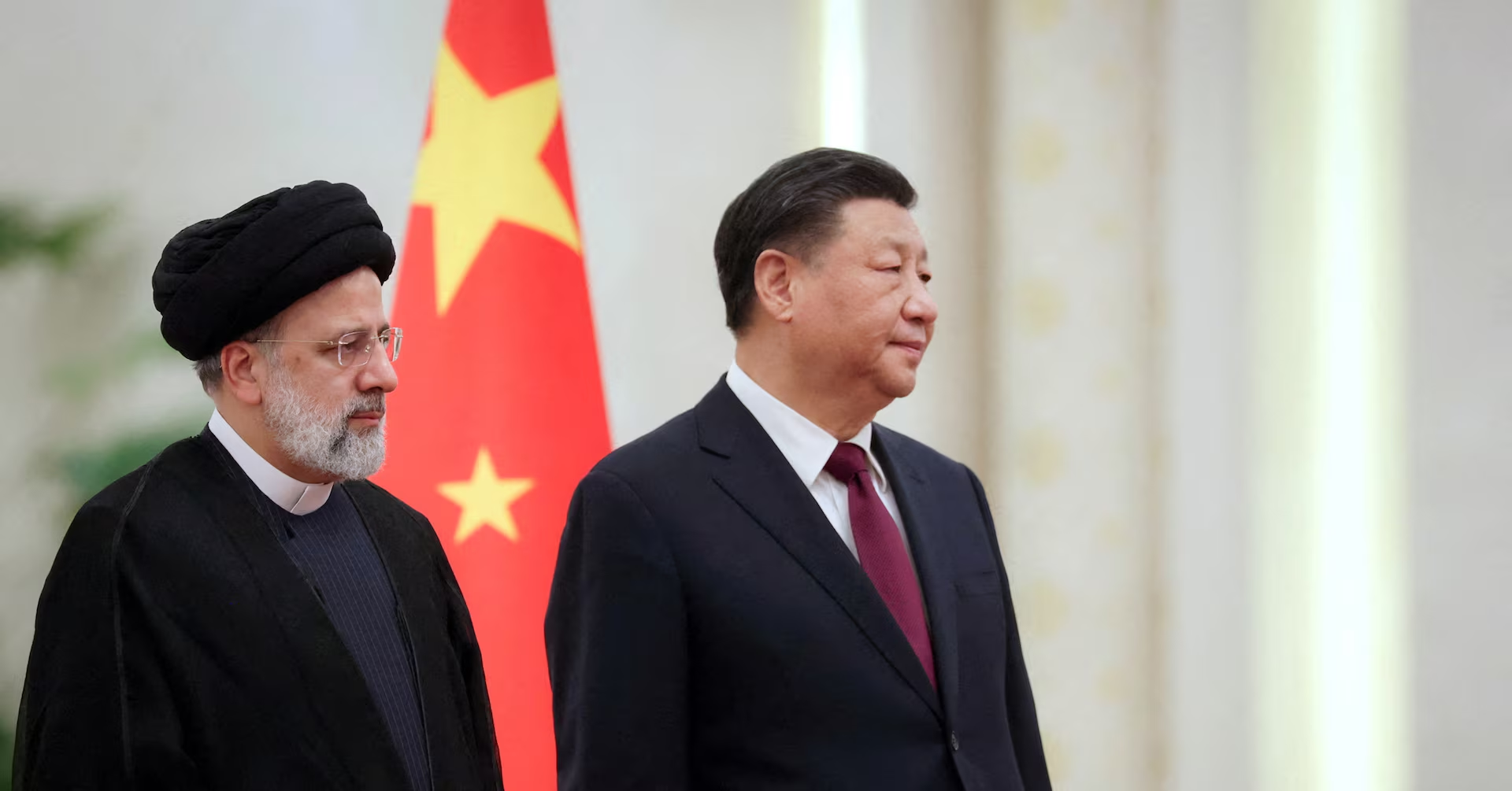
HONG KONG, Jan 14 (Reuters Breakingviews) – The anti-government protests in Iran could cost China a key ally. Donald Trump’s pledge on Monday to slap an immediate 25% tariff on exports to the United States from any of Iran’s business partners further complicates efforts to de-escalate tensions between the world’s two biggest economies. And after the U.S. President’s toppling of Venezuela’s leader, Washington’s latest move in the Middle East also deals a fresh blow to China’s push to diversify its energy supplies.
Despite Washington’s use of sanctions to curb exports from Iran, the People’s Republic remains Tehran’s largest trading partner. It purchased on average 1.38 million barrels per day of Iranian oil in 2025, Reuters reported this week, citing data from Kpler. That’s about 12% of its oil imports, including shipments that ultimately end up in China via refiners trading off the books.
Sign up here.

Elsewhere ties between the two ancient Silk Road countries were deepening. In May, the duo launched a direct rail link between them. Iran is an important transit nation for China’s overland trade to the Middle East and Europe. The new landbound trade route requires only 15 days of transit time, compared with nearly 40 days by sea.
Yet the latest developments in Iran make China’s trade ties with Tehran riskier and its nascent ambitions in Gulf politics look fraught. A ny U.S.-supported regime change in Iran could rob China of a “comprehensive strategic partner”. Venezuela was supposed to be China’s “all-weather” strategic partner too. But China stands to lose more in the Middle East than in the backyard of the United States. What comes next will be a tough balancing act for Beijing.
For more insights like these, click here to try Breakingviews for free.
Editing by Una Galani; Production by Aditya Srivastav
Reuters Breakingviews is the world’s leading source of agenda-setting financial insight. As the Reuters brand for financial commentary, we dissect the big business and economic stories as they break around the world every day. A global team of about 30 correspondents in New York, London, Hong Kong and other major cities provides expert analysis in real time.
Sign up for a free trial of our full service at https://www.breakingviews.com/trial and follow us on Twitter @Breakingviews and at www.breakingviews.com. All opinions expressed are those of the authors.