I can’t keep my opinions to myself, so when I heard that familiar “bi-ding!” sound slop out of my friend’s phone, I turned around and said, “Oh, you’re still using Duolingo?” in an appropriately condescending tone.
Putting aside talk about how fun I am at parties, I’m still shocked that, in 2025, people are still using an app they can barely stomach.
Because of the aforementioned not-fun-at-parties personality trait, my favorite conversational gambit is to innocently ask someone what their Duolingo streak is.
When they respond with a number (it doesn’t matter what number they say, as it’s never enough), I ask them to order a coffee in that language.
Sheepish grins are the usual answer, accompanied by an embarrassed “It’s just for fun.” I don’t care.
If you want to feel smart through a game, play the New York Times Mini Crosswords. If you want to learn a language, ditch Duolingo and use these apps instead.

I let NotebookLM be my language tutor for a week, and the results surprised me
Could it double as a language-learning partner?
AI is fantastic for learning languages, but it has to be used appropriately
Use AI to fill in the gaps of your learning, not for all of it

For years, the biggest criticism leveled at Duolingo was its effectiveness in teaching languages.
However, recent controversies surrounding its aggressive advertising placements and monetization strategies have further tarnished its reputation.
These controversies reached a head when Duolingo’s CEO, Luis von Ahn, announced that the company would now be “AI-first” and would gradually stop using human contractors.
Perhaps the most alarming part of this brutal statement was the admission that this change would cause “small hits on quality.”
Companies aggressively implementing AI at the expense of their employees and products is nothing new, but Duolingo’s approach struck me as particularly bizarre.
I would argue that translation is the best use of AI, as it is significantly better than traditional machine translation algorithms at teaching translation.
However, on the surface, nothing has changed in the Duolingo app. Rather than using AI to improve its teaching methods, Duolingo is using it to make its app more profitable.


Google Translate is my favorite use of AI for teaching languages. This feature is still in beta, but Google is steadily expanding Translate’s teaching feature to more languages.
I tested it last month, and dived into it fully when it added Portuguese to its roster of languages for English speakers.
What makes Google Translate great is that you don’t need to rely on pre-created content.
For example, most language apps cover how to order food at a restaurant, but what if you have dietary requirements?
I can ask Translate to teach me how to inquire about vegetarian options; it then creates short speaking and listening lessons covering this topic.
However, Google Translate’s Practice mode is best used as a supplementary tool. For core language learning, we need to look elsewhere.
There’s no single best language app, but there are many better than Duolingo
Learning languages can still be fun
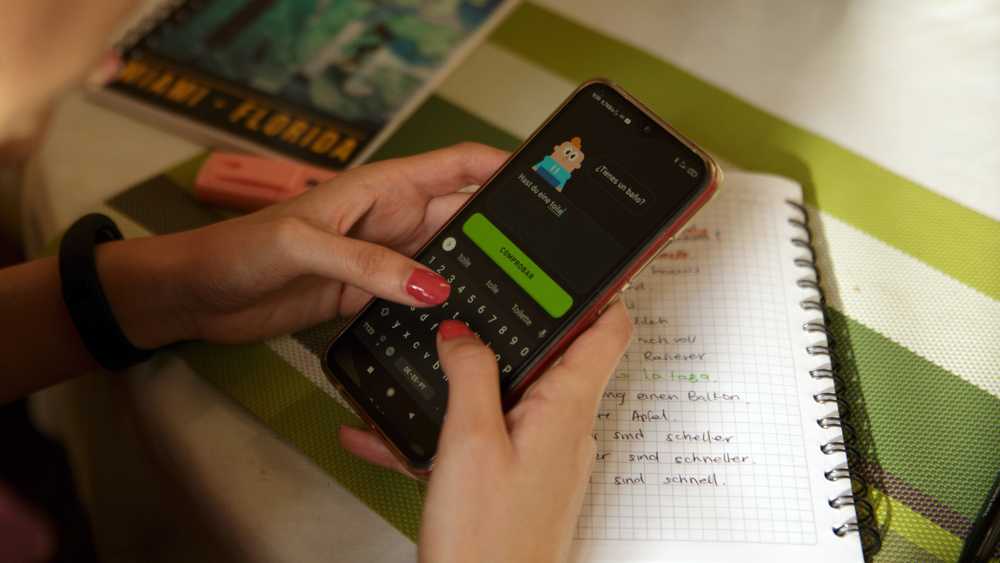
Duolingo’s effectiveness is tricky to determine, but the extent of the app’s gamification and monetization strategies undermines actual learning.
Gamification is an effective way to learn languages, but Duolingo takes things too far.
Research on the effectiveness of language apps is severely limited beyond app-sponsored studies.
All the best language learning apps are useful, but like all learning tools, you get what you put in. However, when I’m asked for recommendations, I offer two suggestions.
Babbel and Memrise are my favorite language learning apps because, unlike Duolingo, they put greater emphasis on tried-and-tested studying techniques.
Babbel is the closest you can get to a classroom, but it offers a relatively limited set of languages compared to other apps. For example, it doesn’t offer European Portuguese, so I use Memrise instead.
Memrise stands out for me thanks to its extensive use of community videos.
From simple videos of native speakers pronouncing words to community-built lessons, it’s the best way to get authentic instruction.
Learning phrases from a machine is useful, but watching a person speak in a natural environment is far better.
Ditch Duolingo, you won’t regret it
I used Duolingo extensively in 2021, and I swiftly became addicted to its dopamine-producing virtual rewards.
However, I soon realized that I became more concerned with climbing the leagues and continuing my streak than retaining information.
Since then, I’ve picked up Memrise, and while it’s no substitute for in-person lessons, I feel far more confident with my learning journey than I did with Duolingo.
Duolingo has sacrificed effective teaching on the altar of profit. I tried the app again before writing this article, and I couldn’t believe how aggressive the app was in trying to get me to sign up for Super Duolingo or Duolingo Max. It felt like Tinder.
Duolingo has lost its way, and I’m glad that I’ve been able to introduce my friends to alternative language apps. When Google Translate feels like a better teacher, I know there’s something wrong.