After the first round of Islamabad talks failed to bring an end to the war between the US and Iran, Pakistan has once again indicated its willingness to mediate between the two countries and facilitate a second round of negotiations.

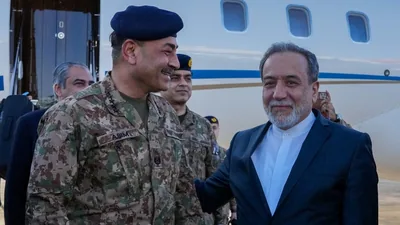
Pakistan Army chief Asim Munir arrived in Iran late on Wednesday, accompanied by interior minister Mohsin Naqvi, to meet key Iranian decision-makers.
Iran’s foreign minister Abbas Araghchi shared a video on his X handle showing him receiving Munir and Naqvi at the airport. Welcoming the Pakistani delegation, Araghchi wrote: “Delighted to welcome Field Marshal Munir to Iran. Expressed gratitude for Pakistan’s gracious hosting of dialogue, emphasizing that it reflects our deep and strong bilateral relationship. Our commitment to promoting peace and stability in the region remains strong—and shared.”
What is on the agenda as Munir meets Araghchi?
Although a peace deal was not reached during the first round of talks between the US and Iran, US Vice President JD Vance hinted that some progress had been made. In a TV interview, he said the ball was now in Iran’s court and expressed hope that Tehran would revisit the US’s “final proposal.”
Also Read | US, Iran likely to hold talks on Thursday; venue, delegation under consideration
Iran, however, claimed that a memorandum of understanding (MoU) was close to being signed before negotiations broke down due to what it described as “maximalism, shifting goalposts, and blockade.”
During the talks, the US deployed sea mine destroyers in the Strait of Hormuz. Soon after the talks ended, President Donald Trump announced a blockade of the strait for ships travelling to or from Iranian ports.
Pakistan is now engaging with Iran again to explore the possibility of a second round of talks. According to an AP report citing a regional official involved in mediation efforts, Pakistan is pushing for a compromise on three major sticking points that derailed the previous negotiations: Iran’s nuclear programme, the Strait of Hormuz, and compensation for wartime damages.
The report also noted that one of the key disagreements in the first round of talks was over Iran’s demand to continue uranium enrichment. While Vance urged Iran to halt enrichment for 20 years, Tehran proposed a five-year suspension — a suggestion that the US rejected.
White House Press Secretary Karoline Leavitt, while dismissing reports that the US had requested an extension of the ceasefire, confirmed that Washington remains actively engaged in talks and views Islamabad as a potential venue for further negotiations.
