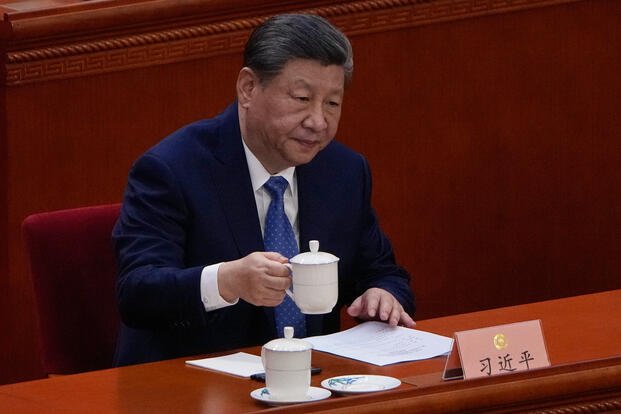
China has not been shy in decrying the actions of the United States and Israel in Iran, but its public sentiment is less about coming to Iran’s defense and more about preserving its own global stake—particularly as it relates to oil and energy resources.
As Chinese President Xi Jinping is anticipated to meet with U.S. President Donald Trump in short weeks’ time, the world power worries more about trade and its position in and around Asia rather than Iran and coming to the unstable region’s defense. On the U.S. side, Trump has hinted at potentially using the Navy to protect trade routes.
“The U.S.-Israeli strikes have no UN Security Council authorization and violate international law,” Liu Pengyu, spokesperson for the Chinese embassy in Washington, told Military.com. “China is deeply concerned over the current situation. China firmly opposes the use of force in international relations or infringement on other countries’ sovereignty and security.”
Chinese Foreign Minister Wang Yi had phone conversations on Monday with Iranian Foreign Minister Seyed Abbas Araghchi, French Foreign Minister Jean-Noel Barrot, and Omani Foreign Minister Sayyid Badr bin Hamad Al Busaidi, according to Chinese state media’s Xinhua News Agency.
Those discussions occurred one day after Wang issued a statement scrutinizing the attacks, saying that they “trample UN Charter principles and basic norms of international relations.” She reportedly tried to coordinate emergency UN Security Council responses with Russian Foreign Minister Sergei Lavrov, according to Reuters.
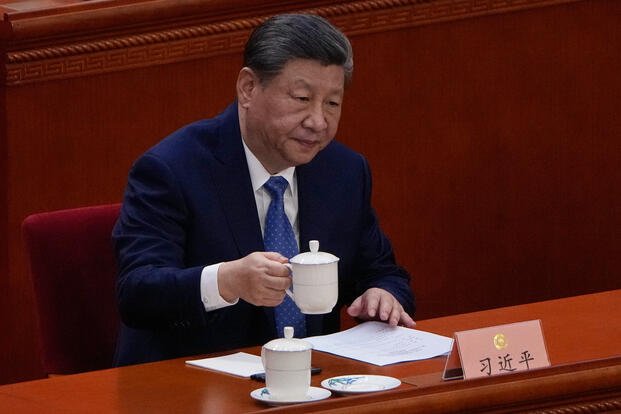
Then, on Tuesday, Wang reportedly told his Israeli counterpart, Gideon Saar, that the U.S. and Israeli attacks occurred just as “significant progress” was being fomented in negotiations between Washington and Tehran, decrying the use of force by saying “it will bring new problems and serious long-term consequences,” according to a statement issued by the Chinese Foreign Ministry.
The Chinese government paints this ongoing war not just as a joint attack on Iran’s sovereignty but also a violation of the United Nations charter, calling for its immediate conclusion. Russia also publicly scrutinized the actions of the U.S. and Israel.
The priority now is to immediately stop military operations and prevent the spread and spillover of the conflict – Pengyu
“China stands ready to work with the international community to call for peace and stop the conflict, resolve issues through dialogue and negotiations, and maintain peace and stability in the Middle East and the world at large,” Pengyu added.
Strait Shutdown Affects Entire World
Yun Sun, a senior fellow and director of the China program at the Stimson Center, said that beyond the geopolitical impact of a broad, regional war like this, China has its own interests at risk.
“China’s primary interest in Iran is oil, about 10% of China’s global import,” Sun said. “But the number needs to be put in perspective. China’s energy is more than 80% self-sufficient and on the global oil market there is more supply than demand.”
She said the shutdown of the Strait of Hormuz will affect China’s oil shipment from the region. Petroleum analysts told Military.com that approximately 20% of the world’s oil supply goes through the strait daily on tankers.
“It’s obviously a very big deal,” GasBuddy petroleum analyst Matt McClain told Military.com. “Domestically in America, about 10-15% of the mix is Middle Eastern oil that makes its way into our oil infrastructure.”
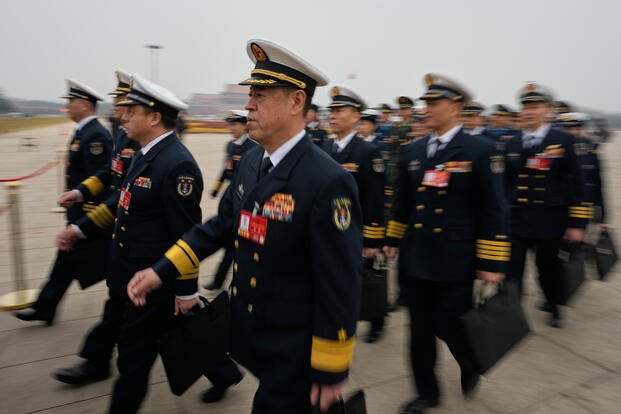
Sun called the impediment of Hormuz “a bigger concern” for Beijing.
“China has long couched its comfort in the belief that such a crisis is unsustainable because both oil producers and consumers will press the U.S. and Iran into a ceasefire,” she said. “That assumption will potentially be tested here.”
But there is a flipside, according to Sun, and it’s due to any real semblance of allyship between China and Iran. There is a reason that China’s response so far has not gone beyond diplomatic criticism.
“Iran is not an ally, and there is no mutual defense treaty,” Sun said. “It is a partner, but a weak, ineffective one that constantly demonstrates a ‘capitulation tendency,’ as the Chinese put it.
“In addition, China’s capacity to aid Iran is limited. Iran is not on China’s border. Shipment of supplies will be deterred or intercepted. Also, China is expecting summits with [U.S. President Donald] Trump this year. Iran is not going to be the fight China will pick.”