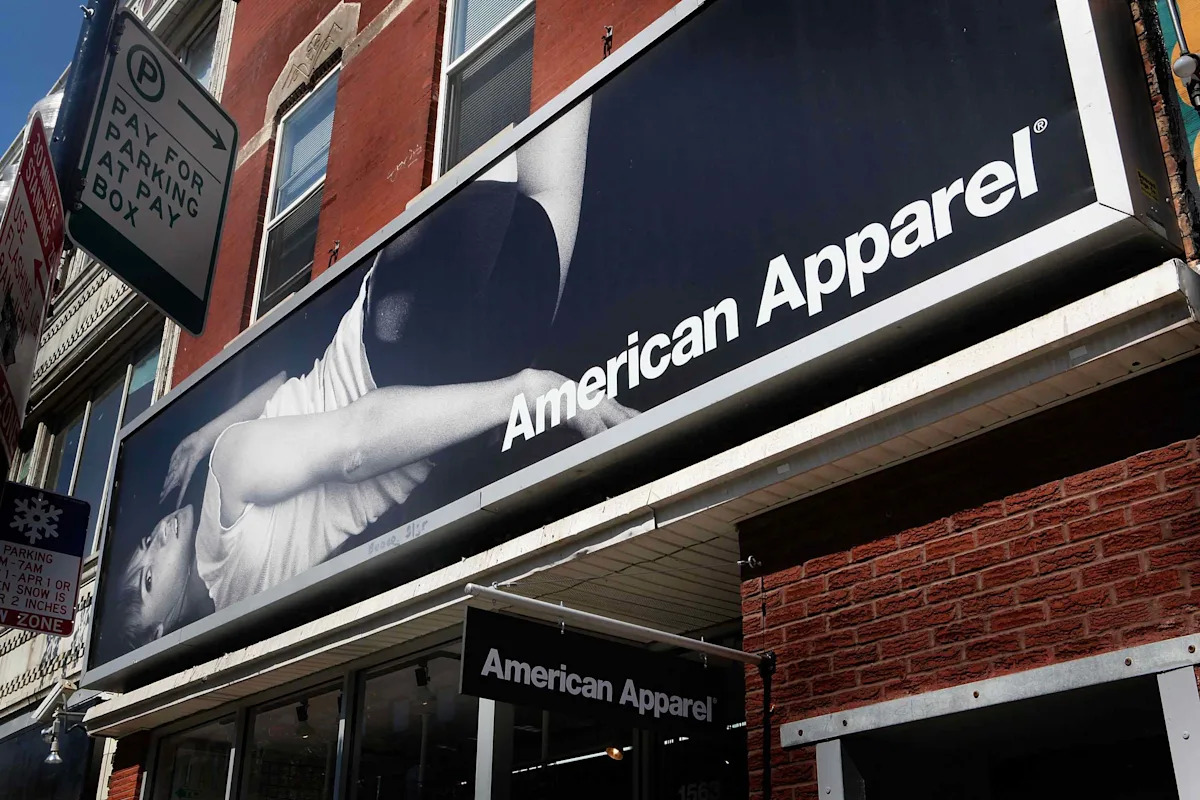
When I started college in the early 2010s, one of my first friends was a well-dressed Hawaiian girl with Tumblr taste and a wardrobe full of disco pants that appeared frighteningly fashionable and outrageously cool to my Midwestern eyes. She was wearing head-to-toe American Apparel, and before long, I was too.
To say that the brand had a chokehold on young millennials is an understatement. You couldn’t attend a Crystal Castles concert without spotting a metallic skater dress. It wasn’t a Cobra Snake-photographed party without at least one American Apparel deep V-neck tee in attendance. And for every Pitchfork review read and tiny line tattoo drawn between 2005 and 2015, there were countless pairs of funky tube socks sold. The brand was the breakout fashion star of a generation, dominating pop culture and providing an alternative to the blinged-out logomania of the Y2K era, until it all came crashing down.
The rise and fall of American Apparel is the subject of Netflix’s latest docuseries. Trainwreck: The Cult of American Apparel, which debuts on the streaming platform July 1, unpacks the cult-like atmosphere, toxic workplace dynamics, and sexual harassment scandal that brought down the business and its CEO and founder, Dov Charney. The troubling dark side of the brand that defined the 2010s is on full display, but not necessarily the clothes and trends that put it on the map.
So what exactly made American Apparel synonymous with hipster style? Why was everyone buying the same corduroy skirt in 2009? The answer requires a look back at the fashion landscape, youth culture, and music scene of the indie sleaze era.
Courtesy of American Apparel.
A line outside of American Apparel.
American Apparel Defined Indie Sleaze
Indie sleaze is back—at least, according to TikTok. In a trend forecast video, Mandy Lee of @OldLoserinBrooklyn predicted the aesthetic’s return in 2021. “Some key characteristics from this trend were provocative advertisements, amateur style flash photography, and opulent displays of clubbing,” explains Lee in the post. American Apparel, with its disco-inspired club attire, controversial campaigns that leaned on sex appeal (and flash photography), and amateur models plucked from obscurity, helped popularize this aesthetic the first time around.
“The whole point of the branding is that there isn’t any branding,” says fashion commenter Rian Phin, who worked at American Apparel, in a viral video on TikTok. “There’s no American Apparel logo on the clothes. There’s no American Apparel patch on the denim. They’re blanks.” This lack of discernible logo appealed to a particular type of consumer who wanted to prove they could look beyond logos and decide how and why they wanted to dress a certain way themselves—at the time, we called them hipsters.
Minimal branding is a powerful signifier when done right. The messy-girl moment of last year’s Brat Summer (characterized by undone hair, smeared makeup, skintight minis, and low-fi design) mirrors the American Apparel brand of yesteryear. Before micro shorts became the trend du jour, the retailer was selling them en masse to millennials. This new look was the polar opposite of the bandage dresses and preppy polos that dominated the mid-aughts mall scene, and as a result, it stood out.
The Greatest Hits
American Apparel designs, with their barely-there branding and made-in-Los Angeles bona fides, looked and felt like nothing else on the market. When the brand became a publicly traded company in 2006, it occupied an important niche in the industry. At a mid-tier price point (most pieces sold for under $300) and with stores around the world, anyone within driving distance of an American Apparel location could save up for a neon scrunchie or high-waisted denim.
Celebrities soon caught on. According to Netflix’s docuseries, Beyoncé used to shut down the LA store to shop in its heyday. Selena Gomez donned the company’s legendary bodysuit for a night out. And perhaps most famously, Lana Del Rey wore a rosette-covered American Apparel sweatshirt in her Born to Die promo photos. (Tragically, I sold the blush version I owned back in the 2010s, and I have lived long enough to regret it.)
These clothes were cool, yes, but also functional, a necessity for young people living through the 2008 financial crisis. They were also versatile (i.e. matched everything) and available in a veritable rainbow of shades. I’m convinced that the popularity of American Apparel bodysuits, which came in every neckline, colorway, and sleeve length imaginable, is the reason brands like Abercrombie and Zara still stock an array of tuckable onesie tops today.

Getty Images
A neon display inside the American Apparel store in 2014.
American Apparel Today
In 2025, the brand is a shell of its former self, but it continues to sell basic tees online, albeit under new management. In January 2017, Gildan Activewear acquired American Apparel for $88 million, following a 2015 bankruptcy. In the ensuing years, the company understandably lost much of its fashion sparkle, and its popularity waned. However, the styles that originally made the brand famous continue to resurface, providing Instagram saved-folder fodder and outfit inspiration for a new generation.
In fact, it’s a Depop mainstay. The American Apparel tennis skirt and its sister circle style are ubiquitous on the platform. A viral photo that epitomized the Tumblr era, featuring numerous black basics and deep side parts, continues to circulate as a meme. Although the fall of American Apparel due to its mismanagement, toxic work culture, and predatory leadership was inevitable, its legacy as the go-to store for hipsters lives on.
As indie sleaze continues to trend (we’re closing in on the 20-year trend cycle peak), expect disco pant–coded skinnies and sexy neon bodysuits to proliferate.
Read the original article on InStyle