New Delhi:
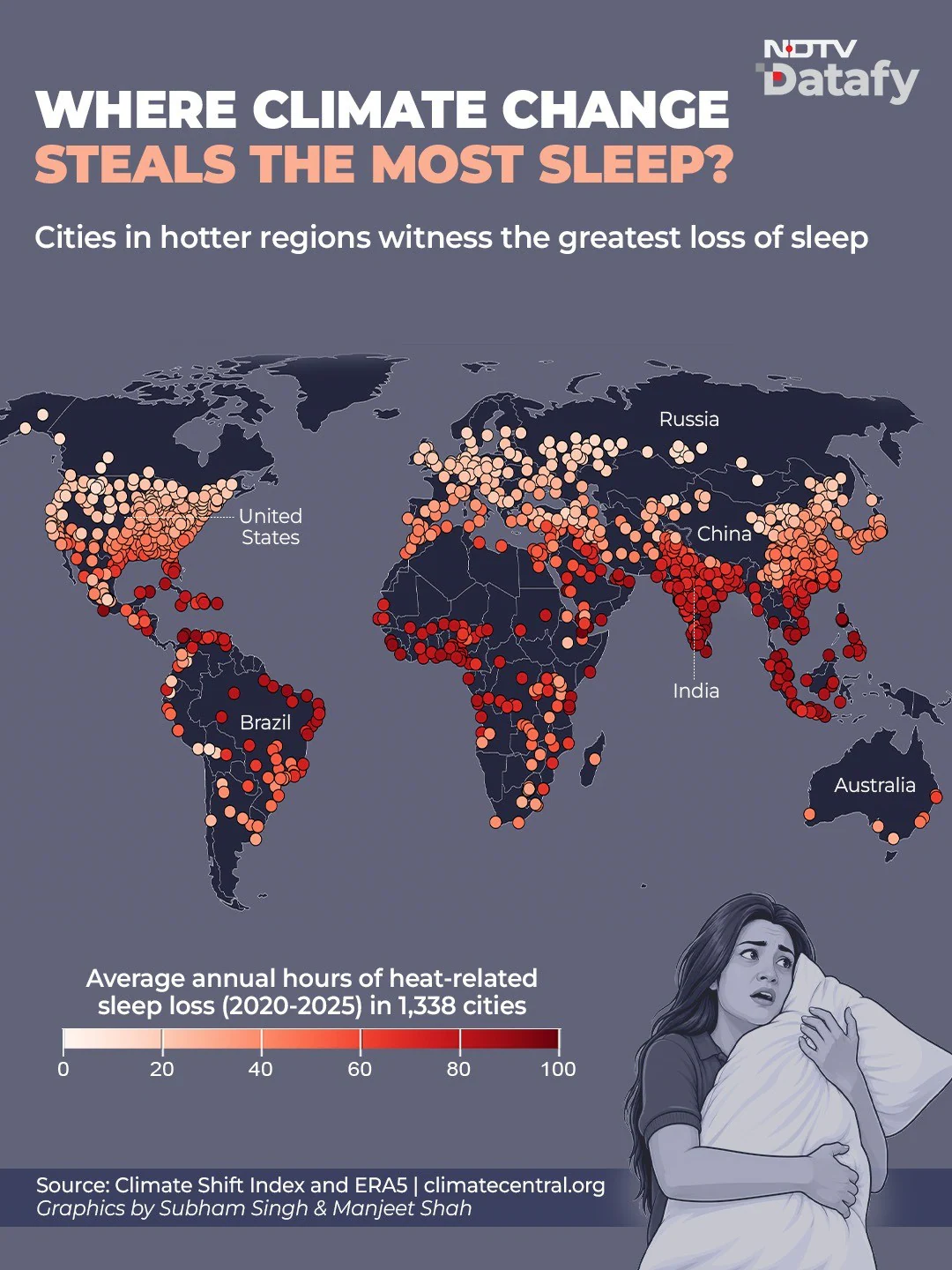
Rising temperatures are not just making days hotter, they are also making nights warmer, leaving millions of people across the world with less sleep. A new analysis by Climate Central estimates that the average person lost nearly 56 hours of sleep every year because of high nighttime temperatures during 2020-2025. The report analysed 1,338 cities worldwide and found that climate change-driven sleep loss has at least doubled since the early 1970s in almost every city studied.
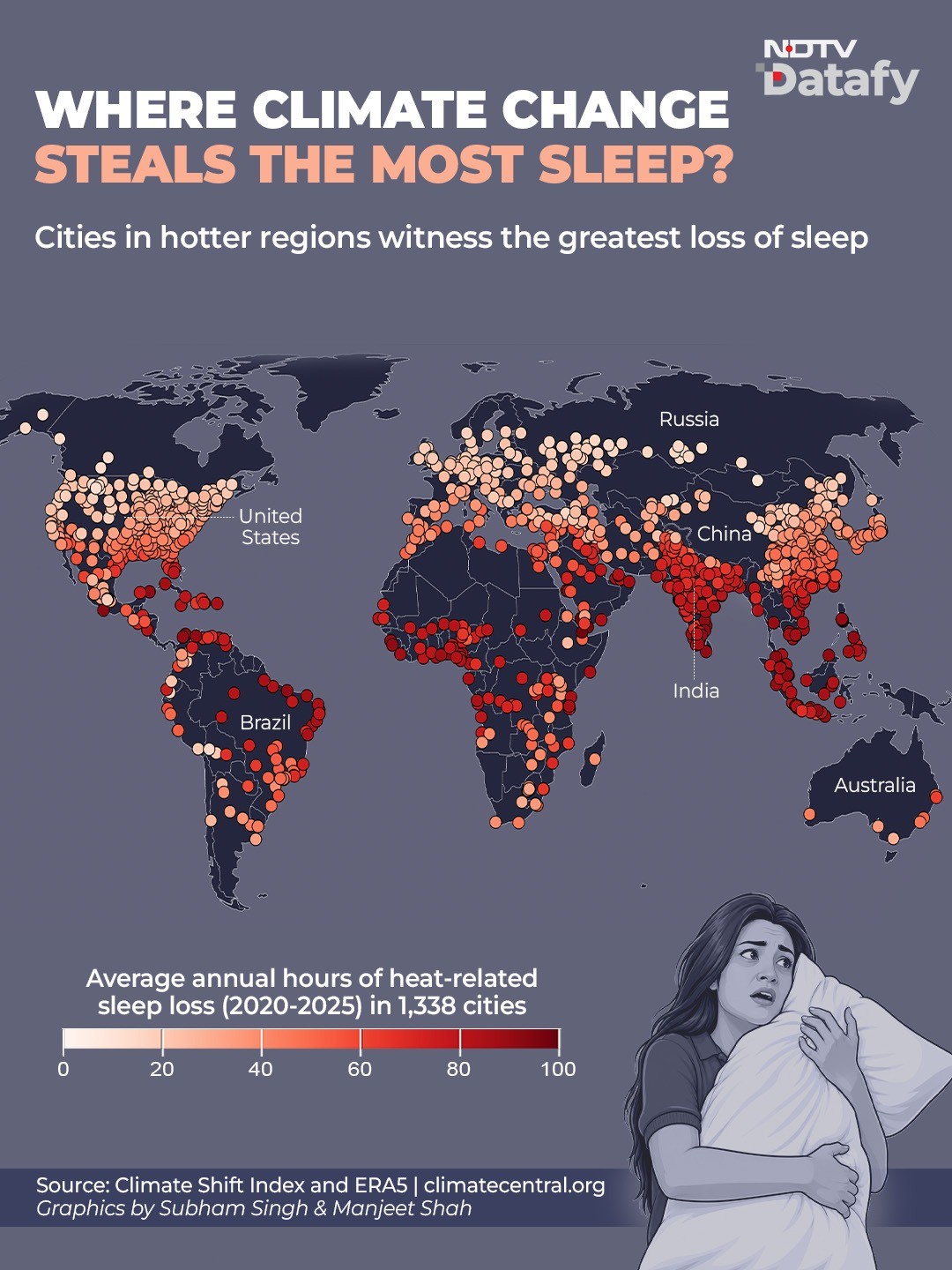
The impact is most visible in hot parts of the world. Cities across the Middle East recorded the highest heat-related sleep losses, while parts of South Asia, Southeast Asia and West Africa also showed significant impacts. According to the report, residents of some cities in southern India and Southeast Asia lost between 78 and 91 hours of sleep annually due to higher nighttime temperatures.
India is among the countries where heat-related sleep loss is emerging as a growing concern. Data for Indian cities show a clear geographical pattern: southern and coastal cities are losing the most sleep. Chennai recorded the highest annual sleep loss at 93 hours, followed by Nellore and Puducherry at 92 hours each. Tiruchirappalli, Kochi, Kozhikode and Guntur were also among the worst-affected cities, with residents losing close to 90 hours of sleep every year because of warmer nights. Cities such as Mumbai (84), and Visakhapatnam (87) also recorded high levels of heat-related sleep loss.
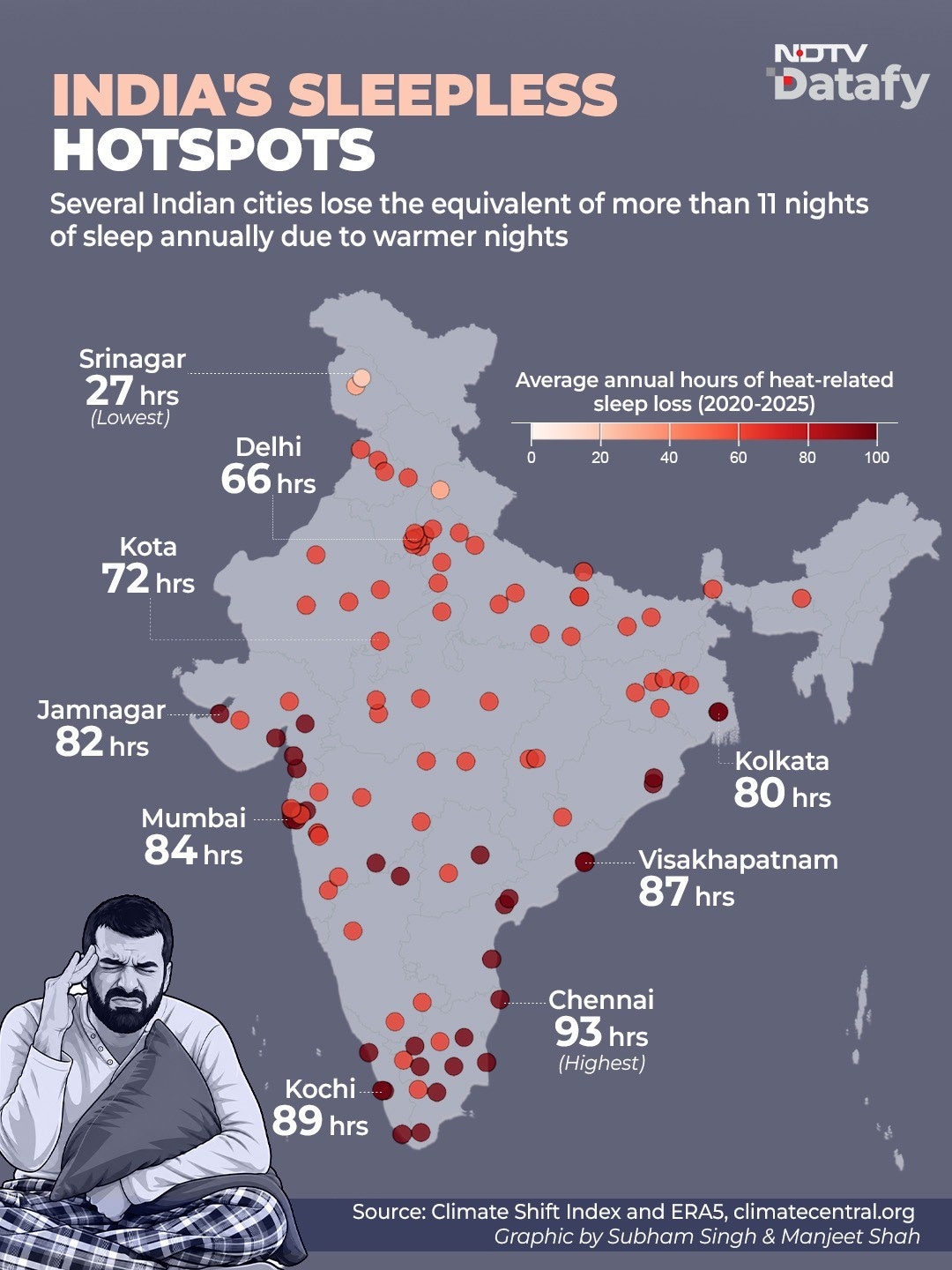
In contrast, cooler locations reported lower impacts. Srinagar, for example, recorded 27 hours of annual sleep loss.
One reason behind these trends is that nights in India are becoming steadily warmer. Data from the India Meteorological Department (IMD) show that the country’s annual minimum temperature has been increasing over time. While the long-term normal for 1991-2020 stands at 19.3 degrees Celsius, recent years have frequently remained above that level. In 2024, India’s annual minimum temperature reached 20.2 degrees Celsius, the highest value since the year 1901.
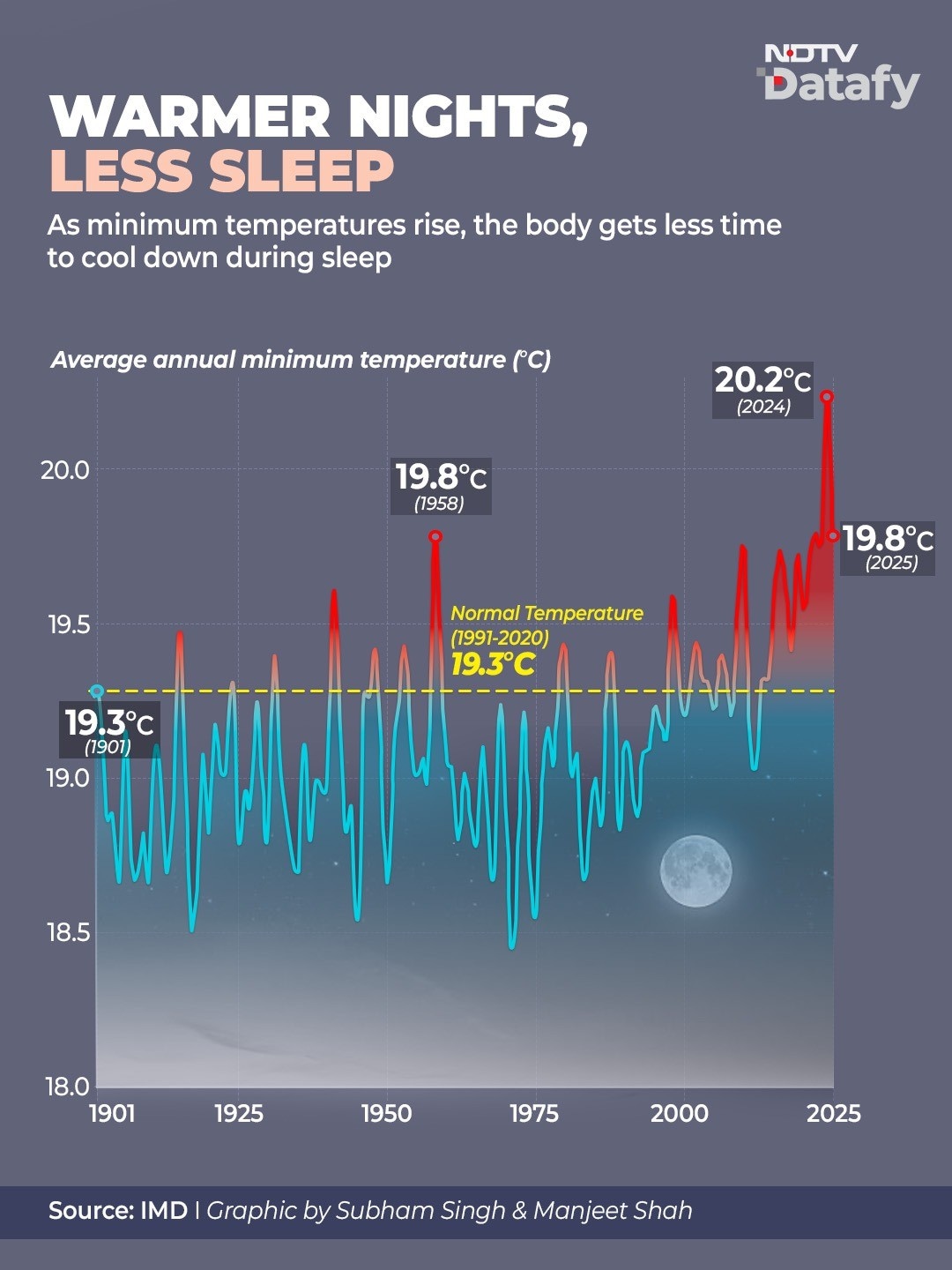
As nighttime temperatures rise, people get less relief from heat after sunset. Climate Central notes that warmer nights make it harder for the body to cool itself, reducing both sleep duration and sleep quality. As climate change continues to push temperatures higher, the loss of a good night’s sleep could become another growing cost of a warming world.