First phase of project costs 42b yuan, will serve 20m people when complete
Guangzhou, the capital of Guangdong province, officially kicked off construction of its second airport in neighboring Foshan on Wednesday, as authorities seek to meet fast-growing civil aviation demand and reinforce the region’s role as a major hub in southern China.
The new airport is expected to support high-level opening-up and help foster a new development paradigm in the Guangdong-Hong Kong-Macao Greater Bay Area, the provincial airport authority said.
Ling Yuzhen, chief engineer of the Guangdong Airport Authority’s construction command, said the project — located in Foshan’s Gaoming district in the western part of the Greater Bay Area — aims to optimize the region’s airport network.
READ MORE: New airport breaks ground in South China’s Greater Bay Area
“The new airport will play a significant role in building a world-class airport cluster, strengthening weak links in the current system and exploring a coordinated development model between the eastern and western parts of the Greater Bay Area,” Ling said at the construction site.
He noted that aviation infrastructure in the region remains unevenly developed. “Airport development in the Greater Bay Area is currently stronger in the east and weaker in the west,” he said.
Once completed, the airport is expected to serve more than 20 million people in Guangzhou, Foshan, Zhaoqing, Yangjiang, Yunfu and surrounding areas in western Guangdong, as well as parts of southwestern China.
Ling said the new facility will complement Guangzhou Baiyun International Airport and promote coordinated development, enhancing connectivity between the region’s airport cluster and urban agglomeration.
The first phase of the project carries a total investment of 41.81 billion yuan ($6.06 billion), including 35.91 billion yuan for core airport construction.
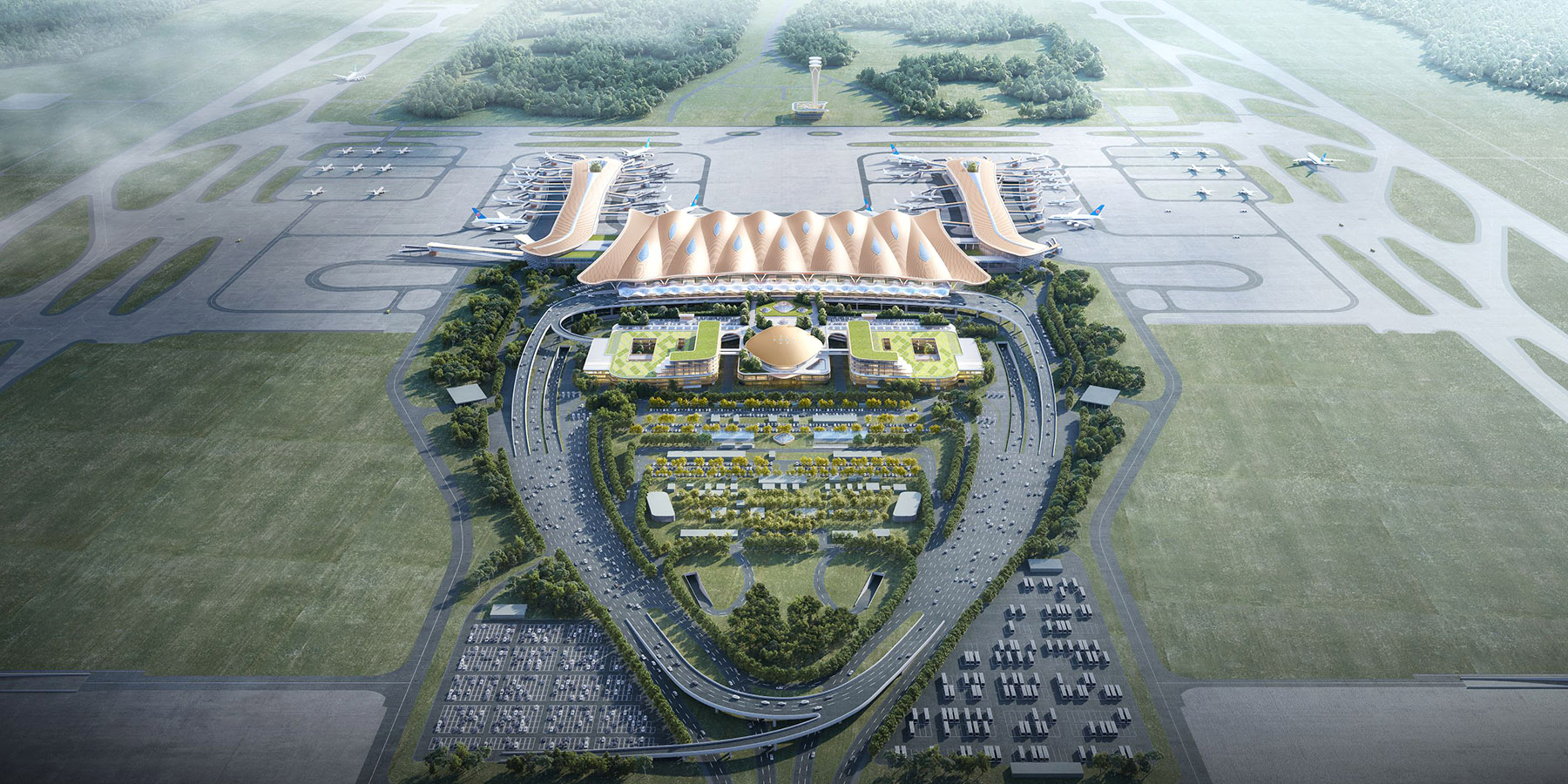
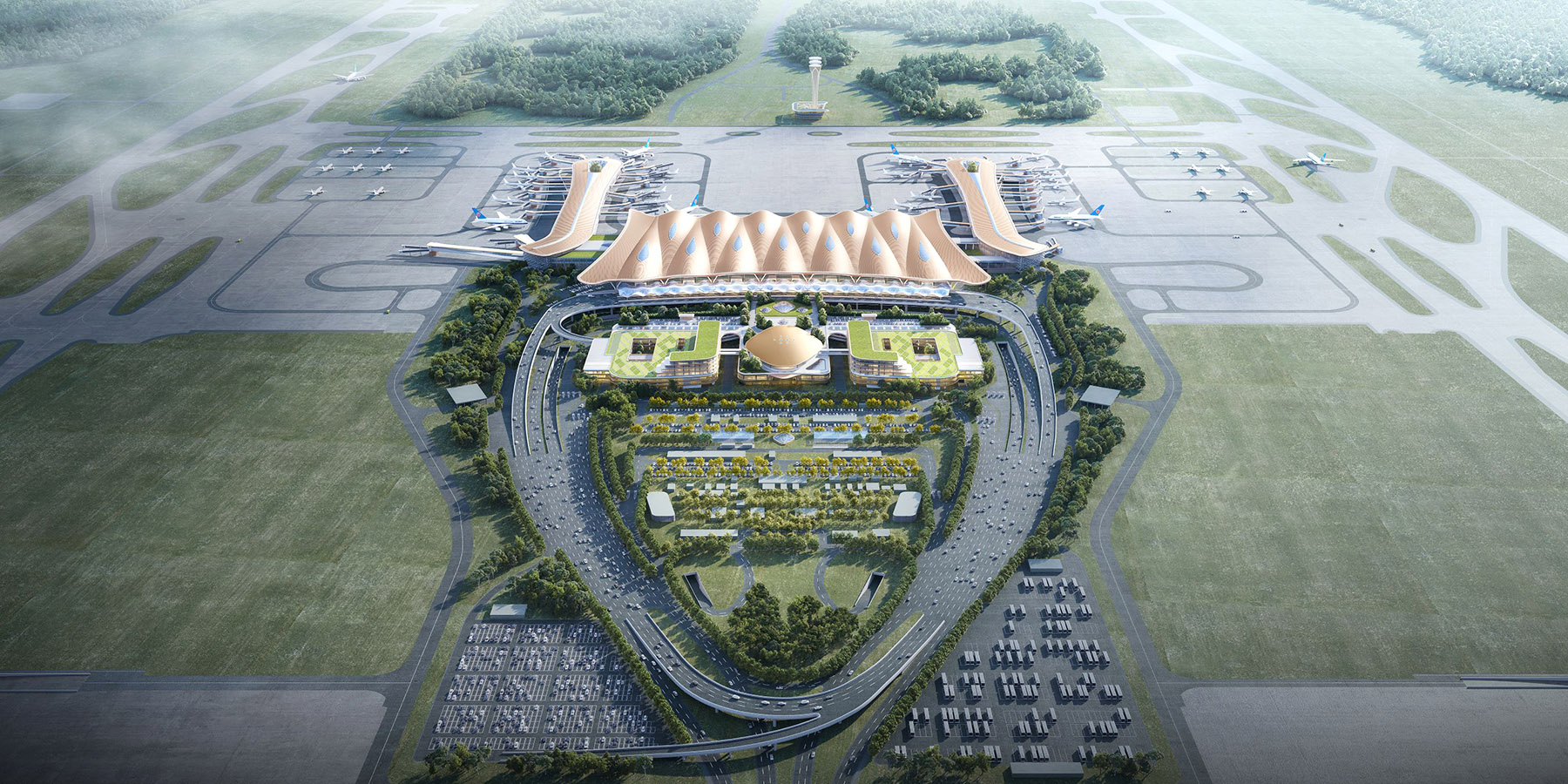
Located about 100 kilometers from Baiyun International Airport, the new facility will feature two long-distance parallel runways, a terminal building covering about 260,000 square meters, 94 aircraft parking positions and related support infrastructure.
It is designed to handle more than 30 million passengers annually, along with 500,000 metric tons of cargo and mail, and 260,000 aircraft movements.
By 2050, annual passenger throughput is expected to exceed 60 million, positioning the airport as a key civil aviation hub for the western Greater Bay Area and strengthening Guangzhou’s role as an international aviation center.
Foshan, a prefecture-level city bordering Guangzhou, is also near Shenzhen, Hong Kong and Macao. Together with Guangzhou, it forms one of the three major economic poles of the Greater Bay Area.
ALSO READ: China’s GBA airport cluster ranks among top aviation hubs globally in 2025
Local authorities say deeper integration into the Guangzhou metropolitan area is a priority for Foshan. High-speed railways and expressways will connect to the new airport, accelerating integration between the two cities, Ling said.
Huang Kunming, Party secretary of Guangdong province, announced the start of construction at a groundbreaking ceremony on Wednesday.
Official data shows that passenger throughput across the Greater Bay Area’s seven airports reached 237 million in 2025, while cargo and mail throughput totaled 9.72 million tons, ranking the cluster among the world’s leading aviation hubs.
Airports Council International projects that air passenger demand in the Greater Bay Area will reach 420 million by 2035.
Contact the writers at zhengcaixiong@chinadaily.com.cn