
February 10 – Women’s football in Germany is a sport with history and momentum on its side. With growth a key driver, the Frauen-Bundesliga is looking to flex its muscles in talks with the German Football Association (DFB) about a proposed joint venture.
Last Thursday, the newly-formed FBL e.V., which represents the clubs, rejected the venture with the DFB at its first meeting after talks late last year failed to find common ground.
The proposed original plan was simple, with the DFB and the league association each holding 50% of a new Frauen-Bundesliga Gesellschaft. The federation also pledged €100 million over eight years to accelerate the professionalisation of the sport.
The FBL e.V., launched in December with the intention of working alongside the DFB, has suddenly shifted gears, leaving the DBF in an awkward position. The clubs have decided to run the show themselves, modelling the league on the DFL, the body that runs the men’s Bundesliga.
FBL e.V. has suggested that after the contracts between the two bodies were finalised, the DBF raised other details the FBL e.V. deemed “unacceptable demand,” leading top club, Eintracht Frankfurt, to say that “the positions and framework conditions communicated by the DFB in recent weeks for cooperation within the framework of a joint venture cannot be met.”
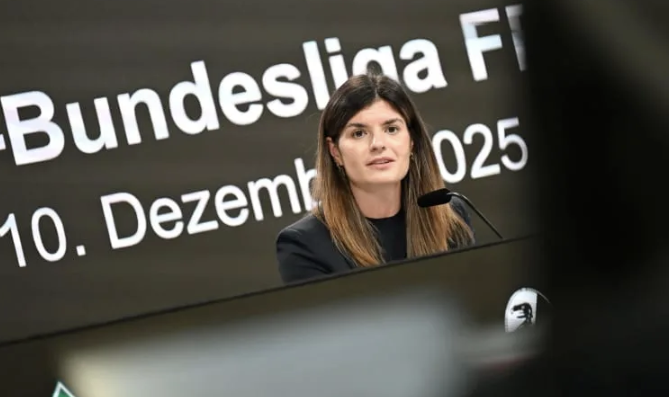
FBL e.V. president Katharina Kiel said, “For us, it is crucial that the future of the Women’s Bundesliga be shaped where the sporting and economic engine lies — with the clubs,” adding the need for “clear responsibilities, a high degree of operational capability, and governance that accelerates growth and increases competitiveness.”
As always, at the heart of the issue is control, and who will have the final say on the direction of the league’s future. The DBF, perhaps backtracking, said it “regrets the decision” but remains “fundamentally willing to discuss the further professionalisation of the Women’s Bundesliga.”
With the growth of women’s leagues worldwide and envious glances towards the WSL in England, Germany’s women are looking to build on the success of the national team, as the domestic league still lags behind. Eight European titles and two World Cups are an impressive resume that will only get better with a sustainable and competitive league.