Gus Carlson is a U.S.-based columnist for The Globe and Mail.
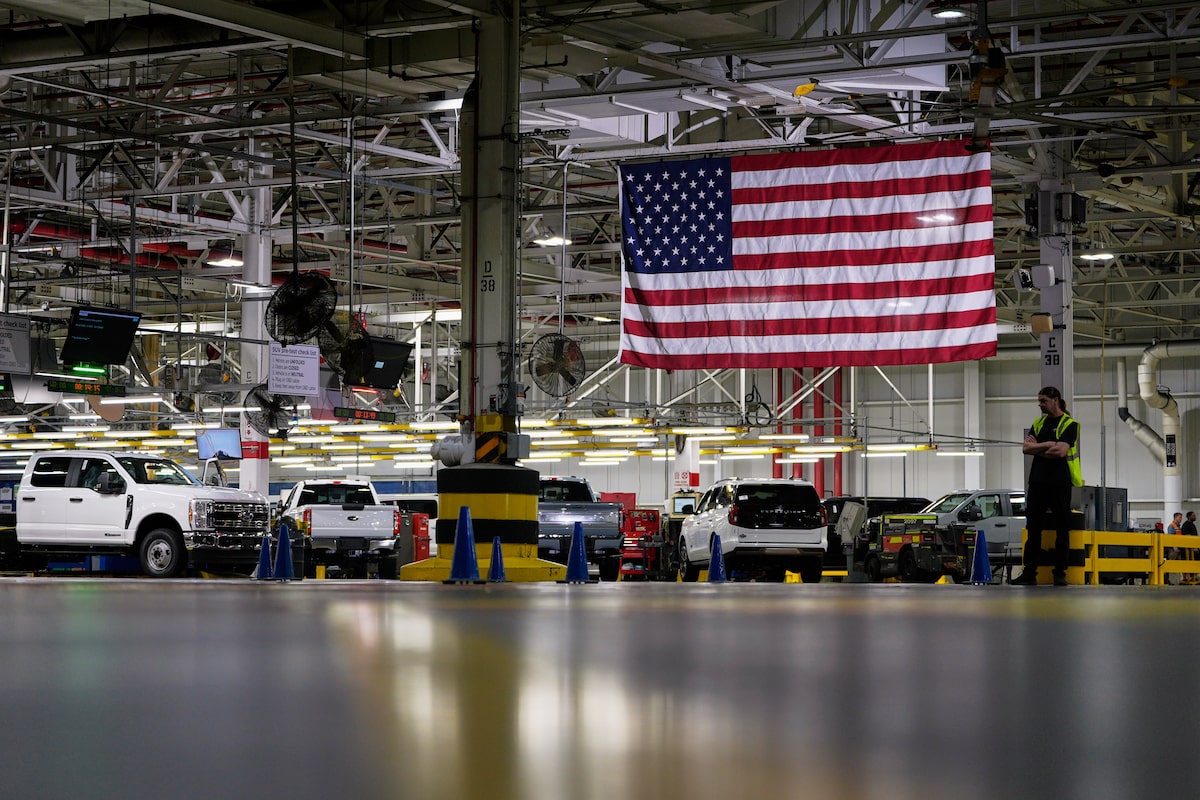
Global EV sales have softened recently while the regulatory environment, particularly in the U.S., has soured significantly.Carolyn Kaster/The Associated Press
Ford Motor F-N calls its new electric vehicle initiative a “Model T moment” because of what the company says is its potential to revolutionize the sector the way its first car did for motoring more than a century ago.
But the automaker’s announcement last week that it will invest billions of dollars in a redesigned, value-priced EV pickup truck comes at a time when gale-force headwinds threaten to make the effort more of an Edsel moment – and not just for Ford.
It may be too dire to suggest Ford is walking into a propeller of anti-EV factors hampering the market. But the timing of its push could not be more challenging, as demand, sentiment and legislation are all going the wrong way.
Recent tepid quarterly results and uncertain projections from second-string pure-play (that is, exclusively) EV makers Rivian and Lucid reveal a market facing more hairpin turns than ever.
Global sales of EVs have softened in the face of stubbornly high sticker prices, range anxiety and infrastructure issues related to charging. More concerning, particularly in the huge U.S. market, is that the regulatory environment has soured significantly.
Ford to invest nearly $2-billion in Kentucky assembly plant to produce electric vehicles
Ford recalls more than 850,000 cars in the U.S. over potential fuel-pump failure
The Donald Trump administration has moved to eliminate the low-emission regulatory credits that have propped up revenue at pure-play/ EV companies such as Lucid.
More chilling is the elimination of the U.S. federal EV retail tax credit, which expires on September 30. The incentive – US$7,500 for new vehicles and US$4,000 for used ones – was part of the Joe Biden administration’s green agenda.
In one of his early acts as president, Mr. Trump moved to phase out the credit, intimating it created an artificial market to push a political agenda. He suggested that without the incentives, most EVs would not survive in a free market.
The glacier-like pace of charging-station installations in the U.S. has not helped EV adoption. Only 58 of the 500,000 charging stations planned under the Biden administration’s US$7.5-billion program were built during its three-year term before Mr. Biden left office in January, according to The Washington Post.
Mr. Trump’s tariffs have also hurt. Both Rivian and Lucid cited the taxes on imported components as challenges to profitability. Lucid has softened its production forecast amid speculation that even its deep-pocketed Saudi investors are concerned about its cash burn and delays in rolling out its new SUV model.
At the same time, low-priced high-quality Chinese EVs are gaining market share – a dynamic that industry leader Tesla did not face when it was defining the market.
So influential are the Chinese EVs, that even Ford chief executive Jim Farley has praised their superior high-tech systems and build quality. He suggested recently that if his company failed to create competitive products, there may be no Ford in the future.
To Mr. Farley’s point – and to his credit – Ford’s new EV pickup seeks to do what other legacy automakers and some pure-play EV makers have failed to do: create a high-quality vehicle with respectable range at a price that average car buyers can afford.
The engineering of the new truck is ahead of the curve and aimed directly at two of the biggest hurdles: costs and range anxiety.
The company says it has simplified the new pickup by using fewer, lighter components and streamlining systems. For example, the truck will have much less wiring than conventional models. It will also be easier to build, which means it will be faster to market and at a digestible price of about US$30,000.
To underscore its commitment to the project, Ford is spending a reported US$2-billion to retool a factory in Kentucky.
If you think you’ve seen this movie, you’re right. Ford committed to – and then pulled back on – a US$1.8-billion EV conversion of its assembly plant in Oakville, Ont., last year, opting to build its bestselling heavy-duty, conventional-fuel trucks there instead.
Back in the company’s early days, Henry Ford said car buyers could have a Model T in any colour they wanted as long as it was black. The industrial logic was simple: It was cheaper and faster to have all automobiles on the assembly line the same colour.
If Mr. Farley can channel even a little of Mr. Ford’s practicality, his new EV pickup may have a chance to revolutionize and even revitalize the market – or at least make Ford a legitimate player in an EV future.
But the spinning propeller of anti-EV factors will need to stop – or slow down, at least – for Ford and other North American EV makers to have a fighting chance.