London
The hard-right Reform UK party led by Nigel Farage has surged in England’s local elections while the governing Labour Party has slumped, deepening doubts about Prime Minister Keir Starmer’s ability to govern and further splintering Britain’s traditional two-party political system.
Results announced early Friday showed that the Reform party of Farage – a chief architect of Brexit and an ally of US President Donald Trump – had gained more than 600 seats, while Labour had lost more than 450. The Conservative Party – the other half of the duopoly that has dominated British politics for more than a century – lost nearly 300 seats.
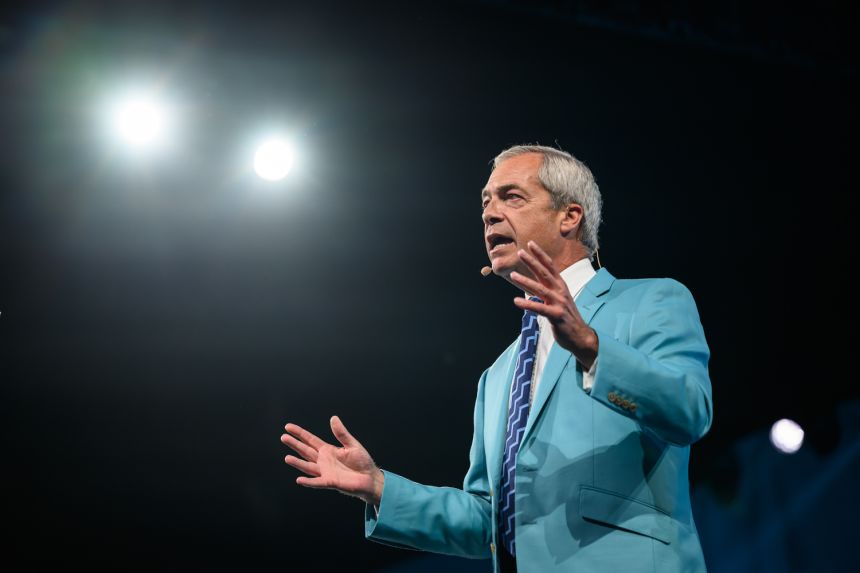
“Labour are being wiped out by Reform in many of their most traditional areas, and what you’re going to see later on today is the Conservative Party being wiped out in their heartlands,” Farage told reporters Friday morning, as some councils were still counting the votes.
He insisted his upstart party – which won just five seats in parliament in Britain’s last general election nearly two years ago but has since climbed in the polls – was no longer a “fluke or a protest vote,” but a “truly national party” that was “here to stay.”
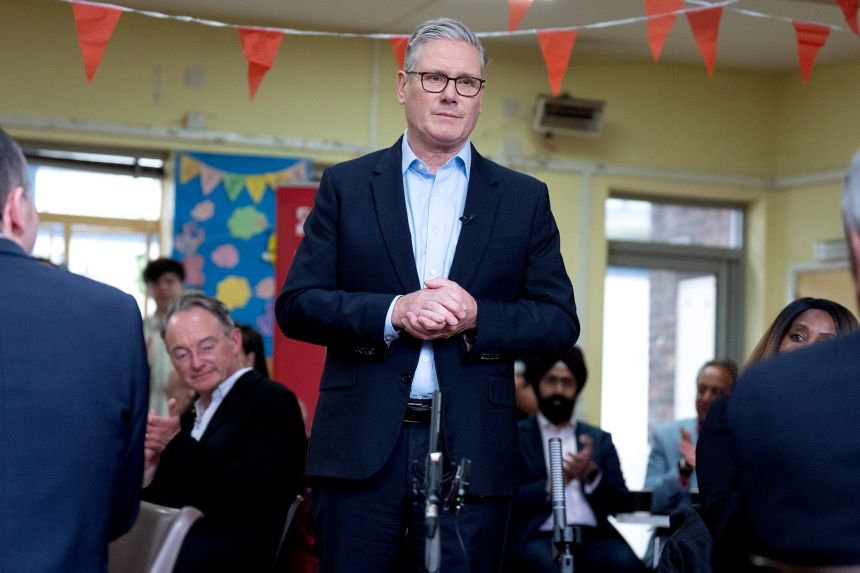
Meanwhile, a beleaguered Starmer told the Labour faithful that it was important not to “sugarcoat” the early results. He said voters were clearly not satisfied with the “pace of change” under his government, which secured a landslide win in July 2024. Still, he stressed he would not resign, saying: “I’m not going to walk away and plunge the country into chaos. We were elected to deal with these challenges, and that’s what we will do.”
While Starmer reckoned with losses in Labour’s historic heartlands in northern England, an ecstatic Farage traveled to Havering, a borough in outer London where Reform had gained control of its first council in the UK capital.
“What’s happened is a truly historic shift in British politics,” Farage said. He added that Reform’s broad gains across England showed that his populist party could challenge the traditional dominance of Labour and the Conservative Party. “It’s a big, big day – not just for our party, but for a complete reshaping of British politics in every way,” he said.
The early results confirm that British politics – once a two-way fight between the heavyweight Labour and Conservative parties – has fractured into a multi-party system, with the once-dominant parties now leaking votes to Reform, the progressive Liberal Democrats, and to the Greens. Nationalist parties in Scotland and Wales are also undermining the longtime Labour-Conservative duopoly.

“Electoral politics in Britain has become highly fragmented,” John Curtice, the doyen of polling in Britain, told the BBC Friday. Once all of the 5,000 contested council seats in England are declared, he noted that Labour could find itself having suffered more than 1,200 net losses.
Those losses would be a testament to Starmer’s unpopularity, his government’s missteps on policy and Labour’s failure to lighten the dour mood among the British public. In Starmer’s first year in office, his team sought to head off Reform’s surge by appealing to right-wing voters with tougher rhetoric and policies on immigration. That strategy backfired: Reform continued to surge in the polls, while Labour alienated its progressive voter base.
Many of those disaffected Labour voters had flocked to the new-look Green Party, led by Zack Polanski, a former hypnotherapist who became party leader in September. Under Polanski’s leadership, the Greens have sought to broaden their appeal beyond its traditional pro-environment base. It has lambasted Starmer’s government over its supposed lack of support for Palestinian rights and proposed a string of populist economic policies, including a wealth tax.
Much of the support for the Greens is clustered in cities. In the London borough of Hackney, the Green Party won its first ever elected mayor on Friday, as Zoe Garbett ousted the Labour incumbent. In her victory speech, Garbett said the results across the country showed that voters were “desperate for an alternative to this failing Labour government.”
Although the Greens have so far gained control of fewer than 100 council seats in England, Curtice noted that support for the Greens was nonetheless causing Labour to lose “plenty of seats” to Reform, as it splits the left-wing vote.
“Labour’s vote has tended to suffer more when the Greens have recorded a strong vote than when Reform have done,” he said. “This suggests that sometimes a flow of votes from Labour to the Greens has enabled Reform to gain a Labour seat, despite Labour pleas for voters to vote tactically to keep Reform out.”
While many Labour voters have shifted to the Greens, many traditional Conservatives – known as Tories – have switched to Reform. Farage’s party won control of the county council in Essex, which the Conservatives had controlled for 25 years.
Farage heralded Reform’s inroads into Tory heartlands, saying those gains signaled a new sort of politics. “Politics is no longer about the old arguments of right and left,” he said. “It’s about people who value patriotic ideas, believe in this country, and want to see things turned around.”
Labour’s drubbing will renew questions about Starmer’s fitness to lead the party. John McDonnell, a left-wing Labour lawmaker, said the prime minister must now judge whether his staying in post could risk “opening (the) door to Farage.”
Starmer’s position may be bolstered, however, by the lack of an obvious contender. Many of Starmer’s potential opponents within the Labour Party are tainted by scandal – such as Angela Rayner, the former deputy prime minister who resigned last year over her failure to pay the correct amount of property tax – or untested. Another of Starmer’s rivals, Andy Burnham, the mayor of Manchester, is currently unable to challenge Starmer because he does not have a seat in Parliament.
Government ministers have insisted that now is not the moment for a change at the top. “You don’t change the pilot during the flight,” David Lammy, the deputy prime minister, said Thursday night.
Speaking to reporters Friday, Starmer said: “Tough days like this – they don’t weaken my resolve to deliver the change that I promised at the general election. They strengthen my resolve to do so.”