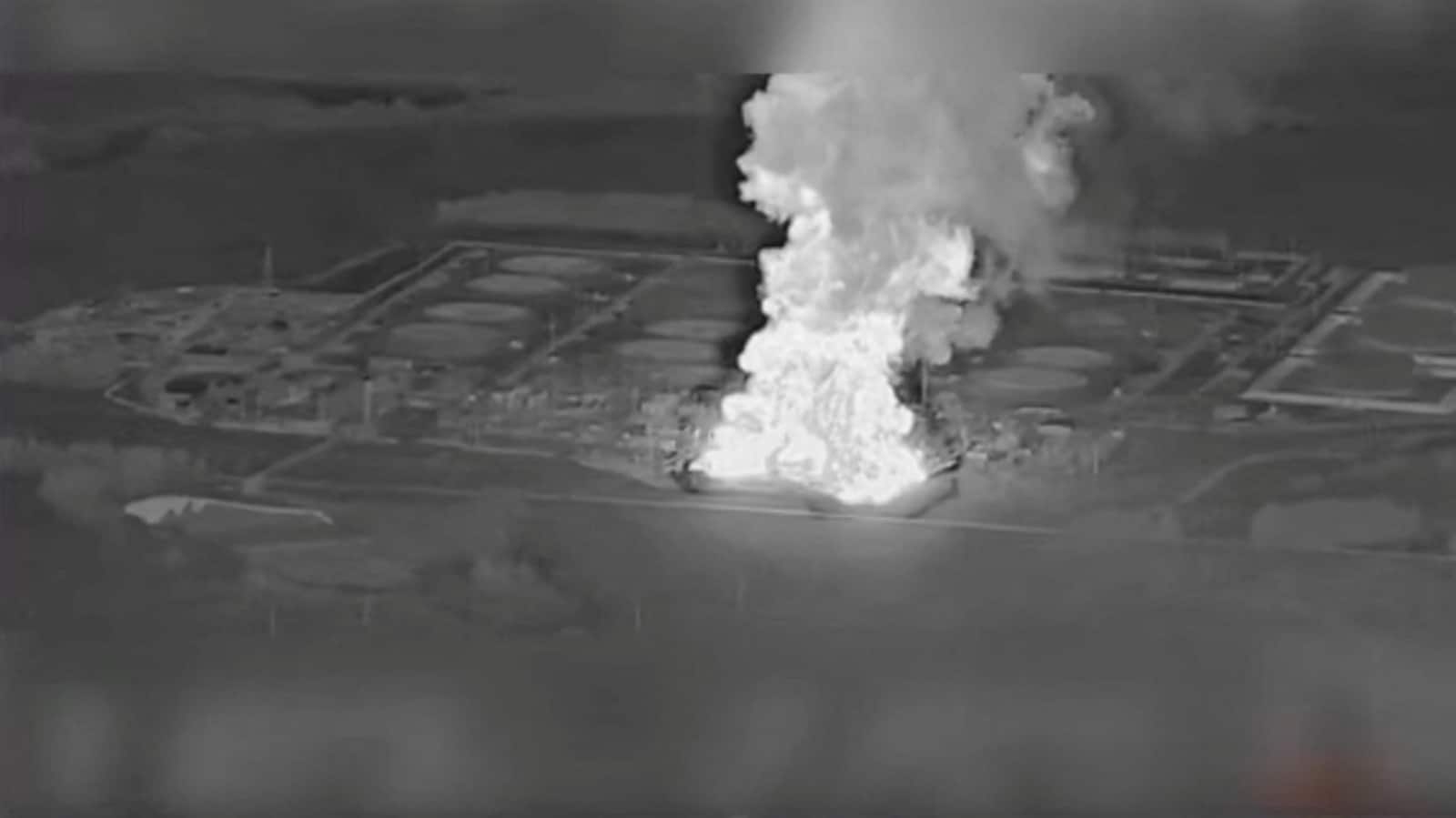
Ukraine’s attacks on Russian oil-export infrastructure—encouraged in recent days by President Trump—have exposed how deeply parts of Europe still rely on Moscow’s hydrocarbon exports even in the fourth year of war.
Kyiv’s forces have struck a major pipeline carrying both Russian and Kazakh crude into Central and Eastern Europe three times this month, disrupting flows and triggering angry reactions from regional leaders.
After the latest strike late Thursday, Ukrainian President Volodymyr Zelensky vowed to intensify pressure on Moscow, echoing Trump’s remark that Ukraine can only win by striking the aggressor on its own soil.
“It is very hard, if not impossible, to win a war without attacking the invader’s country,” Trump earlier wrote on Truth Social. Hours later, Zelensky declared that Putin “understands nothing but power and pressure,” pledging to continue striking deep into Russia.
Ukrainian drone and missile attacks disabled parts of the giant Druzhba pipeline, the world’s largest oil conduit, which carries crude from southeastern Russia to Germany, Slovakia and Hungary.
Eastern Germany, including Berlin and its international airport, depends heavily on Kazakh crude imports that transit Druzhba. Hungary and Slovakia are fully reliant on the pipeline for their energy needs.
Thursday’s combined strike of drones and U.S.-supplied Himars rockets severely damaged a pumping station near the Russian city of Bryansk, halting supplies downstream, Russian officials said in statements. Repairs are expected to take five to seven days—assuming no further attacks.
In Germany, an executive of the PCK refinery at Schwedt, which supplies Berlin and its surroundings, warned it had oil reserves only until Monday. A spokesperson for the German Economy Ministry insisted that Kazakh oil deliveries weren’t affected, citing current stockpiles, which will however begin to run down next week.
The Schwedt plant, under German government trusteeship but majority-owned by Russia’s Rosneft, receives about 120,000 tons of crude a month via Druzhba. Officially that oil originates in Kazakhstan and is pumped to Europe with Moscow’s permission, but industry experts say that at least some of the piped crude may in fact be Russian given the shared border.
The European Union, now preparing its 19th sanctions package to punish Russia for invading Ukraine, imported some €23 billion, equivalent to nearly $27 billion, worth of Russian hydrocarbons last year. The bloc has pledged to phase out all Russian oil and gas by the end of 2027. Indirect imports—such as Russian crude refined in India and re-exported as diesel to Europe—aren’t logged as Russian.
Hungarian Prime Minister Viktor Orbán voiced outrage in a note to Trump posted online by one of his aides: “Hungary supports Ukraine with electricity and petrol, in return they bomb pipelines that supply us. Very unfriendly move!” Trump scrawled back: “Viktor — I do not like hearing this—I am very angry about it. You are my great friend—Donald.”
The exchange contrasted with Washington’s harder line on India. The Trump administration has threatened sanctions on countries buying Russian oil, and senior aides have repeatedly blasted India for refining and reselling it. Treasury Secretary Scott Bessent told CNBC the practice was “profiteering,” while trade adviser Peter Navarro labeled it a “laundromat for the Kremlin.”
India’s oil trade with Russia gave it a “role in the bloodshed,” Navarro said.
Write to Bojan Pancevski at bojan.pancevski@wsj.com

All Access.
One Subscription.
Get 360° coverage—from daily headlines
to 100 year archives.

E-Paper

Full Archives

Full Access to
HT App & Website

Games
Already subscribed? Login

