The 1960s produced legendary automobiles like the Chevrolet Corvette Stingray, Pontiac GTO, and Ford Mustang that continue to capture enthusiasts’ imaginations today. Beyond these celebrated classics, the decade was also a remarkable period of automotive innovation and experimentation that yielded fascinating performance cars, prototypes, and concepts that pushed design and engineering boundaries.
Many of these intriguing vehicles have faded from popular memory despite their noteworthy contributions to automotive history. From successful race cars to ambitious concepts that never reached production, these machines represent the creative spirit and bold vision of 1960s automotive design. Here’s a closer look at 10 compelling cars from that transformative decade that deserve recognition for their unique place in automotive history.
How We Chose These Cars

Selecting truly “forgotten” automobiles presents unique challenges, as dedicated enthusiasts and collectors maintain interest in even the most obscure vehicles. Our selection focuses on cars that, while perhaps known to specialists, haven’t received the broader recognition their innovation or historical significance merits.
These vehicles were chosen for their noteworthy engineering, distinctive design, or compelling backstories that illuminate different aspects of 1960s automotive culture and development.
Ginetta G4

The Ginetta G4 represents British sports car engineering at its finest, built by Ginetta, a company founded by the Walklett brothers, with the G4 publicly launched in 1961. This lightweight car used a tubular spaceframe chassis with a glass fiber body and most commonly ran Ford-based engines, while some cars were fitted with other units, including the Lotus Ford Twin Cam. Period road tests quoted top speeds around 120 mph for higher-output 1.5-liter examples.
The G4’s successful track record and distinctive design have kept it alive in enthusiast circles, and the model was later revived in limited numbers as the G4 Series IV in the 1980s, with further low-volume continuation-style builds also appearing after the original era.
Monteverdi High Speed 375

The early Monteverdi High Speed 375S coupe was built in tiny numbers, with commonly cited totals around 16 cars for the Frua- and Fissore-bodied 375S versions, making it one of the rarer European Chrysler V8-powered grand tourers of its era. Founded in 1967 by former professional racer Peter Monteverdi in Switzerland, this unique manufacturer combined Italian coachbuilding artistry with powerful American Chrysler V8 engines.
The High Speed made its debut at the 1967 Frankfurt show, and the 375S has appeared in notable collections and media, including a Jay Leno’s Garage feature on a Monteverdi 375S.
Marcos Xylon

The Marcos Xylon earned recognition for its unconventional appearance and innovative wooden chassis construction, which gave the car its name (xylon being Greek for wood). Despite its polarizing aesthetic featuring distinctive proportions and unusual styling elements, the Xylon proved surprisingly effective on the racing circuit.
Marcos Heritage records that only nine Xylons were built, with production spanning 1959 to 1960, making this lightweight British sports car a rare sight even during its brief run.
Plymouth XNR

This striking Chrysler concept car nearly disappeared from automotive history before being rediscovered and restored decades later. Built on a Plymouth Valiant chassis, the XNR featured distinctive asymmetrical design elements and side-mounted exhaust pipes that set it apart from contemporary two-seat roadsters.
After its time as a show car, the sole XNR was sold and eventually ended up in Beirut; in 2008, collector Karim Edde sent it to RM Restorations in Canada for a thorough restoration before it later appeared in major auction and show settings.
Lightburn Zeta

Australian entrepreneur Harold Lightburn introduced the Zeta microcar line in 1963, targeting families seeking affordable transportation during Australia’s economic expansion. The compact sedan struggled with performance limitations, particularly on inclined roads, which became evident during the 1964 Ampol Trial. Contemporary reporting notes three Zetas started the roughly 7,000-mile event, but only one was officially classified as a finisher.
Despite finishing last among completed entries, this achievement demonstrated the little car’s surprising durability and Lightburn’s determination to prove his concept’s viability.
Iso Grifo

Iso produced roughly 400 examples of the Grifo across its main production run, making it a rare and valuable Italian grand tourer whose market value varies widely by engine, specification, and condition. Engineered by Giotto Bizzarrini, who previously worked on the Ferrari 250 GTO, the Grifo uniquely combined Italian styling with American Chevrolet V8 power.
Period testing and published specifications for high-output variants put the Grifo’s top speed in the low 160 mph range, establishing it as a formidable competitor to more recognized Italian supercars.
Vauxhall XVR

The Experimental Vauxhall Research (XVR) prototype represented the British manufacturer’s ambitious attempt to create a cutting-edge sports car that departed from their traditional sedan lineup. Featuring a 2.0-liter slant-four engine in a front mid-engine layout and producing around 100 horsepower, the XVR showcased angular, futuristic styling when it appeared at the 1966 Geneva Motor Show.
Of the three prototypes built, only one survives today, and it is on display at the British Motor Museum.
Matra M530

French engineering company Matra transitioned from military manufacturing to automotive production when they acquired Automobiles René Bonnet, introducing their first road car in 1967. The M530 combined modern features like pop-up headlights and a removable targa roof with a mid-mounted 1.7-liter Ford Taunus V4, and its compact drivetrain packaging enabled 2+2 seating rather than a full four-adult layout.
While innovative, the car’s positioning between affordable and high-performance segments limited its market appeal during its production run.
The Scamp

Scottish Aviation’s Scamp represented an early attempt at personal electric transportation, designed to address growing concerns about urban traffic congestion and air quality. In testing, the Scamp prototype reached about 36 mph and achieved roughly 18 miles between charges in simulated stop-start urban driving, powered by four 48-volt batteries and two electric motors.
Despite positive reviews regarding handling and interior space from period automotive journalists, reliability issues with the motor and suspension system ultimately led to the project’s discontinuation.
Chrysler Turbine Car

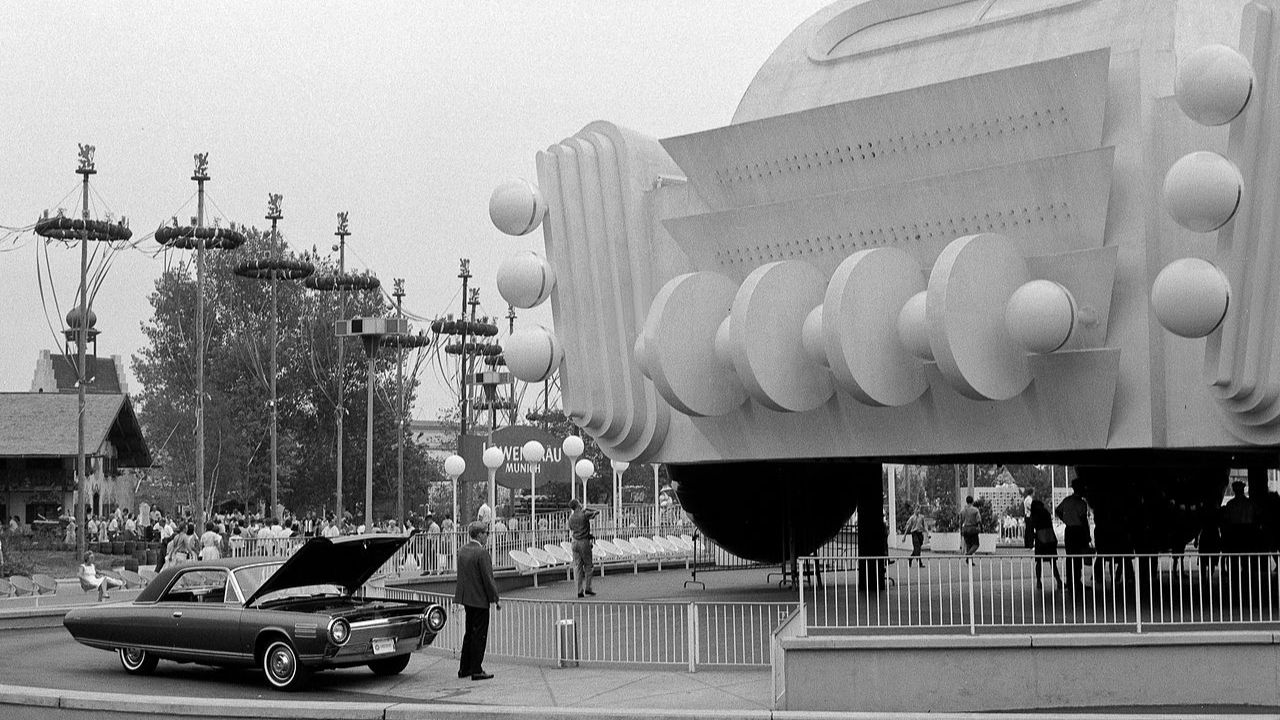
Chrysler’s turbine program culminated in the 1963 to 1964 Turbine Car fleet: 55 vehicles were built in total, including five prototypes and a run of 50 Ghia-bodied cars for a public user program. The program allowed selected individuals to experience turbine-powered motoring in their daily lives, providing valuable real-world feedback on this alternative propulsion system.
While the turbine engines offered smooth operation and could run on various fuels, their fuel consumption characteristics, particularly in stop-and-go driving conditions, ultimately proved impractical for widespread adoption, leading to the program’s conclusion, after which most were destroyed, with only nine widely reported to survive today.
Reflecting on Automotive Innovation

These 10 vehicles represent the diverse experimentation and bold thinking that characterized 1960s automotive development. From successful racing machines to ambitious technological explorations, each car contributed to the rich tapestry of automotive history in its own way.
Their stories remind us that innovation often involves risks and that not every promising concept reaches commercial success, yet these efforts collectively advance automotive knowledge and design possibilities.