“Atherosclerosis is important because the main diseases many middle-aged and older people fear, such as heart attack and stroke, are based on atherosclerotic changes,” said Juta Kraav, a clinical evaluator at the State Agency of Medicines and a recent doctoral graduate of University of Tartu. At the same time, autopsy studies from the 1990s have already shown that processes indicating the disease begin much earlier. Those studies revealed that even very young children can have fatty deposits and fibrous plaques in their blood vessel walls that point to atherosclerosis.
“This has raised interest in how extensive these vascular changes are at a younger age and what factors might influence these processes,” Kraav noted. She also sought answers to these questions in her recently defended doctoral thesis. To do so, Kraav analyzed data from long-term follow-up studies of children in Estonia and Finland. Although the two studies differed in design, she and her colleagues examined changes in the health indicators of participating children over an eight-year period.
More specifically, Kraav was interested in how vascular health is related to other indicators: physical activity, physical fitness, body composition and skeletal development. “We were most interested in how all of these factors work together. When considered jointly, do they also have independent effects?” she said.
Healthy living starts in elementary school
Based on previous knowledge, it could be assumed that physical activity affects blood vessels through body composition: if a child moves little, they tend to have more body fat and, as a result, a higher risk of fatty deposits in their vessels. “However, we ultimately found that body fat mass and body mass index were associated with changes in vessel walls independently of physical activity,” said Juta Kraav.
In Finnish children, she also assessed seven health indicators recommended by the American Heart Association for monitoring heart health: physical activity, diet, body composition or body mass index, blood cholesterol and glucose levels, blood pressure and smoking.
“We looked at a score made up of these seven components. It turned out that the score of children as young as 8 was already associated with their future vascular condition,” Kraav noted. Although childhood scores did not fully predict adolescent health, they showed that all risk factors leave a mark from a very early age.
“The development of atherosclerosis begins when the innermost layer of the blood vessel no longer functions as well. When that happens, function also declines in other parts of the vessel and eventually the entire vessel’s function is impaired,” Kraav explained. A healthy vessel allows only certain substances to pass through, but when it stops functioning properly, fat can accumulate in the vessel wall. This buildup triggers inflammation, which in turn damages the vessel layer in a vicious cycle. Ultimately, this can lead to thrombosis, which is when the disease manifests.
In her doctoral thesis, Kraav examined both arterial elasticity and the thickness of arterial walls in the children studied. In adults, increased arterial wall thickness is a sign of developing atherosclerosis. “In children, however, we found that vessel walls could thicken due to non-harmful factors as well,” the new doctoral graduate said.
In children, vessel walls also became thicker with higher levels of physical activity. Kraav emphasized that exercise is not harmful to blood vessels. Rather, greater physical activity appeared to make arteries adapt: as pressure on the vessels increased, their walls had to become stronger to withstand it. “As a result of physical activity, the vessels were more elastic. More elastic vessels are associated with better function and less strain on the heart,” Kraav explained.
She said this last finding is particularly important for researchers and physicians. While adult patients are grouped into risk categories based on vascular characteristics, these indicators are not currently used in diagnosing children and young people. That is because it is still unclear which indicators and changes in children point to disease. “If an adult has cardiovascular disease and increased arterial stiffness, they are in a particularly high-risk group and would require more intensive intervention. With children, however, great caution is needed to avoid overinterpreting the results,” Kraav said.
As the least studied topic, her work also assessed the relationship between bone mineral composition and arterial health. While this link has been studied and demonstrated in adults, it had not previously been shown in children. Now, such associations have also emerged in children. “Previously, we thought that since body weight affects both bones and arteries, there would be no association once that was taken into account. In fact, the associations were completely independent of other variables, such as physical activity or smoking,” Kraav said.

All is not lost
In light of her doctoral findings, Juta Kraav offers a reassuring message even to young people who may not have made the best lifestyle choices during their high school years. Although she did not study this directly, previous scientific literature shows that the effects of earlier missteps can be reversed. “By improving physical activity and dietary habits, it is possible to reach a level as if you had always behaved healthily,” she said.
According to Kraav, the key is to aim for at least 60 minutes of physical activity per day and to review one’s eating habits. This helps maintain both regular exercise and a healthy body weight. Based on Finnish data, she observed a sharp decline over eight years in the number of children meeting recommended activity levels. “At the first measurement point, around age 8, about 80 percent of children were sufficiently active, but by age 16 this had dropped to 30 percent,” she noted. Declines in physical activity were accompanied by worsening blood pressure indicators among young people.
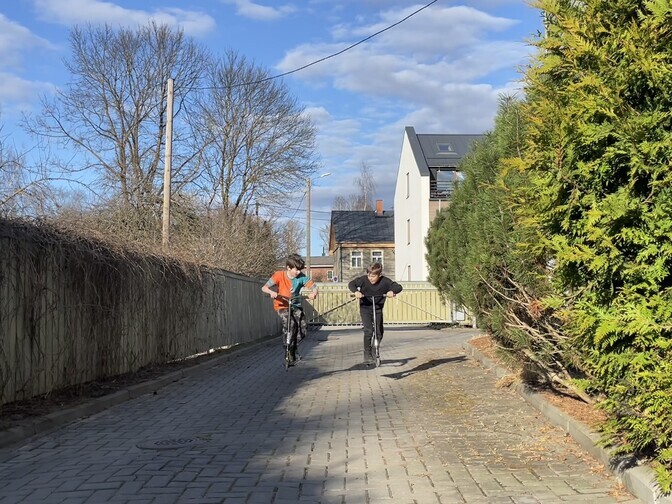
Kraav also emphasized that children are naturally meant to be active. Even simple play counts as physical activity. “It would certainly be more convenient for parents if children were active only during organized sports. In reality, however, that active play they do at home is also beneficial and healthy, even if it creates mess and can sometimes be a bit annoying,” she said with a smile.
Kraav defended her doctoral thesis, “Determinants of arterial structure and function in healthy children and adolescents,” on March 26 at the University of Tartu. The supervisors were Professor Vallo Tillmann and Professor Jaak Jürimäe of the University of Tartu and the opponent was Professor Craig Williams of the University of Exeter.
—