China has released updated climate goals for the period leading to 2030, framed as part of its 15th Five‑Year Plan (2026–2030). These goals focus mainly on improving carbon efficiency, that is, lowering emissions relative to economic output, rather than capping total emissions.
Under the new plan, China aims to reduce carbon dioxide (CO₂) emissions per unit of gross domestic product (GDP) by 17% between 2026 and 2030. The immediate 2026 target is to cut carbon intensity by about 3.8% from the prior year.
The world’s largest emitter has not announced a new absolute cap on total CO₂ emissions for 2030. This means emissions could still rise in total even as the economy becomes more efficient. That cautious tone has drawn attention from analysts.
Norah Zhang, China country lead for Climate Action Tracker, remarked:
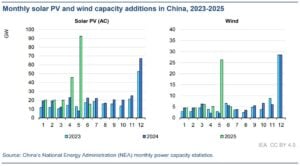
“In 2025, renewable electricity generation in China grew faster than overall electricity demand, which helped reduce coal-fired power generation and lowered CO₂ emissions in the power sector. However, the new five-year plan does not update the 2030 target for newly-installed solar and wind capacity, which China already achieved in 2024. By not updating these targets, the new plan misses an opportunity to create additional momentum through more ambitious goal setting for 2030 and beyond.”
What the New Targets Mean in Practice
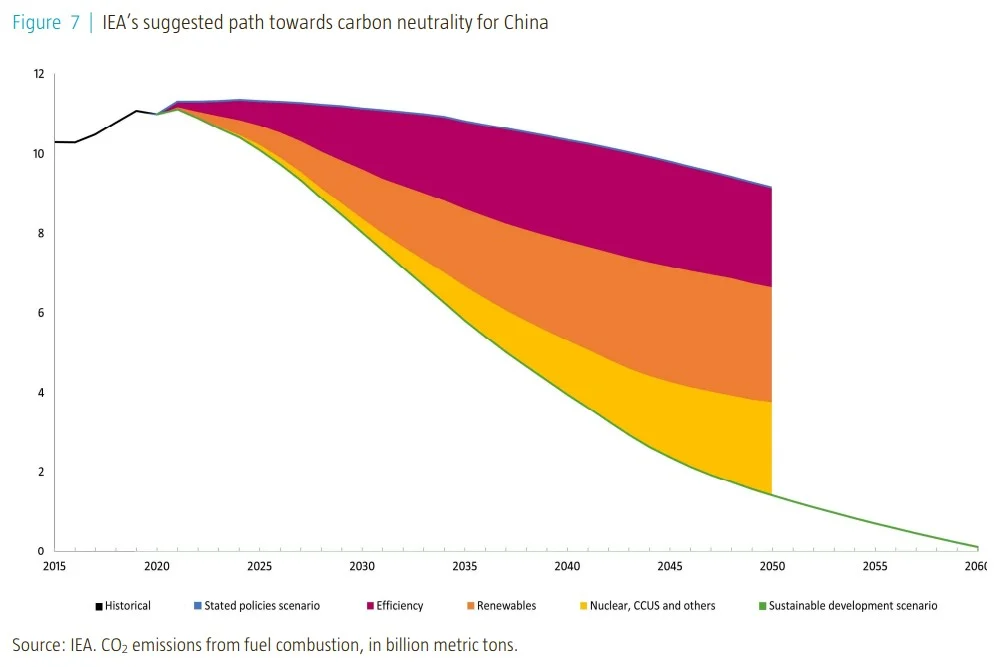
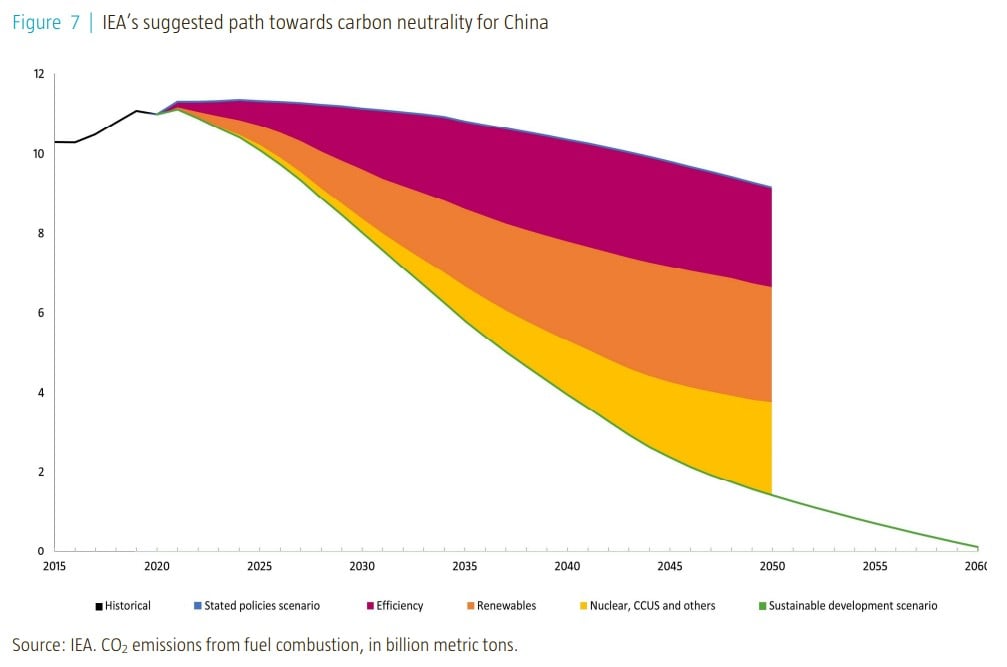
China has long said it will peak carbon emissions before 2030 and achieve carbon neutrality by 2060 — often called its “dual‑carbon” goals under the Paris Agreement. However, the new 2030 plan places greater emphasis on intensity improvements rather than absolute reductions.
China’s updated climate strategy reflects a balance between economic growth and emissions control. The plan includes a GDP growth target of 4.5–5% for 2026, suggesting the government expects continued industrial expansion. But this raises the possibility that total CO₂ emissions could climb even as carbon intensity improves.
The new plan also prioritizes energy transition actions, such as:
However, the absence of an absolute emissions cap means China’s total carbon output may still grow if economic expansion is strong.
China’s Global Emissions Weight: Why It Matters
China is the world’s largest emitter of greenhouse gases, accounting for roughly 30% of global CO₂ emissions. Most studies suggest that the country’s emissions will peak between 2027 and 2030 with a peak between 11.6 and 13.2 gigatonnes of CO₂ equivalent (GtCO₂e) under current policy trajectories.
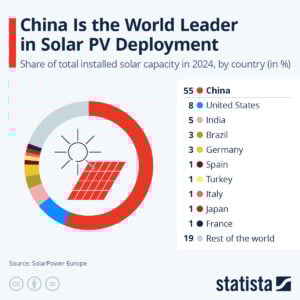
China’s transition has been supported by rapid renewable energy growth. China accounts for more than half of global solar panel production and is a global leader in wind and solar deployment.
Growth in clean energy helped fossil fuel use fall by an estimated 2% in 2025, and renewable sources met about 84% of electricity demand growth, according to independent analysis. This trend is expected to make global fossil fuel demand begin to decline by 2030 if current energy shifts hold.
EV Market Spotlight: Cleaner Power, Bigger Demand
China is also the world’s largest electric vehicle (EV) market. The country plays a major role in EV adoption, and its policies can shape global trends, including demand for vehicles from companies like Tesla.
The Asian nation’s 2030 goals indirectly influence EV demand. Strong efficiency and clean energy targets can make EVs more attractive versus traditional combustion cars by lowering emissions from electricity generation. EVs reduce local pollution and align with both national and global climate ambitions.
Tesla has been expanding in China, including with the Gigafactory Shanghai that supplies vehicles domestically and for export. China’s EV market is projected to grow further, supported by urban electrification policies and consumer incentives.

However, policies that rely mainly on carbon intensity reductions — as opposed to absolute emissions limits — may slow the pace of structural changes needed to fully decarbonize transport and power sectors. Still, China’s rising clean electricity share helps strengthen the climate case for EV adoption by lowering the lifecycle emissions of electric vehicles.
Broader Market Trends, Forecasts, and Investment Signals
China’s cautious climate plan comes amid shifting global policy dynamics. While many countries are enhancing climate targets, some have pulled back from earlier commitments. For example, changes to U.S. federal climate policy have created uncertainty in long‑term emissions strategies.
As of late 2025, around 145 countries had announced or were considering net‑zero targets, covering about 77% of global greenhouse gas emissions. China remains a key driver in this global push.
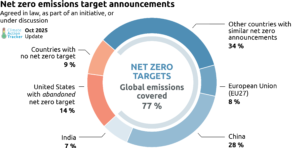
In carbon markets, China has also taken steps to expand its emissions trading system (ETS). Recent policy outlines suggest broader coverage of sectors and possibly higher stringency in future phases. This could help drive cleaner investments and offer market signals to investors and companies.
Renewable energy and clean tech markets may benefit from China’s cautious but steady approach. The country’s demand for solar panels, batteries, and wind equipment can sustain supply chains and keep manufacturing costs down globally — benefiting EV makers and green tech firms alike.
Ambition vs. Reality: Tracking China’s Climate Trajectory
Despite progress in clean energy, challenges remain. China has not set a firm limit on total emissions through 2030, and coal consumption continues to play a major role in power generation. The reliance on carbon intensity targets means that total emissions may grow if GDP expands faster than emissions decline per unit of output.
To stay aligned with Paris Agreement goals, many analysts believe stronger absolute cuts are needed. Independent research suggests that China could reduce emissions by up to 30% by 2035 relative to current levels with more ambitious policy action.
However, the current 2030 plan keeps a cautious balance between economic growth and climate policy. The country aims to improve carbon efficiency and expand clean energy, but stops short of committing to cuts in total emissions. These targets are part of its long‑term plan to peak emissions before 2030 and achieve carbon neutrality by 2060.
For markets and companies like Tesla, China’s climate strategy will continue to matter. As the largest EV market and a leader in clean energy production, China’s demand trends and policy frameworks shape global investment and manufacturing patterns.
The cautious tone of China’s new climate goals shows a complex trade‑off between growth and climate action. Whether China will accelerate its ambition before 2030 remains a key question for global decarbonization and the broader energy transition.