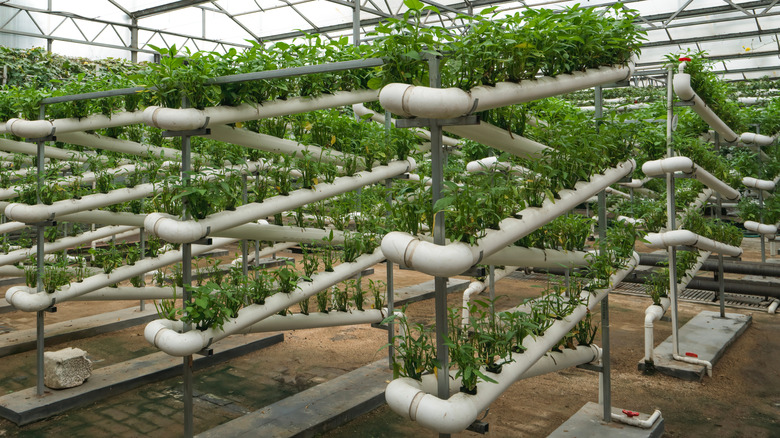
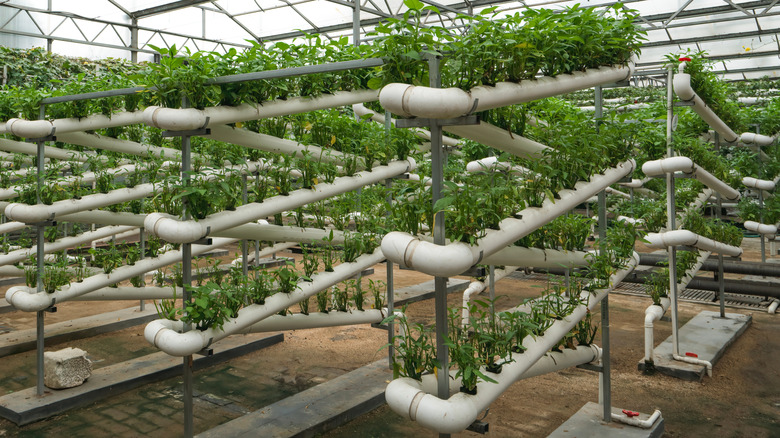
According to NASA, greenhouses cover more than 5,000 square miles worldwide as of 2024. That’s about a 43-fold increase over the 116 square miles of greenhouses that existed in 1987. Much of that boom occurred in China, which is now home to most of the world’s greenhouses. But for China, sheer numbers aren’t the sole point of interest. The country’s greenhouse technologies, not to mention its burgeoning farming robots, are actively revolutionizing the farming industry.
In a 2025 article published in the Greenhouse Plant Production Journal, Mani Jabbari et al. explain that “cultivating fruit crops in greenhouses represents an important shift in contemporary horticulture.” One way that China is driving this innovation is by leading the global indoor production of both peaches and nectarines using solar greenhouses. China is also leading this shift by positioning itself as one of the world’s leading investors in vertical farms, which require advanced and costly temperature regulation systems.
Advanced protected cropping systems like high-tech glass greenhouses can overcome agricultural and climate-related limitations to achieve higher food production using fewer resources, which directly addresses socioeconomic concerns like poverty. According to Bin Guo et al. in a 2024 journal article published in Applied Sciences, “The protected cultivation of fruit trees has become one of the pillar industries for poverty alleviation and rural revitalization in many areas in China.” Other nations are making similar moves; for instance, the U.S. more than doubled its own protected cultivation between 2009 and 2019.
China is building more solar-powered greenhouses
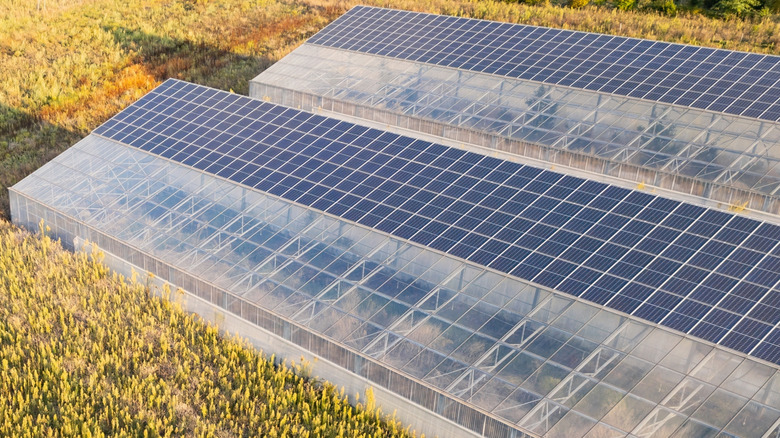
Research in China is also pushing advancements in solar collection tech in tandem with greenhouse development. This comes as no surprise for a nation that’s so heavily invested in solar power. In fact, one Chinese solar farm is creating fertile soil in the desert; it’s easy to imagine how that same technology helps indoor crops flourish using clean energy.
One way that China is revolutionizing its solar thermal industry is through the development of systems that leverage surplus solar energy for greenhouses. In many cases, solar panels can and do send excess energy straight back to the local power grid, but the ability to repurpose surplus energy on-site is especially beneficial for farming needs. Energy-saving solar greenhouses are being developed to great effect in northern China to enable winter harvesting, although energy costs, ventilation control, and proper lighting are among the main challenges impacting their operation.
If China can tackle those problems at scale, though, and succeed at efficiently storing surplus solar energy for seasonal use, they may devise a roadmap for other nations to overcome the difficulties associated with operating solar greenhouses during the winter.
The rest of the world is still playing catch-up on greenhouse tech
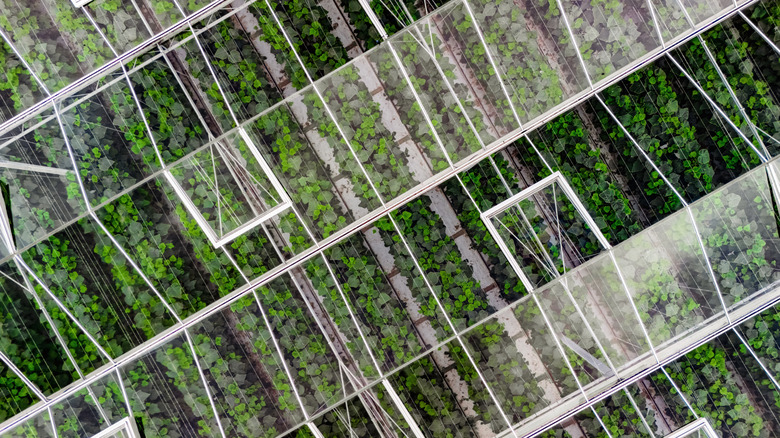
In the farming industry, sustainability is a constant concern. Greenhouse operators need to manage labor costs, energy costs, regulatory compliance, and economic demands simultaneously, all the while accounting for future hurdles that may arise in each of those departments. By leveraging automation in farming processes, however, Chinese greenhouse tech is rapidly bringing the nation toward its sustainability goals. China uses smart agriculture and AI-powered optimization to improve factors like fertilizer efficiency, pesticide use, and energy management in its greenhouses.
In a statement to Greenhouse Grower, Atlas Greenhouse CEO Mark Davis said, “The biggest challenge [for greenhouse manufacturers] as it relates to new larger construction projects is foreign competition.” It’s difficult for the U.S. to catch up to China’s greenhouse tech when the latter is dominating the race by hosting roughly 60% of the world’s greenhouses. Not only that, but the U.S. has always outputted far more CO2 emissions per capita than China has, making it even more crucial for them to make greater strides in the realm of environmental sustainability.
Energy efficiency is a pursuit that extends far beyond agriculture, of course. It’s a problem without a single clear answer — wind turbines take a decade to pay off, and the same is often true of solar panels, which can take up to 14 years to pay off in the U.S.. Regardless, the Chinese government is currently aiming for carbon neutrality by the year 2060, while the U.S. has a more ambitious goal of net-zero emissions by 2050. Even though China is currently the world’s leading source of overall CO2 emissions, the nation is making promising progress with its rapid developments in greenhouse technology.