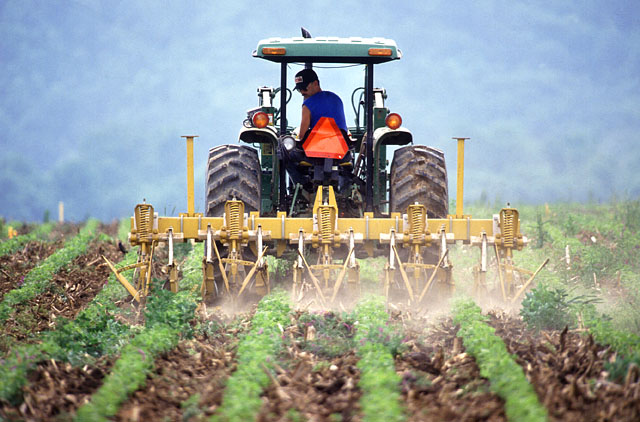
Mississippi Today’s Cassandra Stephenson reported that, “crops are in the ground, the weather is cooperating, soybean prices are up slightly from 2025, and China — the biggest buyer of U.S. soybean exports — is once again placing orders after a trade agreement ended the country’s purchasing freeze last fall.”
“But while morale is higher among soybean farmers as the 2026 growing season gets underway, the cost to plant crops remains high, and U.S. Department of Agriculture data shows there is still a long way to go before China’s purchases reach pre-trade war levels,” Stephenson reported.
“‘There have been some positive movements in trade relations with China, specifically with soybeans, that have caused markets to improve over last year,’ said Stefan Maupin, executive director of the Tennessee Soybean Promotion Council,” Stephenson reported. “‘However, we are definitely not where we were in years past. For most farmers out there, the big question in front of them is, will it get back?’”
‘However, we are definitely not where we were in years past. For most farmers out there, the big question in front of them is, will it get back?’
“Soybeans are a major agricultural product nationwide, covering about 10% of all U.S. farmland,” Stephenson reported. “Roughly 40% of U.S. soybeans are exported, and in recent years, around half of exported beans went to China.”
“China stopped purchasing U.S. soybeans in 2025 during tariff negotiations with the Trump administration, leaning instead on soybeans from South American trade partners,” Stephenson reported.
New Agreement Could Support Exporters and Farmers
Bloomberg’s Hallie Gu and Alfred Cang reported that, “the White House said China has agreed to buy at least $17 billion of agricultural products, in addition to at least 25 million tons of soybeans each year through 2028, after the summit between President Donald Trump and his counterpart Xi Jinping. Beijing hasn’t confirmed any of the numbers stated by the US.”
“The pick up in trade comes after the summit held between presidents Donald Trump and Xi Jinping in May, and will help bolster expectations that Beijing will increase imports of US farm goods as both sides work on their commitments made under their broader trade trace,” Bloomberg reported. “Additional buying from China would provide support for US exporters and farmers ahead of the new marketing season, which runs from September. Soybean futures in Chicago have strengthened in recent days on expectations of stronger Chinese demand, while traders continue to watch for any additional policy signals from Washington and Beijing before an expected meeting between Trump and Xi later this year.”
“Soybean futures in Chicago climbed to $11.98 a bushel, the highest intraday level in over a month, before turning narrowly lower. Soybeans on Monday surged 3.9%, the biggest gain since June 2023,” Bloomberg reported. “Earlier this year, China fulfilled a previous pledge to purchase 12 million tons of American soybeans, after holding off buying for much of the season as the Asian nation sought a bargaining chip during negotiations over tariffs.”
Purchases May Differ Between Private and State-Owned Companies
AgWeb’s Michelle Rook reported that, “still, November soybeans failed to close above the key $12 level and Naomi Blohm of Total Farm Marketing thinks the market may be running out of runway as Monday was mostly technical buying,” Rook reported.
“‘The recent rally has also made U.S. soybeans less competitive, with prices now about 50 to 60 cents above South American offers. So, China may wait for prices to pull back before returning as an active buyer,’ she explains,” Rook reported.
RFD-TV’s Tony St. James reported that, “retired USDA economist Dr. Fred Gale says Chinese customs data show all 8.3 million metric tons of U.S. soybeans that arrived through May were imported by companies headquartered in Beijing. That points to state-owned firms carrying out China’s October 2025 purchase commitment.”
“By contrast, 26.4 million metric tons of Brazilian and Argentine soybeans were imported by companies spread across China’s coastal crushing regions,” James reported. “The largest volumes were tied to Shandong, Jiangsu, and Shanghai.”
“Gale says the split reflects China’s market structure,” James reported. “Beijing-based state companies can respond to government purchase commitments, while provincial crushers and private firms buy based on price, duty exposure, and processing needs.”