Published on
February 27, 2026

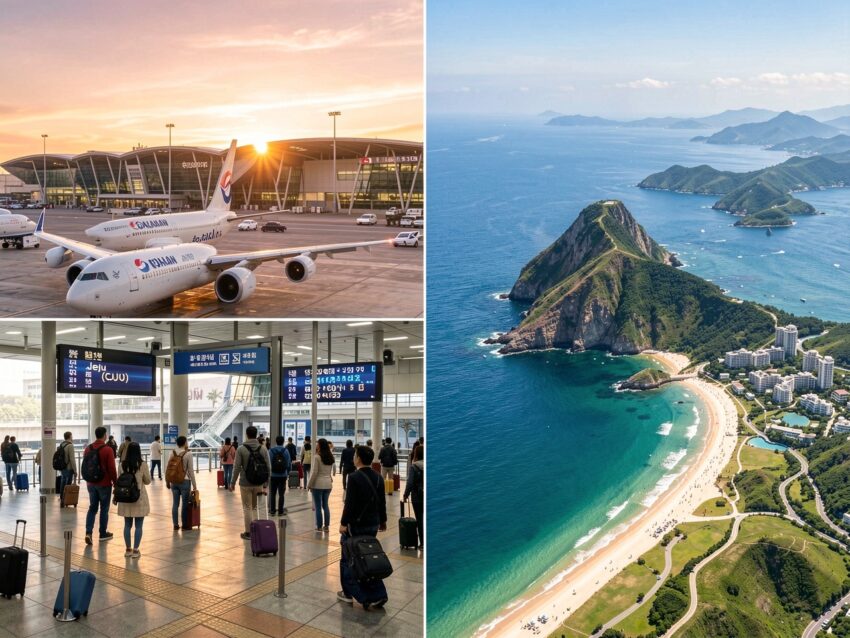
Image generated with Ai
China, Japan and Taiwan are once again at the center of Jeju’s global tourism resurgence as South Korea moves to restore the long-suspended Incheon–Jeju direct air link after nearly a decade, a decision aligned with the government’s broader strategy to decentralize inbound travel beyond Seoul and accelerate regional tourism growth. The route, halted in October 2016 due to weak load factors, is set to resume in the second quarter of 2026 following high-level policy deliberations aimed at improving connectivity for foreign visitors arriving at Incheon International Airport. The timing is significant: South Korea welcomed nearly 18.9 million international visitors in 2025, while Jeju Island recorded over 2.24 million foreign arrivals, with Chinese travelers accounting for more than 70 percent of that figure, followed by strong demand from Taiwan, Japan, the United States and Southeast Asia. By eliminating the need for time-consuming airport transfers between Incheon and Gimpo, the revived route is expected to cut travel friction, strengthen airline transit capture, boost hotel occupancy across brands such as Lotte, Shilla and Marriott, and reinforce Jeju’s position as a premier nature, leisure and education destination. For travelers, the change promises faster access to volcanic landscapes, coastal resorts and UNESCO-listed sites; for airlines and hospitality operators, it marks a calculated step in Korea’s push toward a more competitive and regionally balanced tourism economy.
China Joins Japan, Taiwan, United States, Thailand, Hong Kong, Singapore and Philippines in Driving Jeju’s Travel Revival as Korean Air, Jeju Air and Asiana Relaunch Incheon–Jeju Route
South Korea is reopening one of its most strategic domestic air links. The government has approved the resumption of direct flights between Incheon International Airport and Jeju International Airport after a 10-year suspension. The route, halted in October 2016 due to weak demand and financial losses, is scheduled to restart in the second quarter of 2026. This move is part of a broader national tourism strategy aimed at decentralizing inbound travel and strengthening regional economies. For international visitors landing at Incheon, the revival means one thing: faster, simpler access to Jeju Island.
In 2025, South Korea welcomed nearly 18.9 million foreign visitors, marking a strong recovery trajectory. Jeju alone recorded more than 13.8 million total visitors, including over 2.24 million foreign tourists. China accounted for more than 70 percent of Jeju’s foreign arrivals, followed by Taiwan, Japan, the United States, Hong Kong, Singapore and Thailand. With those markets already active, the restored Incheon–Jeju connection is expected to accelerate growth even further.
China, Japan, Taiwan and United States Lead Korea’s Inbound Momentum as Incheon–Jeju Flights Return After 10 Years
China remains Jeju’s dominant source market. In 2025, more than 1.58 million Chinese tourists visited the island. Taiwan contributed over 230,000 visitors, while Japan and the United States continued steady post-pandemic growth. Thailand recorded one of the fastest growth rates year-on-year, reflecting expanding Southeast Asian interest in Korean leisure travel.
Advertisement
Advertisement
The challenge for many of these travelers has been connectivity. International passengers arriving at Incheon typically needed to transfer to Gimpo Airport for a domestic flight to Jeju. The journey between the two airports takes approximately 45 to 60 minutes by road or rail, followed by check-in and security. Total transit time could stretch to three or four hours. For short-stay tourists, this created friction.
The resumed ICN–CJU route eliminates that transfer. Travelers can now clear immigration at Incheon and board a direct domestic flight to Jeju within the same airport system. Flight time between Incheon and Jeju averages just over one hour. The time saved can be used for sightseeing, dining or rest.
Thailand, Hong Kong, Singapore and Philippines Travelers Eye Jeju Comeback as Korean Air, Jeju Air and Asiana Prepare for Route Revival
Southeast Asian and Hong Kong travelers are increasingly choosing Korea for nature-driven itineraries. Jeju’s UNESCO-listed volcanic landscapes, coastal cliffs and walking trails appeal to markets seeking fresh-air destinations. Singapore and Hong Kong travelers often opt for premium short breaks, while Thailand and the Philippines supply both leisure groups and honeymoon traffic.
Korean Air and Asiana Airlines have historically operated domestic trunk routes, while low-cost carriers such as Jeju Air, Jin Air and T’way Air dominate short-haul regional connectivity. The revived Incheon–Jeju route is expected to involve a low-cost carrier under government-supported coordination. This keeps fares competitive and increases seat capacity.
Domestic airfare between Seoul and Jeju typically ranges between KRW 30,000 and KRW 100,000 depending on season and booking window. With direct Incheon departures, airlines can better capture transit passengers arriving from China, Japan, Southeast Asia and North America. This strengthens load factors and ancillary revenue streams such as baggage fees and seat upgrades.
South Korea’s 30 Million Visitor Target Strengthens Regional Tourism Strategy
The route revival is not isolated. It aligns with the national objective of reaching 30 million foreign visitors annually by 2030. Authorities are focusing on distributing tourism flows beyond Seoul. Jeju is central to this strategy. The island offers distinct branding: volcanic scenery, black sand beaches, tangerine farms, premium resorts and international schools.
In 2025, foreign tourist spending in South Korea surpassed KRW 17 trillion. Regional dispersal helps increase average length of stay. Visitors who add Jeju to their itinerary often extend trips by two to four nights. That translates into higher hotel occupancy, restaurant spending and transportation revenue.
Jeju’s foreign visitor segment rose 17.7 percent year-on-year in 2025. With simplified air connectivity, that growth trajectory could accelerate in 2026 and 2027.
Korean Air, Jeju Air and Asiana Reposition Domestic Capacity as Incheon–Jeju Demand Builds
Airlines are recalibrating domestic networks. The Gimpo–Jeju route remains one of the busiest air corridors in the world by frequency. However, Incheon serves as Korea’s main international gateway. Direct domestic connections from Incheon reduce transfer friction for inbound passengers.
Low-cost carriers benefit most from this structure. Transit passengers are less price-sensitive when they value time savings. Airlines can schedule flights to align with major long-haul arrival banks from China, Japan, Southeast Asia and North America.
Aircraft types likely include Boeing 737 and Airbus A320 families, configured for high-density short-haul operations. Typical block time between Incheon and Jeju is approximately 70 minutes. Turnaround times remain tight, allowing multiple daily rotations.
Lotte Hotels, Shilla and Marriott Anticipate Occupancy Gains Across Jeju
Hospitality brands are preparing for uplift. Lotte Hotel Jeju and Shilla Jeju operate large-scale resort properties with strong Chinese and Japanese clientele. Marriott International manages several branded hotels on the island under premium and lifestyle segments.
Increased direct connectivity tends to improve booking conversion rates. Travelers are more likely to confirm Jeju stays when transfer complexity is removed. Hotel operators can market seamless “Fly Incheon, Land Jeju” packages.
International schools in Jeju also stand to benefit. The island hosts several globally accredited institutions that attract expatriate families from China, Southeast Asia and beyond. Improved air access supports parent visits and recruitment.
Travel Tips for China, Japan, Taiwan and United States Visitors Planning Jeju in 2026
Book flights early during peak cherry blossom and autumn foliage seasons. Demand for Jeju rises sharply in April, May and October. Consider midweek departures for lower fares.
Pack light if flying on low-cost carriers. Checked baggage fees apply. Many LCCs include 10 to 15 kilograms in basic fare, but additional weight incurs charges.
Plan airport transit time at Incheon carefully. Immigration clearance may take between 20 and 60 minutes depending on arrival wave. Domestic transfer signage guides passengers directly to internal check-in counters.
Download Korean navigation apps for Jeju car rentals. Public transport exists, but rental cars offer flexibility for exploring Seongsan Ilchulbong, Hallasan National Park and coastal drives.
Thailand, Hong Kong, Singapore and Philippines Markets Drive Premium and Group Segments
Thailand has emerged as one of Jeju’s fastest-growing visitor sources. Growth has been supported by restored Bangkok–Jeju air links and broader Korean tourism promotion in Southeast Asia.
Hong Kong and Singapore travelers often book upscale resorts and curated culinary experiences. Jeju’s seafood markets and farm-to-table dining resonate strongly with these markets. Premium hotel suites and wellness spas record higher demand from these segments.
Philippines and Malaysia contribute group tours and student travel. With the Incheon–Jeju route, agencies can design multi-city packages combining Seoul shopping with Jeju nature escapes.
China’s Dominance in Jeju Tourism Reinforced by Simplified Air Access
More than 1.5 million Chinese tourists visited Jeju in 2025. That represented over 70 percent of the island’s foreign arrivals. Visa policies and group travel facilitation have helped sustain this flow.
Direct connectivity from Incheon simplifies itinerary planning for Chinese visitors arriving on long-haul or regional flights. Instead of overnighting in Seoul for transfer, they can proceed directly to Jeju.
Retailers and duty-free operators anticipate spillover effects. Chinese travelers are high spenders in cosmetics, fashion and health supplements. Jeju’s downtown shopping districts benefit from strong Chinese purchasing power.
United States and Long-Haul Travelers Gain Time Efficiency
American arrivals to South Korea continue to grow steadily. Long-haul travelers value itinerary efficiency. The elimination of airport transfers reduces fatigue.
U.S. visitors often combine Seoul cultural sites with Jeju hiking and coastal exploration. The direct Incheon–Jeju route makes a four- or five-night Jeju extension realistic within a 10-day Korea itinerary.
Hotel brands with loyalty programs, including Marriott and Hyatt, can target U.S. members with integrated booking offers.
Hospitality Employment and Local Economy See Positive Ripple Effects
Jeju’s tourism sector supports tens of thousands of jobs across accommodation, transport, food service and retail. Increased inbound arrivals stimulate hiring.
Occupancy improvements benefit not only five-star resorts but also boutique guesthouses and pension-style accommodations. Rural tourism in Seogwipo and western Jeju may see spillover demand.
Cruise tourism may also integrate with air arrivals. Visitors can fly to Jeju and depart on regional cruises, strengthening multimodal tourism networks.
Environmental Balance and Responsible Travel in Jeju’s Growth Phase
Authorities have introduced visitor conduct guidelines to protect Jeju’s environment. Sustainable tourism is critical as visitor numbers rise.
Travelers should respect hiking trail regulations, avoid littering coastal zones and follow local community rules. Responsible tourism ensures long-term viability of Jeju’s natural assets.
Outlook for 2026 and Beyond
The Incheon–Jeju direct route is more than a domestic flight revival. It is a structural adjustment in South Korea’s tourism framework. By aligning aviation networks with inbound growth patterns, the country strengthens its competitiveness.
Airlines gain higher transit passenger capture. Hotels gain improved booking conversion. Travelers gain time savings and smoother itineraries.
China, Japan, Taiwan, United States, Thailand, Hong Kong, Singapore and the Philippines will likely drive initial demand waves. As more markets discover simplified access, secondary countries such as Malaysia, Vietnam and Indonesia may follow.
China, Japan and Taiwan are driving Jeju’s tourism comeback as South Korea prepares to relaunch direct Incheon–Jeju flights after a 10-year suspension.
With foreign arrivals nearing 19 million in 2025 and Jeju’s international visitor numbers surging past 2.2 million, the restored route promises faster access, stronger airline connectivity and a major boost for the island’s hospitality sector.
Jeju stands at the center of Korea’s regional tourism transformation. After a decade-long pause, the skies between Incheon and Jeju are reopening. The runway is set. The island is ready.