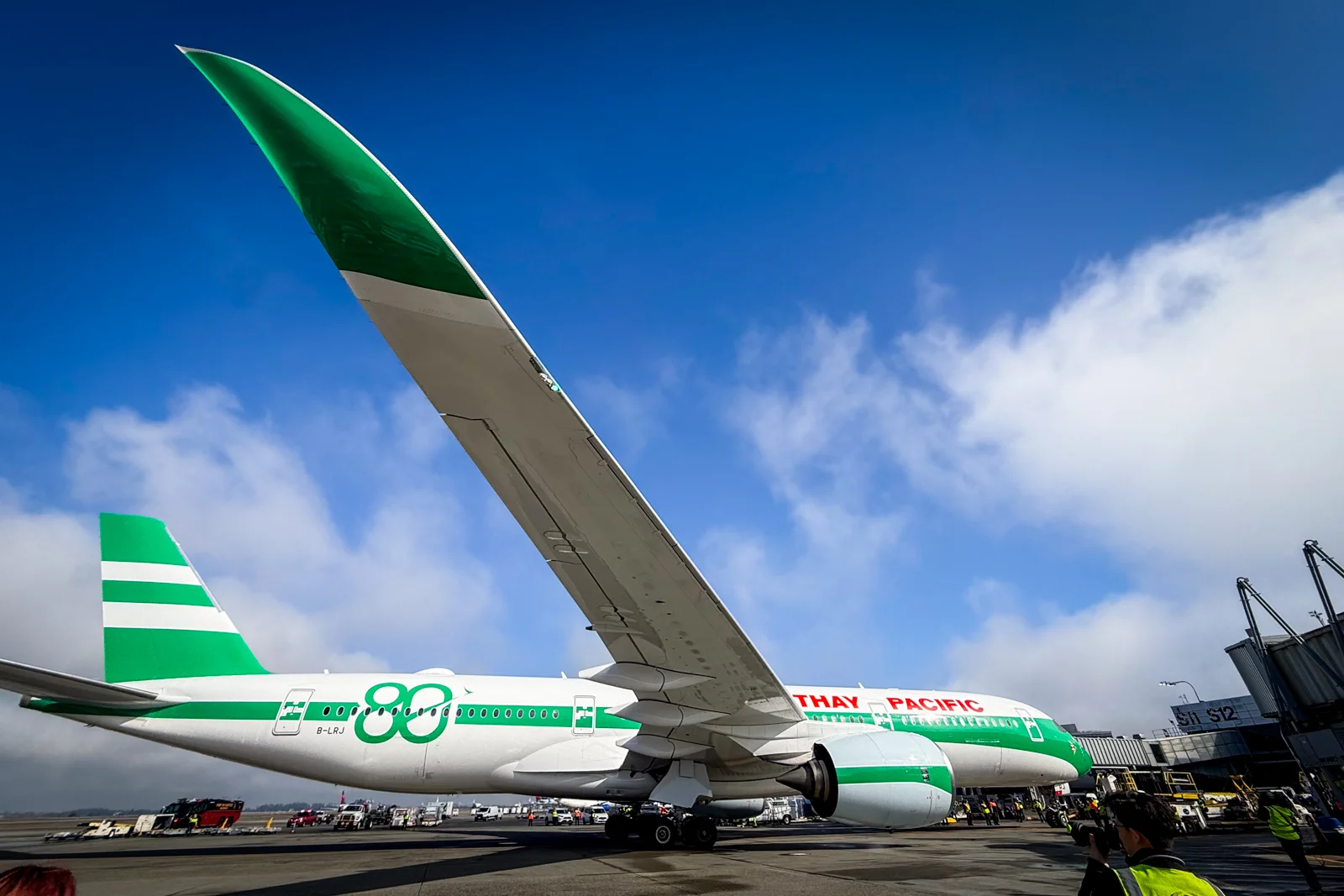
West Coast flyers can take advantage of a new nonstop route to Asia.
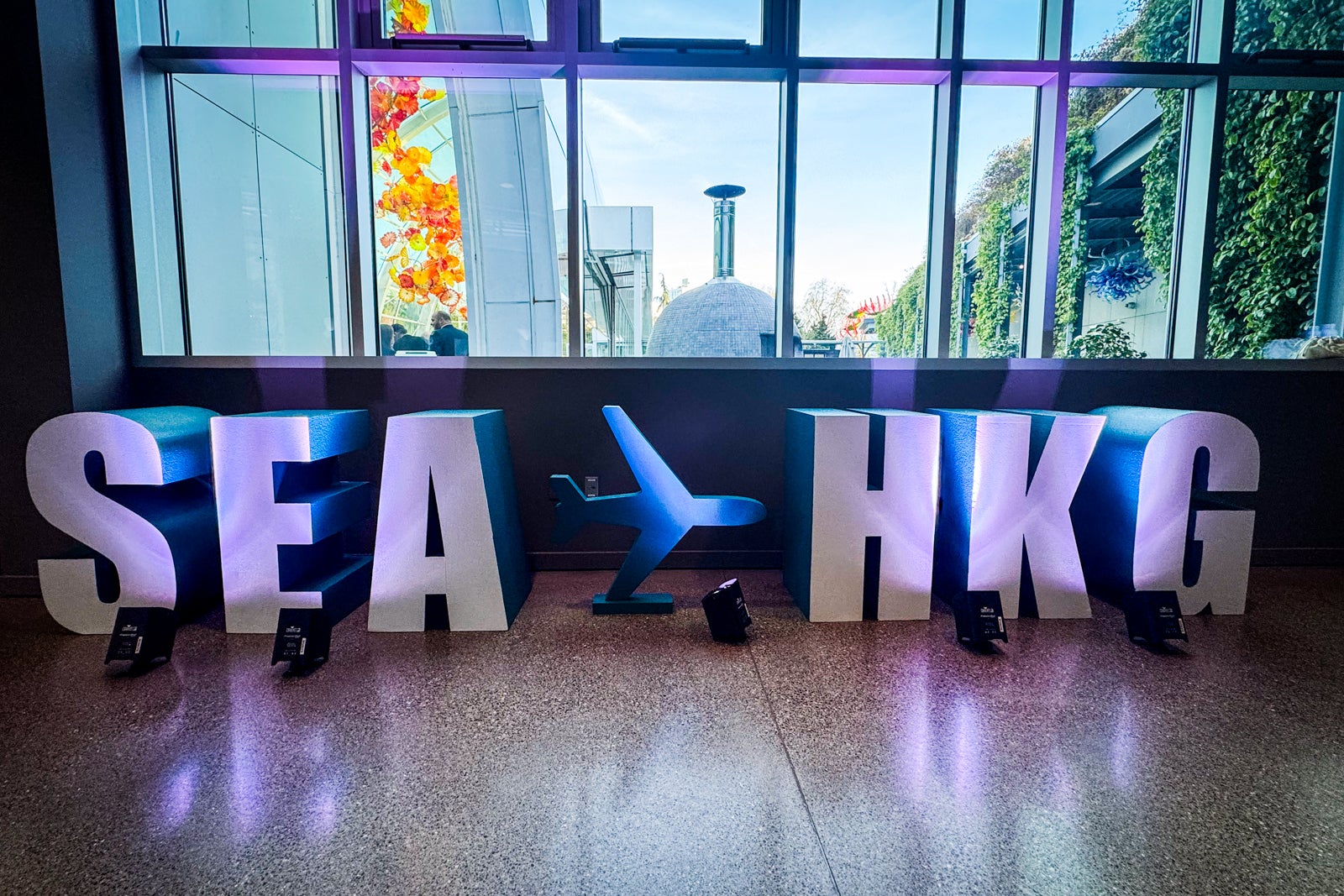
Well, not new exactly. As of March 30, Cathay Pacific has relaunched flights between its home hub of Hong Kong International Airport (HKG) and Seattle-Tacoma International Airport (SEA).
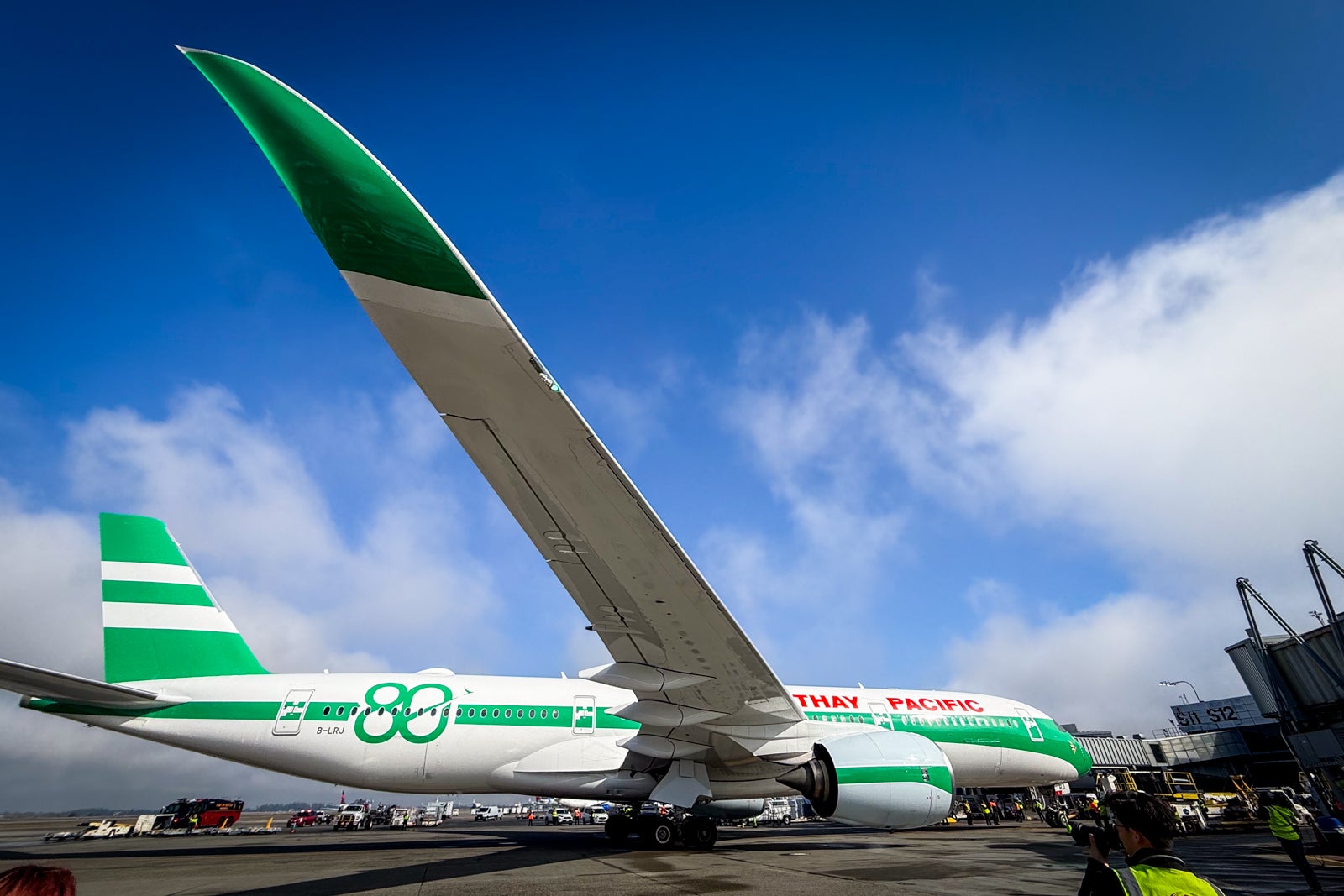
The airline previously operated this route from April 2019 until November 2020, when it dropped SEA along with Newark Liberty International Airport (EWR) and Dulles International Airport (IAD) near Washington, D.C., from its route map due to coronavirus pandemic-related challenges.
As of Monday, March 30, however, this Pacific Northwest route is back.
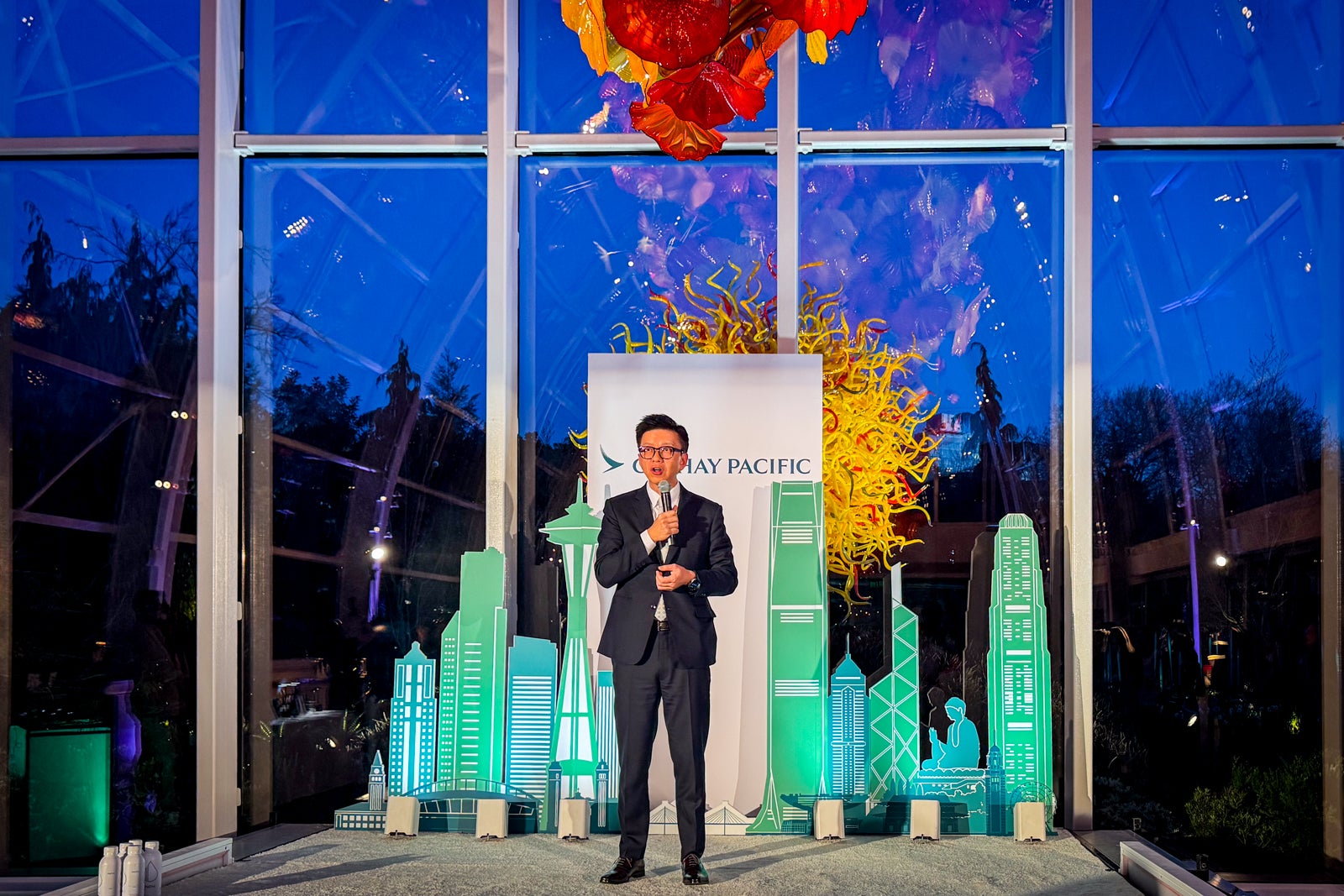
“After the pandemic, we always wanted to come back to Seattle,” Ronald Lam, CEO of the Cathay Group, told TPG. “We believe now is the right time.”
To see what this service is all about, we were among the first flyers to experience the relaunched route. Here’s what’s in store for other travelers.
Cathay Pacific’s Hong Kong-Seattle flights
As of March 30, Cathay Pacific operates the following flight schedule between HKG and SEA.
- CX 853 from SEA to HKG, departs at 11:45 a.m. and arrives at 4:45 p.m. the following day (all times local)
- CX 852 from HKG to SEA, departs at 1:25 p.m. and arrives at 10:05 a.m. the same day (all times local)
These flights are currently scheduled for Monday through Thursday and Saturday each week, and the exact flight times will change slightly in a few months.

Reward your inbox with the TPG Daily newsletter
Join over 700,000 readers for breaking news, in-depth guides and exclusive deals from TPG’s experts
Seattle is a natural fit for Cathay Pacific, according to Lam, who spoke to me before a celebration at Seattle’s Chihuly Garden and Glass museum.
“Seattle on its own is a very important destination for us,” he said. “It’s the home of many world-class companies like Boeing, Amazon and Microsoft, which we work very closely with.”
1 of 5
ERIC ROSEN/THE POINTS GUY
“It’s also home,” he pointed out, “to a very vibrant Asian American community. Many of them still have a very deep connection with Hong Kong and the rest of Asia-Pacific, so we are here to serve them.”
Equally important is the fact that its airport is a hub for Alaska Airlines, a Oneworld partner of Cathay Pacific.
“We work very closely with [Alaska],” Lam said, “and by connecting Hong Kong with Seattle, it opens up a lot of connectivity in this part of the world.”
Flyers will be able to transition from Cathay’s transpacific flights to Alaska’s robust route network along the West Coast and beyond.
On the Seattle route, Cathay Pacific is operating an Airbus A350-900 with 38 seats in business class, 28 seats in premium economy and 214 seats in economy.
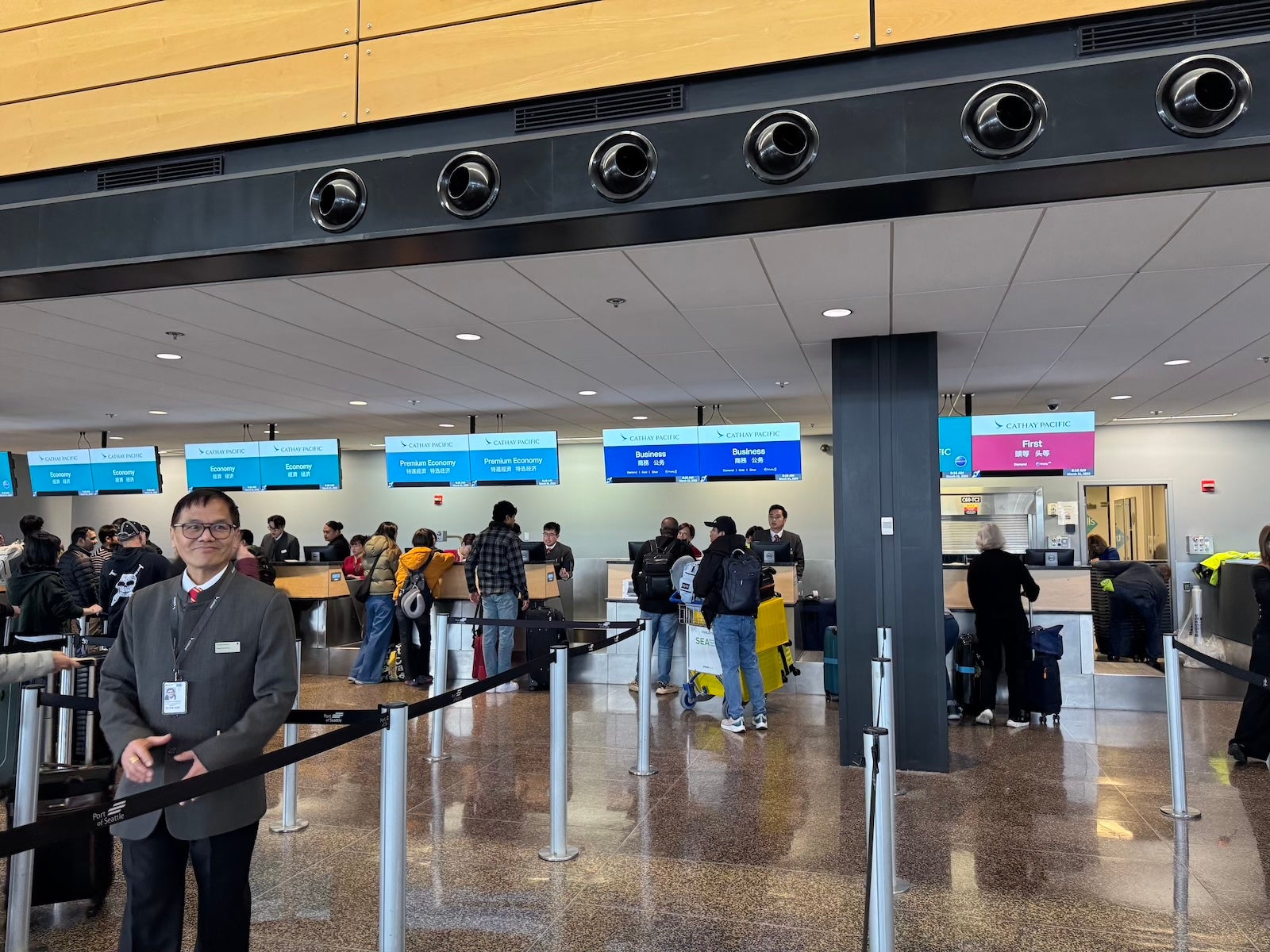
Unfortunately, the business-class cabin does not sport the airline’s latest-generation Aria Suites — so far, those are only flying to San Francisco International Airport (SFO) in the U.S. — which have technological updates like 24-inch 4K entertainment systems and wireless charging pads, not to mention closing doors for privacy.
Still, these seats are plenty roomy. They are 20 inches wide, recline to 75-inch lie-flat beds and have 18-inch touchscreen entertainment systems.
How much does it cost to book Cathay Pacific’s new Hong Kong-Seattle flights?
Airfare and award flights for the first few months for round-trip travel from Seattle to Hong Kong start at the following prices.
| Economy | Premium economy | Business class | |
|---|---|---|---|
|
$1,220 |
$2,684 |
$5,350 |
|
|
75,000 |
100,000 |
150,000 |
|
|
75,000 |
100,000 |
140,000 |
|
|
54,000 |
100,000 |
176,000 |
Now for the bad news: There are very few, if any, business-class awards. You will either have to try booking as far in advance as possible when the schedule opens up or hope for some last-minute availability close in. Also, plan to book using Asia Miles from the Cathay program since it releases more award availability to its own members.
Luckily, Cathay is a 1:1 transfer partner of the following points and miles programs:
Seattle becomes the ninth North American gateway for Cathay Pacific, which also currently flies to:
- Boston Logan International Airport (BOS)
- Dallas Fort Worth International Airport (DFW)
- John F. Kennedy International Airport (JFK) in New York
- Los Angeles International Airport (LAX)
- O’Hare International Airport (ORD) in Chicago
- San Francisco International Airport (SFO)
- Toronto Pearson Airport (YYZ)
- Vancouver International Airport (YVR) in British Columbia
DFW, in particular, has received a lot of attention from the airline, which just started flying there last April. At the time, Cathay only operated these flights four days a week, as it promoted connectivity with its other U.S.-based Oneworld partner, American Airlines, which has a hub at the airport. Just six months after that launch, Cathay boosted its frequency to daily flights between the two airports.
When asked about any other potential new North American routes, Lam demurred, saying, “We already have 120 return flights every week between Hong Kong and North America, so we feel we have a very high frequency and presence in this part of the world. In the short run, we don’t have an immediate plan to add more points or frequencies.”
However, he did note that when the airline starts taking delivery of its new Boeing 777-9s in 2027, some of which will be equipped with the airline’s new (and long-awaited) first class, “we can consider more long-haul points.”
“It’s going to be a world-class, world-leading first-class product, like what we’ve done with our recent Aria Suite business-class product,” he added. “We want to be the best in the world.”
On board one of the first flights from Seattle to Hong Kong
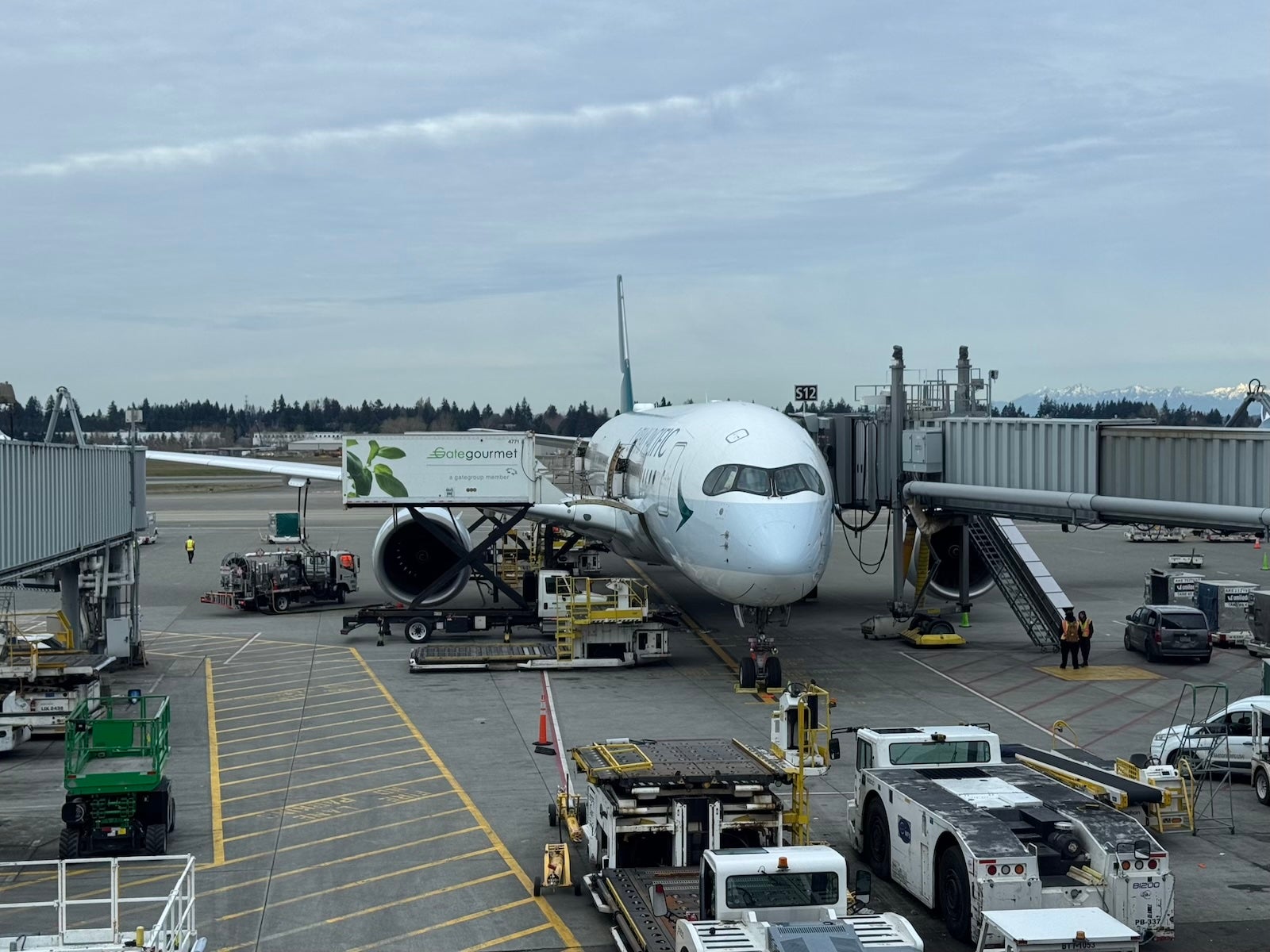
As mentioned, Cathay Pacific’s Seattle-Hong Kong flights will be operated by Airbus A350-900s.
The business-class cabin on board consists of two sections: a forward one with 30 seats arranged in rows of 1-2-1 so that each seat has direct aisle access and a back section with just eight seats spread across two rows. For a quieter experience, try to snag a seat in the back cabin. Just know that passengers board through the doors between the two business-class sections, so this miniature cabin does see more foot traffic ahead of takeoff.
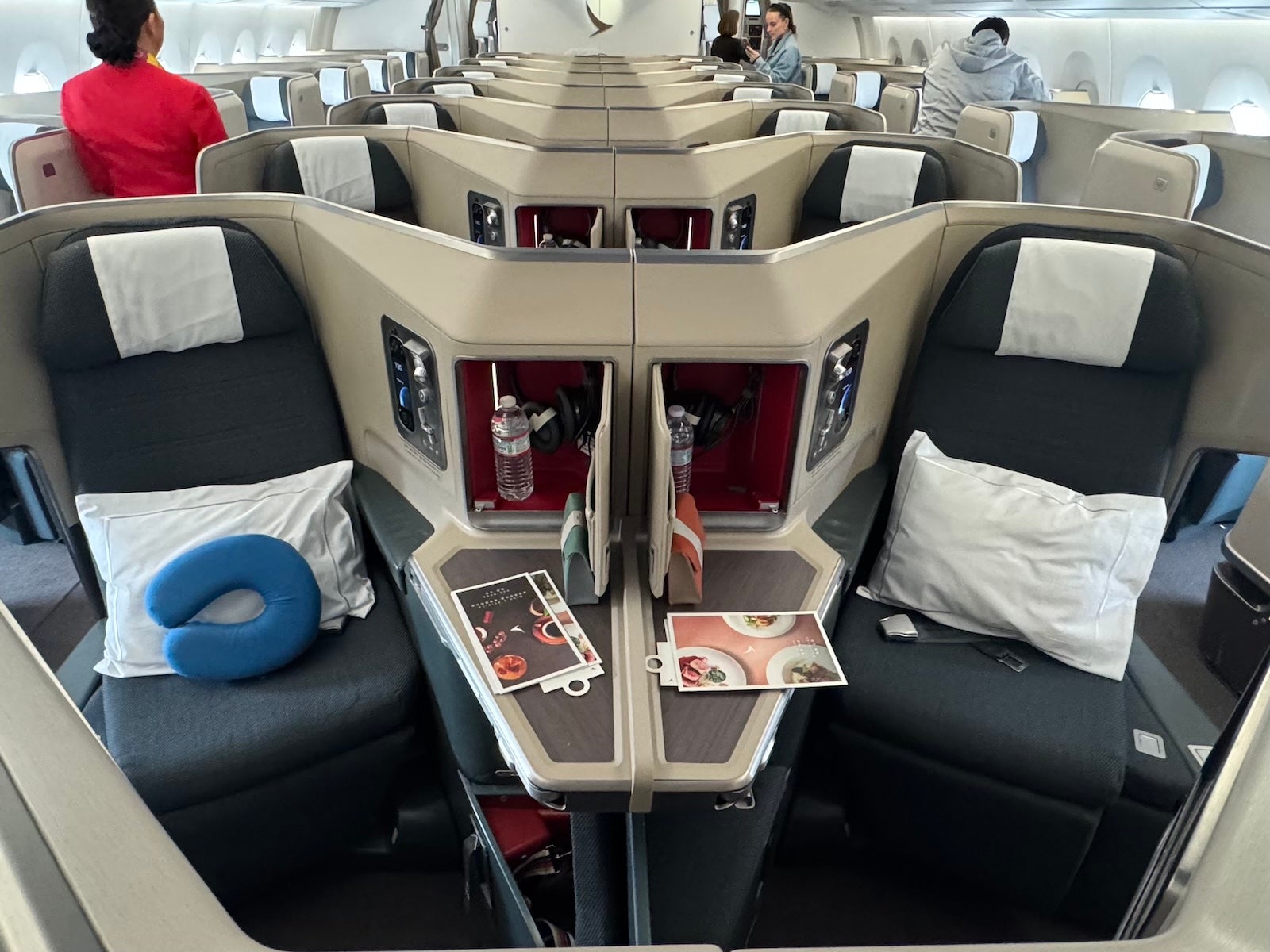
Seats are 20 1/2 inches wide with 45 inches of pitch; they recline to 75-inch lie-flat beds. That’s plenty roomy for me since I’m just 5 feet, 8 inches tall, but if you are much taller, you might have to scrunch a little while you sleep.
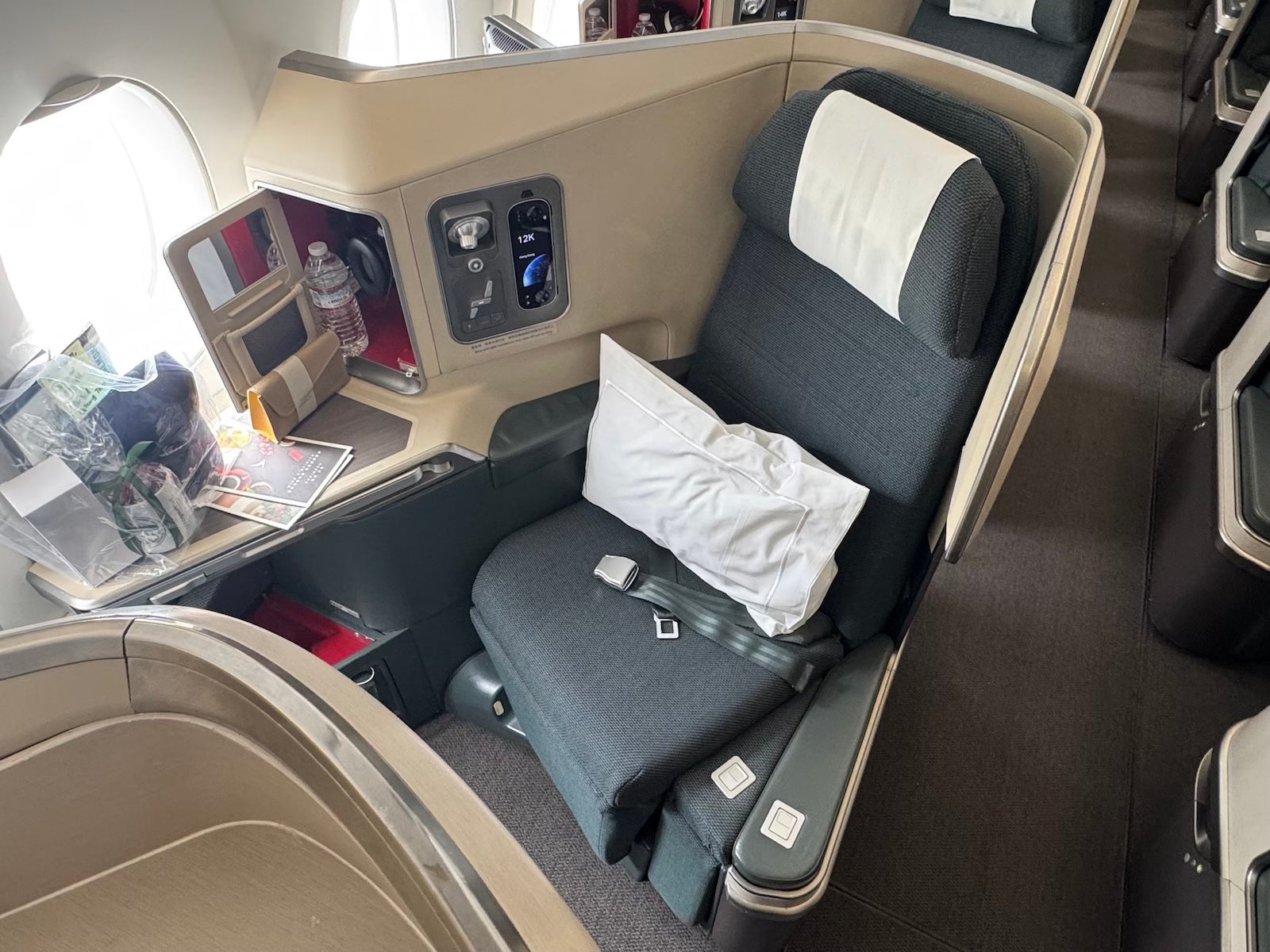
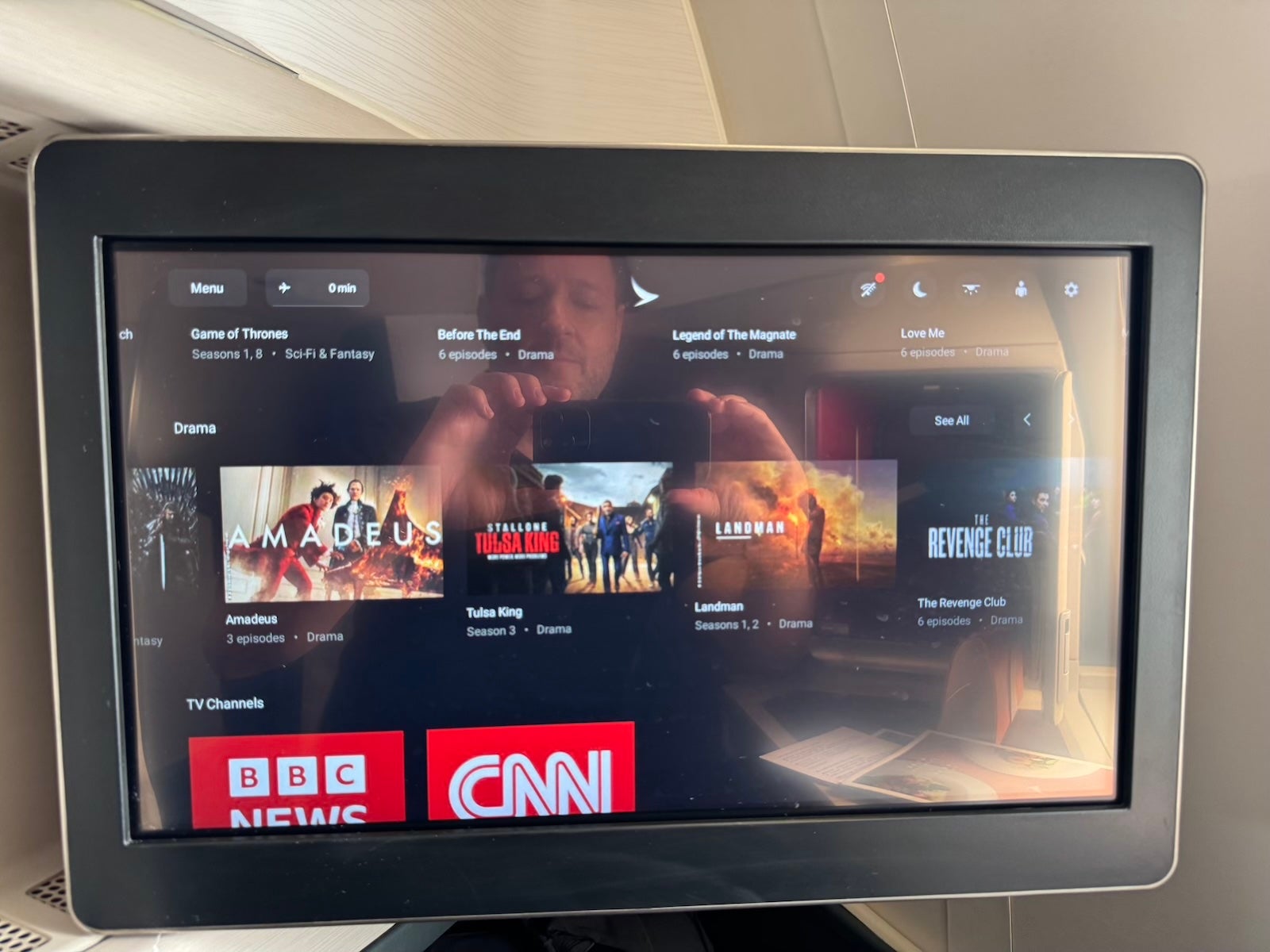
The entertainment systems are 18-inch high-definition touchscreens that come stocked with over 4,500 hours of entertainment. During my flight, I browsed new-release movies like “Marty Supreme” and “Wicked: For Good,” as well as TV shows like “Landman” and “A Knight of the Seven Kingdoms.”
While you won’t find USB-C ports, there are universal power plugs and USB-A ports in the small compartment next to the seatback to keep your devices charged.
Although I was tempted by Cathay’s famous inflight cheeseburger, instead, I preordered roast duck and barbecued pork with choy sum noodle soup from six available dishes inspired by both Western and Asian cuisine. I also had a starter of smoked salmon salad and finished with a lemon meringue tart, all accompanied by fine wines like Louis Roederer Collection 246 Champagne and De Loach Heritage Reserve zinfandel.
1 of 3
ERIC ROSEN/THE POINTS GUY
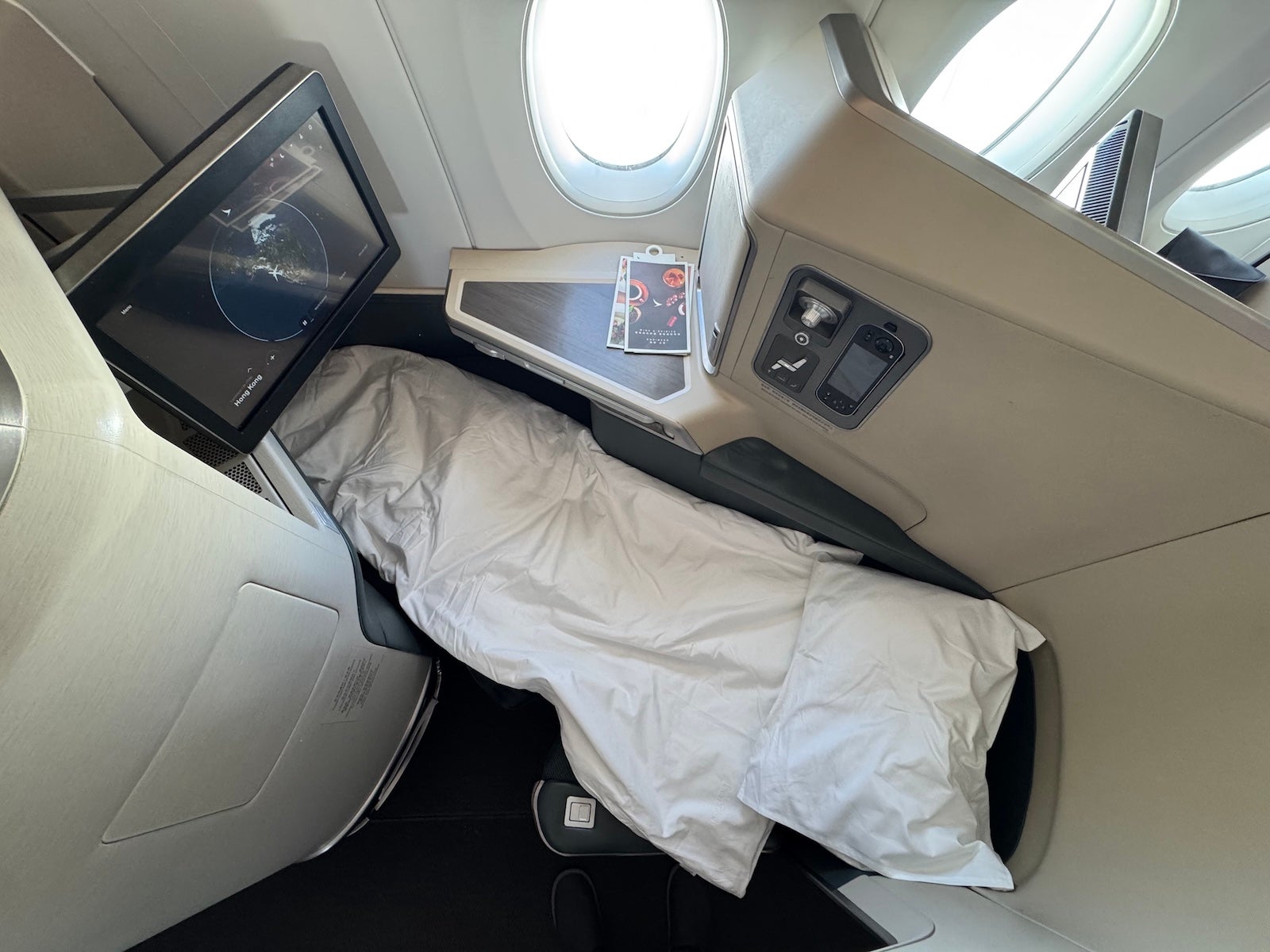
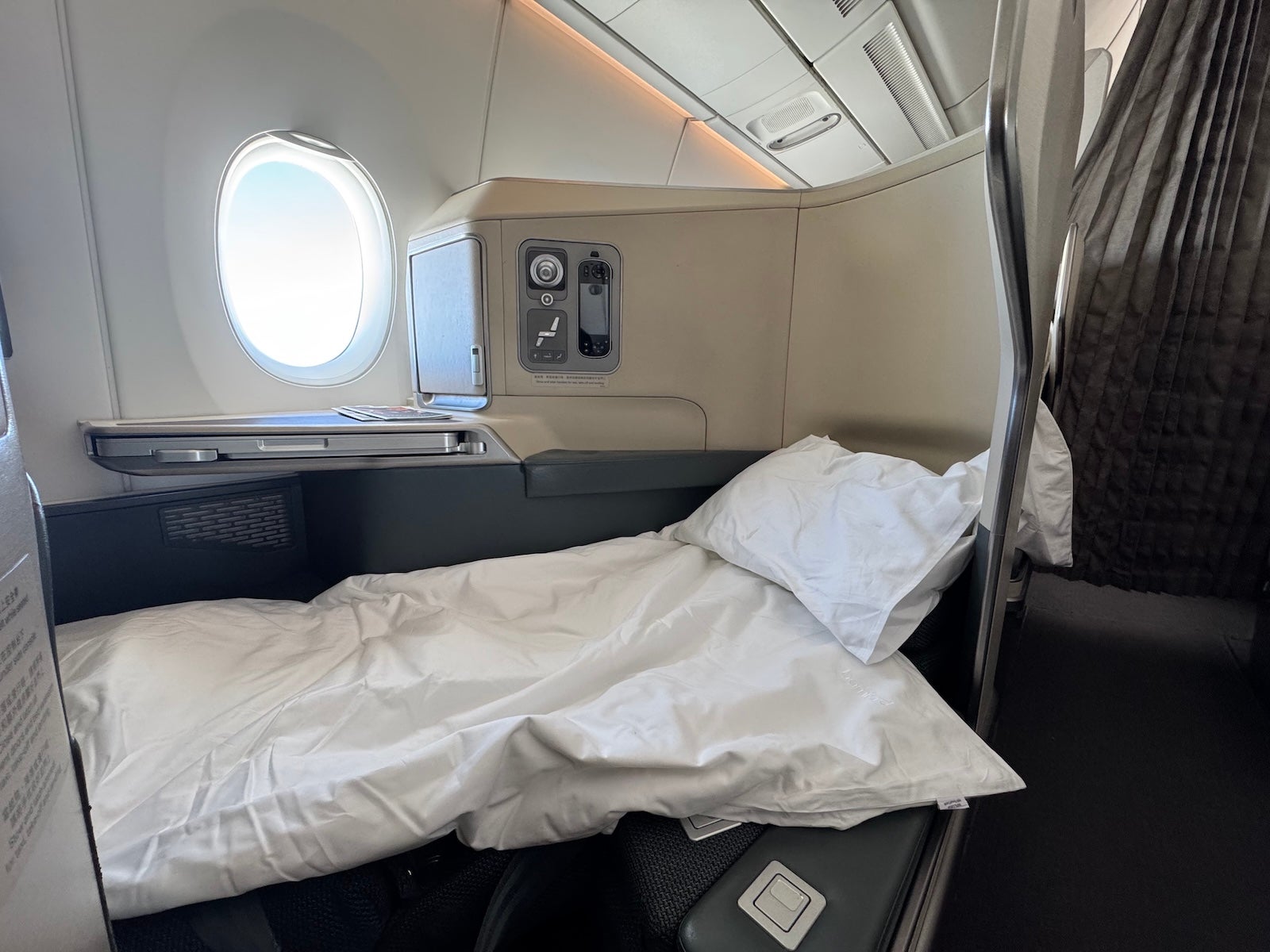
When it was time for a rest, I reclined my seat to lie-flat mode. Flight attendants helped make it up with the provided Bamford mattress pad, a lightweight duvet and a full-size pillow, which made for a cozy but breathable setup.
1 of 2
Cathay Pacific business-class seat in lie-flat mode. ERIC ROSEN/THE POINTS GUY
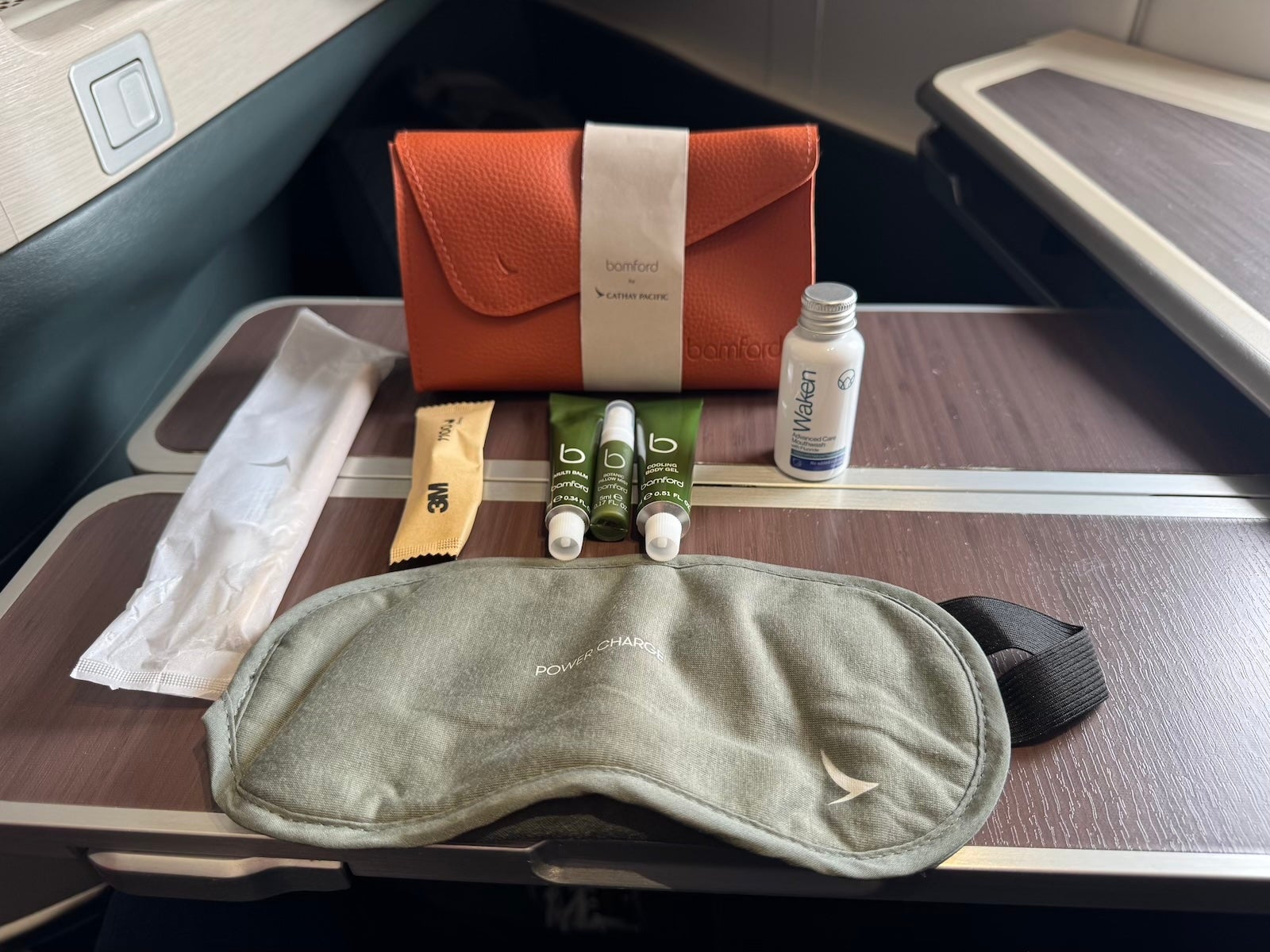
I also love the airline’s Bamford amenity kits that come stocked with dental kits, mouthwash, eye masks, earplugs and herb-scented pillow mist, body gel and lotion.
Bottom line
Cathay Pacific’s new Seattle-Hong Kong service is a welcome addition both to the airline’s slate of North American routes and SEA’s growing crop of long-haul flights. Hopefully, the route will stick around longer this time and Cathay Pacific will release more award availability in the premium cabins, making this a great new option for those who want to redeem points or miles for a transpacific jaunt.
Related reading: