With roots in ancient traditions like fire gazing and rhythmic chanting, meditation has evolved over thousands of years into the relaxing, healthful practice we know it as today. Modern technology has made mindfulness—a key aspect of meditative practices—more customizable than ever, with the best meditation apps that give you all-access control to sessions right from your device. Among these, Insight Timer stands out as a Forbes Vetted favorite; its free availability to hundreds of thousands of tracks makes it our choice for the best meditation app overall.
Our editors shared their favorite meditation apps after years of use, including Insight Timer, Calm and more.
Illustration: Forbes / Photo: Retailer
Michael J. Salas, PsyD, a licensed professional counselor and supervisor, says that apps “reduce the intimidation factor and make mindfulness feel doable for people who would never attend a class or read a book about it.” However, he notes that an app’s effectiveness depends on finding the specific style that resonates with you. To help you find the right fit, we rounded up options ranging from soothing celebrity narrations and nature soundscapes to hybrid fitness platforms. Our picks are actively used and recommended by discerning Forbes Vetted staffers, who have provided insight into their favorite tools and features, below.
Our Top Recommendations
Best App For Sleep Meditation: Calm
Subscription: Not required, premium available for $10 monthly or $60 annually| Free trial: 7 days for premium| Availability: iOS and Android
Best for:
Free library of soundscapes
A large variety of meditation sessions, teachers and music tracks
Live events and community
Skip if:
You want a consistent structure, narrator or quality level
You’d like a clear roadmap for your meditation journey
You’re overwhelmed by over-choice
Insight Timer offers more meditations (guided or self-directed) than any other on the market, and at no cost to you. Over 24,000 teachers and musicians from all over the world contribute their expertise and teachings to the app—including psychologists, monks, yoga experts and more—which is why there’s such a significant selection (over 55,000, to be exact). There are also ways to build community within, despite it being virtual, by engaging with different interest groups, live sessions and more.
“I love Insight Timer,” says Forbes Vetted supervising deals editor Kara Cuzzone. “I appreciate that it offers a lot of good features for free because I’m not always consistent with my meditation practice.” Although there’s a Member Plus subscription that unlocks features like multi-day courses and offline listening, she says she still gets “access to a huge library of guided meditations and a meditation timer” without it. To boost consistency, add the widget to your home screen that tracks how many days in a row you’ve meditated. “It helps encourage me to keep my streak going,” says Cuzzone.
Want to save this story for later?
No need to bookmark—get it straight to your inbox.
We’ve sent this story to your inbox.
Subscription: None required, premium available for $20 monthly or $70 annually | Free trial: 7 days | Availability: iOS and Android
Best for:
Well-known Sleep Stories, with celebrity cameos
High-quality audio and video
Fewer, more consistent teachers to choose from
Skip if:
You don’t want to pay to access more than a handful of meditations
You want a community experience with personal connections
Unlike Insight Timer that’s essentially a limitless experience, Calm is designed to be more structured and routine. Its high production value is evident, featuring world-renowned experts as your teachers who you can gain familiarity with. You can get a brief taste of the app’s features with the free version, but we recommend paying the upgrade for Calm Premium to get more meaningful resources, including the brand’s famous Sleep Stories. These are bedtime stories to help lull you to sleep, with occasional appearances from celebrity narrators like Matthew McConaughey and Harry Styles. You can also choose from different sleep sounds without narration if they’re more conducive to dozing off.
In addition to guided meditations, mindful movement sessions and more, a new 10-minute meditation session is available for Calm Premium users each day. “There are so many options, from beginner-friendly guided meditations to longer, more advanced choices,” says Forbes Vetted commerce writer Monica Petrucci, who’s been using the app for the past decade. “I personally love the Daily Trips feature, which are always around 10 minutes long, easy to work into a hectic day and include some guidance for managing stress.” She says she taps into the catalog of sounds when she’s struggling to wind down, including white noise and the Sleep Stories. For more choices, see our full list of the best sleep apps.
Subscription: Annually for $70, monthly for $13| Free trial: 14 days| Availability: iOS and Android
Best for:
Taking meditation courses, rather than sporadic tracks
Learning meditative skills
A small group of narrators with one core voice
Being medically researched and validated
Skip if:
You want a free subscription (most of the app is behind a paywall)
You’d prefer to learn from several teachers and voices
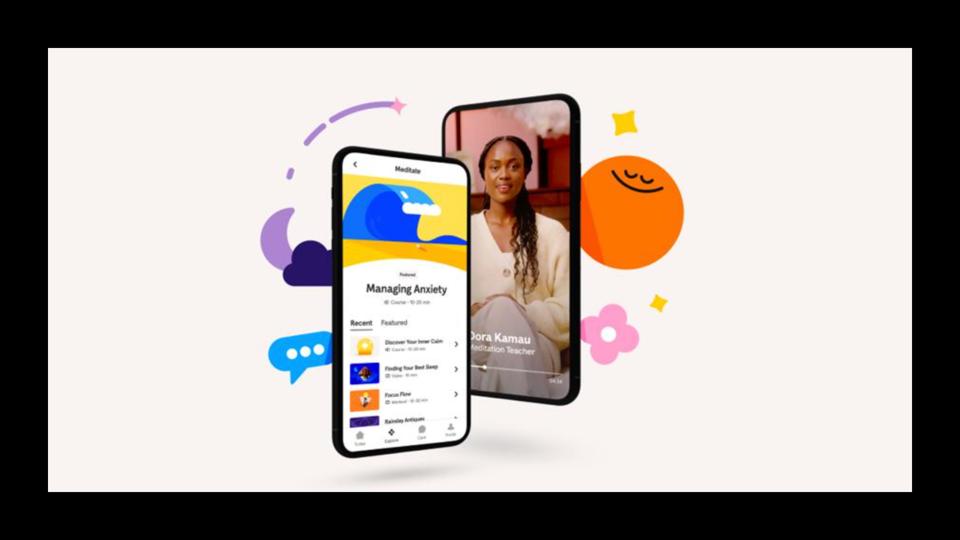
To embrace the fundamentals of meditation and mindfulness, the Headspace App is an opportune classroom with curriculum, animation explainers and AI-based guidance. It’s the most medically researched meditation app on our list, with one study finding it decreased stress by an average of 23.5% for participants. “I’ve been a Headspace user for years and absolutely love their guided meditations,” says Forbes Vetted editorial assistant Whitney Bruno. “Their library is expansive, with meditations available for just about every scenario.”
She adds that she likes having the ability to adjust the length of each meditation so it fits her daily schedule and the different narrators she can choose from. Though Headspace cofounder Andy Puddicombe is the core voice, there are a handful of others to lull you to sleep. “I’m also guilty of venting to the app’s built-in AI companion, Ebb, when I just need a quick space to self-reflect on the day’s events,” says Bruno. There are also Sleepcasts to help you fall asleep, which are 45-minute audio tours that change each night.
Subscription: $13 per month (App One membership), included with Peloton membership| Free trial: 30 days or occasional 60-day offer| Availability: iOS and Android
Best for:
Shorter sessions to fit busy lifestyles (five, 10, 15, 20 and 30 minutes)
High-quality video and audio with well-known instructors
Accessing yoga and other fitness classes taught by professionals
Sleep sessions
Skip if:
You want self-guided sessions
Access to fitness classes is not important to you
You’re interested in deeply exploring traditional philosophy/teachings
Peloton’s best known for its premier workout equipment and guided classes, with the brand’s app giving you access to thousands of training sessions at home. However, it also incorporates meditation and mindfulness as part of the health journey. Primarily led by Peloton’s beloved yoga instructors, the meditation classes are five to 30 minutes long, designed to seamlessly fit into a crammed schedule. Similarly to Calm, its content is well-produced and of top-notch quality. Sessions are often audio-only and include grounded and walking meditations related to breathing, anxiety, acceptance, courage, gratitude and more.
“A lot the yoga instructors also record guided meditations, and you can filter by instructor, length of time and also theme (anxiety, peace, sleep, etc.),” says Forbes Vetted audience development director Spencer Dukoff, who tries to practice daily 10-minute sessions. “On days I struggle to get in a workout, I try to meditate for at least 20 minutes. It’s also been great for me when I’m restless and want some help getting to sleep.” That said, the value isn’t as great if you don’t plan to take advantage of the app’s other fitness offerings. It also omits self-guided sessions and comprehensive education on core meditation philosophies, if that’s what you value in a mediation app.
How We Chose The Best Meditation Apps
We asked Forbes Vetted editors and writers for their recommendations on the best meditation apps they regularly use in their routines for better mindfulness.
We searched top-rated meditation apps that offer a wide variety of features, with the possibility to aid symptoms of stress, anxiety, sleep, mindfulness and more. We also took note of apps with additional premier offerings, like fitness classes.
We evaluated price and download availability to ensure our recommendations can suit a variety of individuals and their needs.
We only included picks with high ratings from customers—at least 4 out of 5 stars—and scanned reviews to note key highlights or downsides.
What To Consider When Shopping For The Best Meditation Apps
For many, meditating is an instrumental tool for supporting both mental and physical health. It’s a personal practice that comes in numerous forms, from focused breathing to walking. For this reason, it’s helpful to first consider your most valuable features and how you feel you could benefit from a meditation app.
“Meditation works best when people stop judging the outcome,” says Salas. “A wandering mind isn’t failure, it’s actually the practice. Apps can be helpful if they encourage curiosity and consistency, but they can also become counterproductive when users turn them into another performance metric.”
Guided Vs. Unguided Meditations
Guided: An instructor walks you through your meditation session to help strengthen focus, which reinforces structure. “Guided meditation offers containment, which is especially helpful for beginners or people who feel overwhelmed by their thoughts,” says Salas. “The downside is that some users rely on the guide to regulate their emotions.”
Unguided: Rather than a teacher providing instruction, unguided (or self) sessions offer calming sounds or music for you to enjoy while meditating. “Unguided meditation builds independence and deeper self-trust, but it can be challenging for people who tend to ruminate or dissociate without structure,” says Salas.
Lightly guided: An instructor is present with gentle instruction, but it’s minimal; it’s a great balance for those who find unguided meditation too daunting yet fully guided sessions too involved or overstimulating. They may say just a few words to help you stay focused.
Duration And Frequency
Meditation apps allow you to briefly practice for a few minutes or extensively for hours. However, Salas notes that how often you meditate is much more important than how long each session is, warning that it’s also best to ease in: “Start smaller than you think you need to. Three minutes done consistently is far more effective than 20 minutes done sporadically,” he says. When working with clients, he advises they “aim for something that still feels possible on their worst day because that’s how habits actually stick.”
Keep in mind that meditating may not initially be calming. “Increased awareness can surface anxiety, grief or intrusive thoughts,” says Salas. “That doesn’t mean the app is failing or that the person is ‘bad at meditation.’ It usually means the nervous system is finally slowing down enough for unresolved material to show up.”
Salas adds that it’s especially important for anyone with active trauma systems to approach meditation cautiously. “For them, sitting quietly with internal sensations can feel unsafe,” he explains. “That doesn’t mean meditation is off-limits. Instead, it just means starting with grounding, movement or very brief practices rather than long, silent sessions.”
Trial Period And Price
Most of the meditation apps on our list require a monthly or annual subscription, or have fees to unlock more content. If you’re interested in certain apps, take advantage of their free trial periods, so you can get a taste of the user experience and compare to find the most accommodating fit. But be sure to check whether you need to proactively cancel the trial period to avoid auto enrollment/payment.
Why Trust Forbes Vetted
Our editors and writers at Forbes Vetted have extensive professional experience researching and testing consumer products, in addition to interviewing medical experts and health professionals to help inform our library of content.
Author Bridget Chapman is the senior mattress and sleep editor at Forbes Vetted and a certified sleep science coach. She’s tested several apps on the market to help unwind or go to sleep, including ones from Calm and Peloton, and has covered many sleep and wellness products, from the best sauna blankets and sunrise alarm clocks to the best body pillows and white noise machines.
McKenzie Dillon, mattress and sleep editor at Forbes Vetted, also has a sleep science coach certification and has been professionally testing and researching consumer products for over six years. Some of her recent pieces include the best sleep apps and an anti-snore pillow review.
We consulted Michael J. Salas, PsyD for this story, a licensed professional counselor and supervisor, and founder of Vantage Point Counseling. He has clinical experience in anxiety, emotional regulation and how digital tools affect mental health and relationships.
Frequently Asked Questions (FAQs)
What Is The Number One Meditation App?
We named Insight Timer the best meditation app overall, as it gives users free access to thousands of guided and unguided meditations from a huge variety of teachers and musicians. It also has an average 4.7-star rating from over 246,000 reviewers on Google Play.
Which Is Better, Calm Or Headspace?
It depends on the type of experience you want. Calm is optimal if you want high-quality production with different instructors, while Headspace is better for learning in a structured space with consistent, core narrators.
Do Meditation Apps Actually Work?
Yes, meditation apps can help with learning and practicing mindfulness, especially if done consistently and with curiosity. “Clinically, I see the biggest benefit when apps help people notice patterns, like how stress shows up in their body, how quickly their mind escalates and how often they’re running on autopilot,” adds Salas.