Published on
March 2, 2026

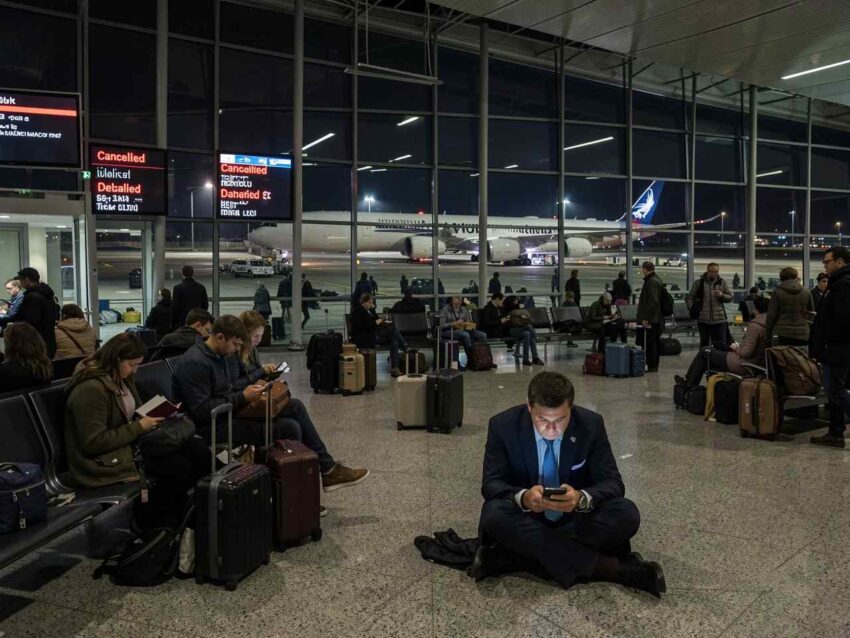
Image generated with Ai
Australia, India and the United Kingdom are at the centre of a fast-moving global travel crisis after US-led strikes on Iran triggered retaliatory action and widespread Middle East airspace closures, disrupting some of the world’s busiest aviation corridors. Within hours, major Gulf transit hubs that collectively handled tens of millions of passengers in 2025 — including Dubai International with over 95 million travellers last year and Doha’s Hamad International, which supports a tourism market that welcomed more than five million international visitors — were forced to suspend or sharply curtail operations. For thousands of Australians alone, this has meant grounded departures, mid-air turnbacks, and costly extended stays abroad, with government estimates indicating more than 100,000 Australians are currently in the broader Middle East region. India, the largest passenger market through Dubai with nearly 12 million travellers in 2025, and the United Kingdom, one of the top European markets for Gulf carriers, are also feeling the impact as airlines reroute or cancel long-haul services linking Europe, Asia and Australia. The result is a cascading disruption that stretches far beyond the conflict zone, tightening seat availability, straining hotel capacity in transit cities, and leaving travellers scrambling for clarity in an aviation system now operating under heightened security constraints and rapidly changing advisories.
Australia, India, United Kingdom, United States and Saudi Arabia Hit as Emirates, Qatar Airways and Etihad Suspend Flights — Marriott, Hilton and Accor Face Booking Shock in Middle East Travel Meltdown
Thousands of Australian travellers are facing mounting financial losses and prolonged travel chaos after US-led strikes on Iran triggered retaliatory attacks and widespread Middle East airspace closures. What began as a geopolitical escalation has rapidly evolved into one of the most disruptive aviation crises in recent years. Major Gulf transit hubs such as Dubai, Doha and Abu Dhabi — vital connectors between Europe, Asia, Africa and Australia — have suspended or heavily curtailed operations. The ripple effects are now hitting airlines, hotels, tour operators and travellers across multiple continents.
Australia is particularly exposed. The country relies heavily on one-stop connections through Gulf carriers to reach Europe and the United Kingdom. When those hubs stall, thousands of passengers are left stranded mid-journey or unable to depart at all. The situation is fluid. Airspace restrictions shift daily. Airlines are attempting to rebuild schedules. Yet recovery will take time.
This feature explains what is happening, which travellers are most affected, how airlines and hotels are responding, and what tourists need to know before making decisions.
Australia, India, United Kingdom, United States and Saudi Arabia Hit as Emirates, Qatar Airways and Etihad Suspend Flights
Advertisement
Advertisement
The scale of the disruption is immense. Aviation analytics data shows that on the first full day of escalation, nearly a quarter of inbound flights into the Middle East were cancelled. When outbound services are included, cancellations surged dramatically. Thousands of flights have since been scrapped or rerouted globally.
Dubai International Airport handled 95.2 million passengers in 2025. That averages more than 260,000 passengers per day. It is not merely a destination airport. It is a global switching station. India was its largest country market last year with 11.9 million passengers. Saudi Arabia followed with 7.5 million. The United Kingdom contributed 6.3 million. Pakistan recorded 4.3 million, and the United States 3.3 million. When Dubai halts operations, these traffic flows feel immediate strain.
Advertisement
Advertisement
Qatar’s Hamad International Airport plays a similar role. Qatar welcomed 5.1 million international visitors in 2025, with 61% arriving by air. The Gulf hubs are essential arteries for long-haul connectivity. When they close, the shock spreads instantly to London, Sydney, Mumbai, New York and Riyadh.
For Australians, exposure is high. Government estimates indicate roughly 115,000 Australians are currently in the broader Middle East region. Many were transiting or holidaying when the airspace closures began. Australian airports have already experienced cancellations and diversions involving Gulf routes.
Australia, India, United Kingdom, United States and Saudi Arabia Hit as Marriott, Hilton and Accor Face Booking Shock
The hospitality industry is now absorbing the aftershock. Dubai recorded 19.59 million international overnight visitors in 2025, with hotel occupancy averaging 80.7%. The city has more than 154,000 hotel rooms. These figures reflect a high-performing tourism market built on seamless connectivity.
When flights suspend, hotels face a paradox. In the short term, airport and city hotels see unexpected occupancy spikes from stranded passengers. In the medium term, forward bookings weaken. Corporate events postpone. Leisure tourists delay travel. Group tours pause.
International brands such as Marriott, Hilton and Accor operate large portfolios across Dubai, Doha and Abu Dhabi. Accor alone maintains dozens of properties in the Gulf. Hilton and Marriott are deeply integrated into the region’s MICE and luxury segments. Even short disruptions can distort revenue management models and average daily rates.
Qatar’s accommodation sector had approximately 42,469 room keys in 2025, with average occupancy at 71.3%. Room nights increased by 8.6% year-on-year. Sustained aviation disruptions could interrupt that growth trajectory.
Airlines Under Pressure as Costs Climb and Networks Rebuild
Airlines are dealing with two simultaneous problems. First, operational dislocation. Aircraft and crew are stranded in unexpected locations. Second, rising costs. Oil prices jumped sharply during the escalation, increasing fuel expenditure. Jet fuel represents a major operating cost for long-haul carriers.
Emirates operates extensive connections from Australia to Dubai. Qatar Airways connects Australia to Doha, including services operated in partnership with Virgin Australia. Etihad links Sydney and Melbourne to Abu Dhabi. These carriers form the backbone of one-stop travel from Australia to Europe.
When airspace over Iran and Iraq closes, flights must detour. Detours lengthen flight times. Longer routes can force payload restrictions. Fewer seats may be available. Crews may reach legal duty-time limits. Aircraft rotations unravel quickly.
Even after airspace reopens, restoring schedules takes days. Airlines must reposition equipment and crews. Airport slots need to be renegotiated. Passengers must be reaccommodated.
Why Australia Is So Exposed to Gulf Disruptions
Australia’s geography makes it dependent on long-haul hubs. Direct flights to Europe are limited and expensive. One-stop routes via Dubai, Doha or Abu Dhabi remain popular due to frequency and pricing.
In a normal week, dozens of long-haul services depart Australia toward Gulf hubs. Widebody aircraft typically carry between 250 and 350 passengers. Over several days of rolling suspensions, the number of affected travellers can reach into the tens of thousands.
Australian travellers heading to London, Paris, Rome, Frankfurt and beyond frequently connect through Gulf airports. The disruption is not confined to one city. It cascades across Europe and parts of Africa.
India, UK, USA and Saudi Arabia Also Feel the Impact
India remains the single largest passenger market through Dubai. Indian travellers connecting onward to Europe, North America and Australia are now competing for limited alternative seats.
The United Kingdom has strong leisure and business links with the Gulf. British travellers use Dubai and Doha as transit points to Asia and Oceania. The United States also sees substantial traffic through these hubs.
Saudi Arabia, as both a source and destination market, faces intra-regional strain. Regional connectivity across the Gulf has been disrupted, affecting both tourism and corporate travel.
The broader implication is global. When a major aviation corridor closes, congestion shifts to alternative hubs such as Singapore or East Asian gateways. Seat supply tightens. Fares can rise.
What This Means for Hotel Guests and Holidaymakers
Tourists should expect variability. Some hotels near affected airports may show full occupancy due to stranded guests. Others may see cancellations from future travellers concerned about instability.
Luxury resorts in Dubai and Doha have built reputations on reliable air access. With flight schedules fluctuating, booking flexibility becomes critical. Many international hotel chains are currently offering flexible rebooking policies in line with airline waivers.
Travellers should confirm cancellation terms before modifying reservations. Non-refundable rates may not automatically convert to flexible options.
Travel Tips for Australians and Other Affected Travellers
Do not cancel impulsively. Airlines sometimes issue waivers that allow rebooking without penalty. Wait for official notifications.
Monitor airline apps and airport advisories frequently. Airspace status can change quickly.
Keep all documentation. Save boarding passes, emails and cancellation notices. Retain receipts for accommodation and meals.
Review travel insurance carefully. Many retail policies contain exclusions related to war, hostilities or government advisories. Understanding the wording is essential before lodging a claim.
Check passport validity and visa status. Extended delays can affect onward travel documents.
Consider alternative routings only after confirming seat availability. Some Asia-based carriers may provide alternative connections, but capacity is limited.
How Airlines Are Attempting to Stabilise Operations
Major carriers are rebuilding schedules corridor by corridor. Some flights have resumed on adjusted routings. Others remain suspended pending security assessments.
Airlines typically prioritise passengers already mid-journey. Reaccommodation may involve longer travel times or additional stops.
Frequent flyer members should monitor loyalty program updates. Award inventory may fluctuate as airlines manage capacity.
Passengers with tight onward cruise or tour departures should contact operators immediately. Some cruise lines are adjusting embarkation policies in response to flight disruptions.
Economic Implications for the Tourism Ecosystem
Tourism contributes significantly to Gulf economies. Dubai’s visitor growth in 2025 reinforced its role as a global leisure and business destination. A sustained aviation slowdown could affect airlines, hotels, tour operators and retail sectors.
However, past crises show resilience. Once airspace stabilises, pent-up demand often returns. The speed of recovery depends on security conditions and airline network restoration.
The Bigger Picture for Global Travel
This disruption underscores how interconnected modern aviation has become. A single geopolitical flashpoint can affect travellers from Sydney to London within hours.
For Australian travellers planning European holidays, flexibility is key. Consider travel windows with buffer days. Avoid non-refundable arrangements where possible.
For travellers currently abroad, remain patient and informed. Airlines and airports are working to restore services safely.
The coming days will be critical. As airspace reopens and schedules normalise, tourism and hospitality sectors will begin recalibrating. Until then, travellers should prioritise safety, documentation and clear communication.
In times like these, preparation matters. Travel remains possible. But it now requires vigilance, flexibility and reliable information.