ASPI has launched a major new expansion of its globally recognised China Defence Universities Tracker, a database that now includes more than 180 Chinese civilian and military research institutions. The tracker has become a go-to international resource, drawing huge traffic from the United States and China, followed by Japan, Hong Kong, Australia, Canada, Britain, Germany, Singapore, France, Taiwan, the Netherlands, Russia and India.
The tracker illuminates military and security links between Chinese institutions and the state, helping universities, governments and companies make informed and targeted decisions about research partnerships and collaboration. It supports export control compliance, research security assessments, due-diligence research, international academic partnerships, investment screening and informed public debate. Its goal is to support informed decision-making that protects research integrity while preserving the benefits of international collaboration.
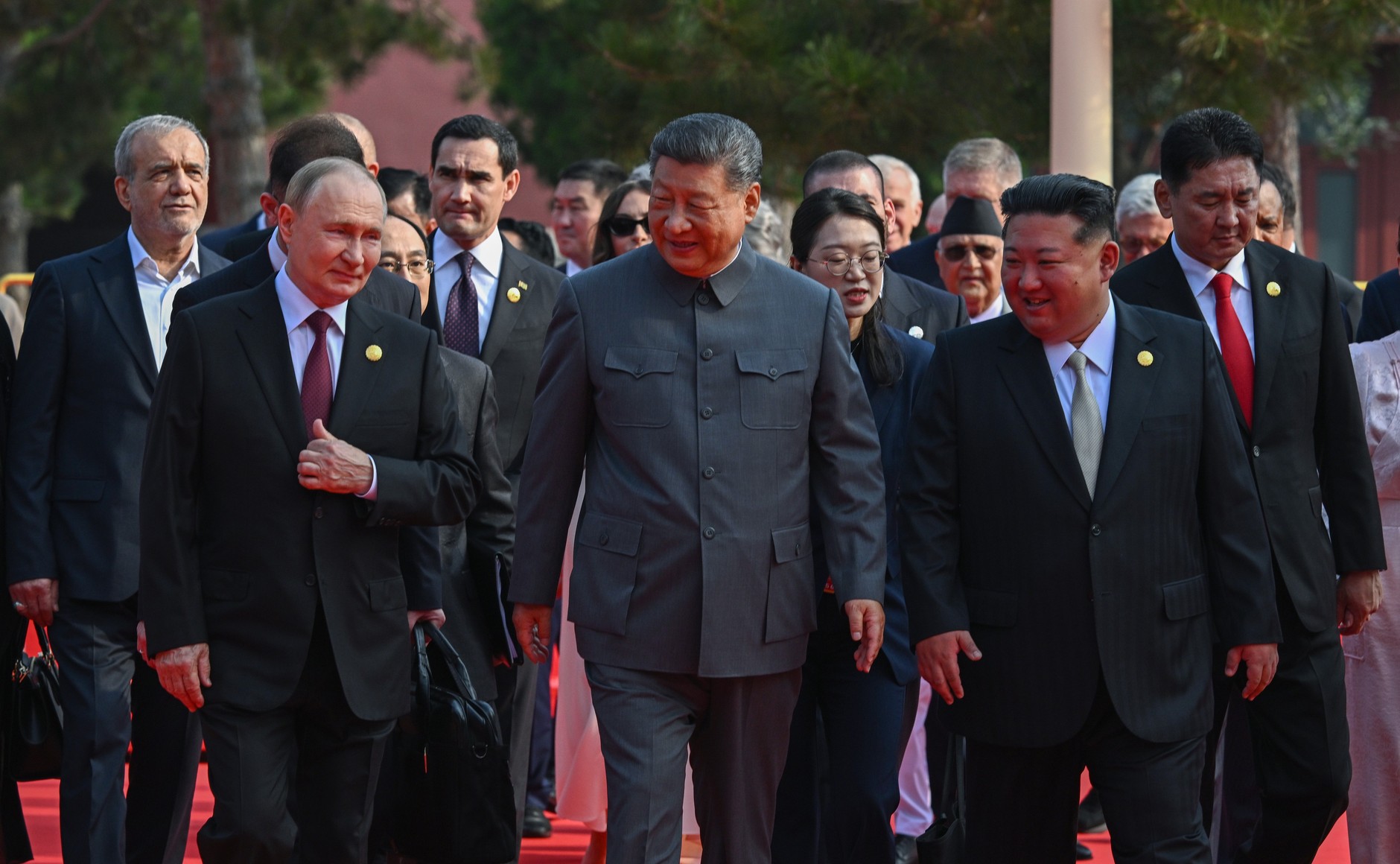
As China and Russia deepen their military and technological ties—framing it as the foundation of a rising illiberal world order—the tracker is even more strategically relevant today than when it first launched in 2019. At that time, the primary concern was Beijing’s military-civil fusion agenda and the implications for Western research security. Those risks persist, but the landscape is now markedly more dangerous.
ASPI’s new research shows that since 2019, top Chinese universities have dramatically increased their research partnerships with Russian research institutions, especially in critical and dual-use technologies. These findings raise concerns that China-connected research could indirectly aid Russia’s war in Ukraine, providing Moscow with access to innovations and know-how that help offset Western sanctions and export controls.
The tracker now provides evidence to map, monitor and mitigate these transnational research links. What began as a tool to illuminate China’s defence-linked higher education sector has now also become a resource for understanding how authoritarian powers build cooperative research ecosystems that can undermine Western security and resilience.
Additional findings in the expanded tracker also show that dozens of China’s top universities have deepened their research and development partnerships with Chinese state-owned defence manufacturers, presenting heightened risk that research engagements with Chinese universities could end up supporting China’s military modernisation. ASPI has updated risk ratings throughout the tracker to reflect this heightened risk.
As international scrutiny of Chinese-foreign joint venture universities has grown, ASPI has added three prominent joint ventures to the tracker, allowing users to easily compare the relative risks of joint venture universities and Chinese universities. Expanded research on international collaborations also reveals that Chinese universities are still partnering with British and European institutions with the explicit goal, for example, of advancing China’s national aerospace industry.
The tracker also now includes the Chinese Academy of Sciences (CAS), the world’s largest scientific research institution, and 10 affiliated institutes. Users can now quickly see why CAS occupies such a preeminent place in global science research; the tracker features CAS’s global and national rankings in 64 critical technologies tracked by ASPI, including the 31 critical technologies where CAS leads the world in high-impact research. These fields include quantum sensors, high performance computing and advanced robotics.
Previous ASPI research has shown that while China overwhelmingly leads in high-impact research in critical technologies, it has historically lagged in its ability to industrialise and commercialise that research into real-world technological capabilities. But new tracker findings show that the Chinese government has implemented sweeping changes to bridge this gap between research and industry through the establishment of on-campus technology transfer centres and new research centres sponsored by China’s top tech companies. This puts new research advances straight into the hands of companies that can develop and market them.
These new research findings have been applied to more than 60 universities and institutes in the tracker database, complementing the existing database of nearly 100 civilian universities, 50 People’s Liberation Army institutions, China’s nuclear weapons program, three Ministry of State Security institutions, four Ministry of Public Security universities and 12 state-owned defence industry conglomerates. From early 2026, updates will see new institutions added to the tracker and research additions extended to more existing institutions.
ASPI is also excited to announce an exclusive new partnership with corporate intelligence platform WireScreen, allowing the tracker to provide new details about corporate ties and technology procurement for more than 50 universities and institutes.
To learn more about how to gain access to the expanded tracker, email us at [email protected] or sign up for updates here.
