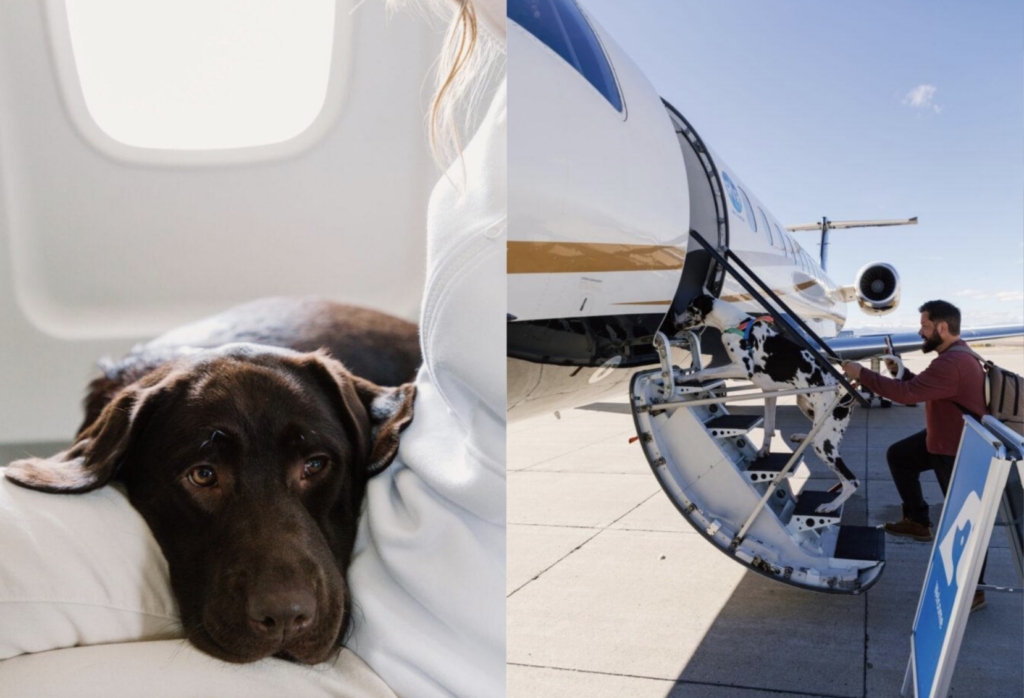
Flying with a pet — especially a large dog — can be one of air travel’s most stressful experiences. Many owners don’t want to risk putting their pets in a cargo hold, can’t justify the cost of private aviation, and end up driving for days.
RetrievAir is designed for the needs of furry travellers, offering a niche, pet-first public charter air service built to reduce stress for animals and their owners.
“We call it a pet first travel experience,” Mark Williams, co-founder of RetrievAir, told AGN. “It’s all built around the pet and then the human pet parent.”
RetrievAir offers pet-first air travel for dogs and their owners
The pet-travel trend is growing, inviting new entrants to the dedicated pet air travel market—most rely on private jet services or air charter operations. RetrievAir welcomes more pet-focused air services, according to Evan Delvecchio-Williams, RetrievAir’s Head of Marketing & Public Relations.
“We’re actually very happy as pet owners that there are becoming so many different options out there,” he said, adding that RetrievAir sees itself as a “lower cost option” offering fares in the hundreds compared with some private-jet-style alternatives in the thousands.
While it may be more affordable for humans, commercial airline travel can sometimes be rough on pets. While some airlines are making efforts to be more pet-friendly, Williams doesn’t believe major airlines can easily replicate the company’s pet-first model.
“They’re not set up for dealing with pets,” he said, pointing to “people’s allergies” and “fear of animals,” among other issues.
How a personal pain point inspired an airline for dogs
RetrievAir’s business idea began with a familiar problem: moving large dogs over long distances is challenging, and the available options are often unappealing.
“It’s really difficult with a large dog in particular,” Williams said. “Either you put them in the cargo hold, or you fly private, or you drive.”
For Williams, it was also personal. He is a seasonal traveller who splits time between Canada and Florida.
“I’m a snowbird. We live in Toronto in the summer, and then we live in Naples, Florida, in the winter, and we have a dog, so we drive three days with our dog,” he said.
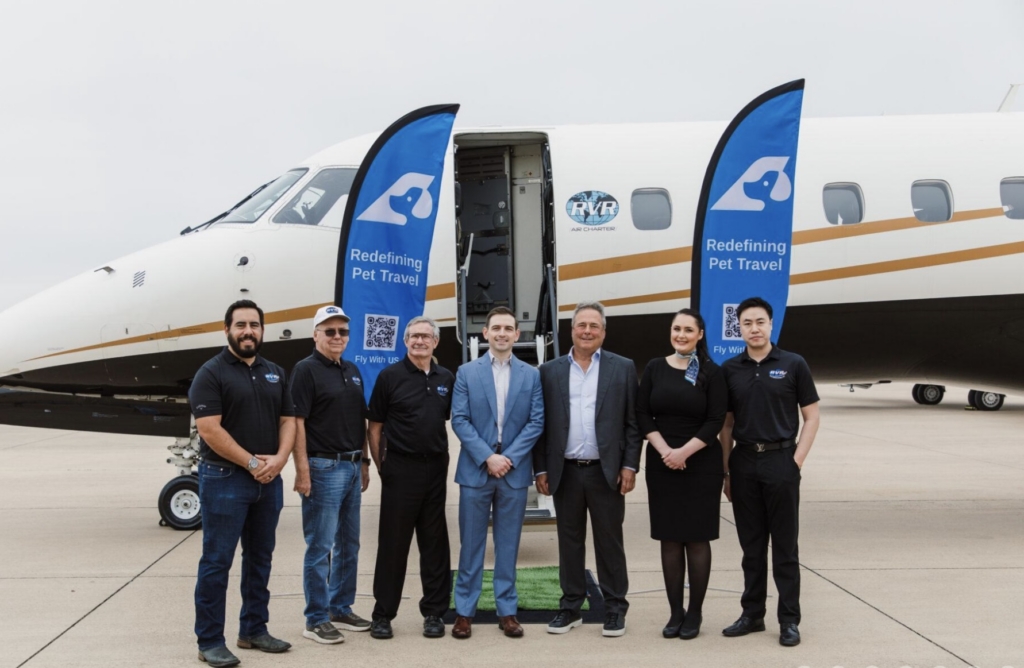
That experience helped shape the original question that led to the creation of RetrievAir.
“Wouldn’t it be nice if there were an air service that allowed us to forgo the three days of driving and we could get the dog back and forth on an aeroplane,” Williams added.
Importantly, Williams is not a newcomer experimenting at the edge of aviation. He has spent decades building businesses in the sector.
“I’ve been involved in aviation for more than 30 years,” Williams said. “I actually started an airline in Canada in 2004 called Sunwing and grew that to be Canada’s fourth largest airline. We ended up selling that airline to WestJet in 2022, and I was happily retired at that point.”
He met his co-founder and CEO, Benton Miller (who was flying and not available for the AGN interview), through a mutual friend.
“Benton had this idea for an airline that was a niche product for people travelling with their pets,” Williams said.
The pet-travel concept inspired Williams to get back into the industry. The two took the concept to Shark Tank to secure $500,000 in seed funding.
A public charter model using the Embraer 135
RetrievAir is structured as a public charter, with air services provided by Part 135/91 charter operator RVR Aviation, based in Arlington, Texas.
RetrievAir operates Embraer 135 aircraft, a regional jet with a layout that supports a pet-friendly 2-1 cabin configuration, which accommodates both passengers travelling with pets who need a separate seat and those who can fly with their pet on their lap or in a carrier stowed under the seat in front of them.
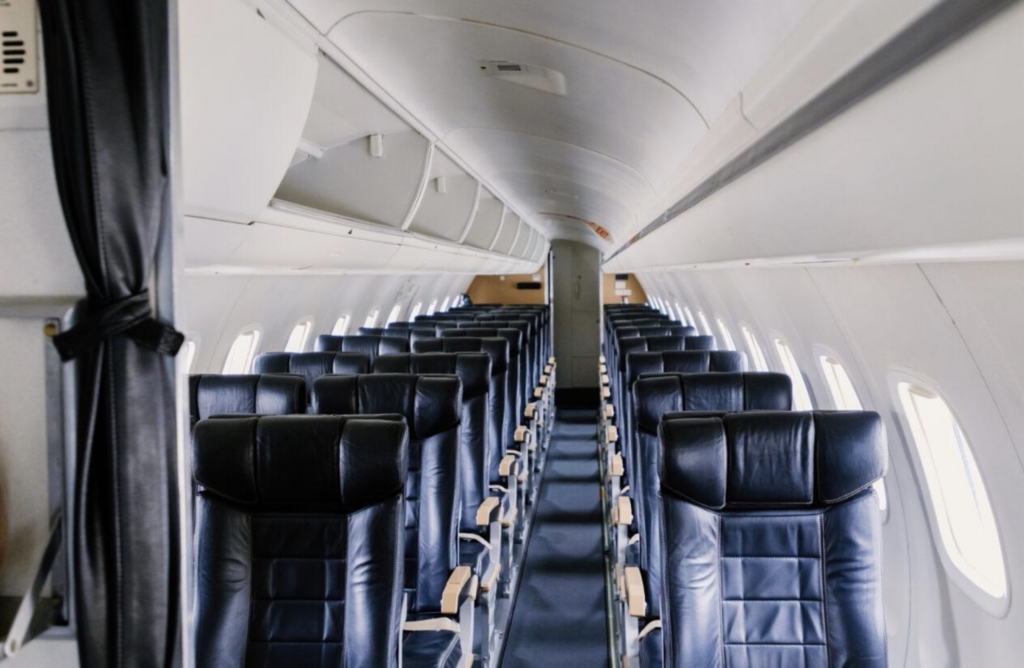
Williams said the aircraft “works out very well for us.”
RetrievAir routes: Multi-stop flights that double as pet breaks
Unlike the nonstop-heavy networks most travellers expect from airlines, RetrievAir intentionally uses multi-stop, same-plane service on routes—partly for affordability and partly as a pet-centric feature.
“We operate the flights with stops,” Williams said. “So we’re sort of combining markets to help fill the aeroplane.”
He pointed to one of the carrier’s primary structures as an example: “Our main flight starts in Los Angeles and from Los Angeles to Denver, Chicago, New York… So there’s a stop every couple of hours, and it’s the same plane service.”
For travellers, the stopover is part of RetrievAir’s value proposition because it allows pets to take a break.
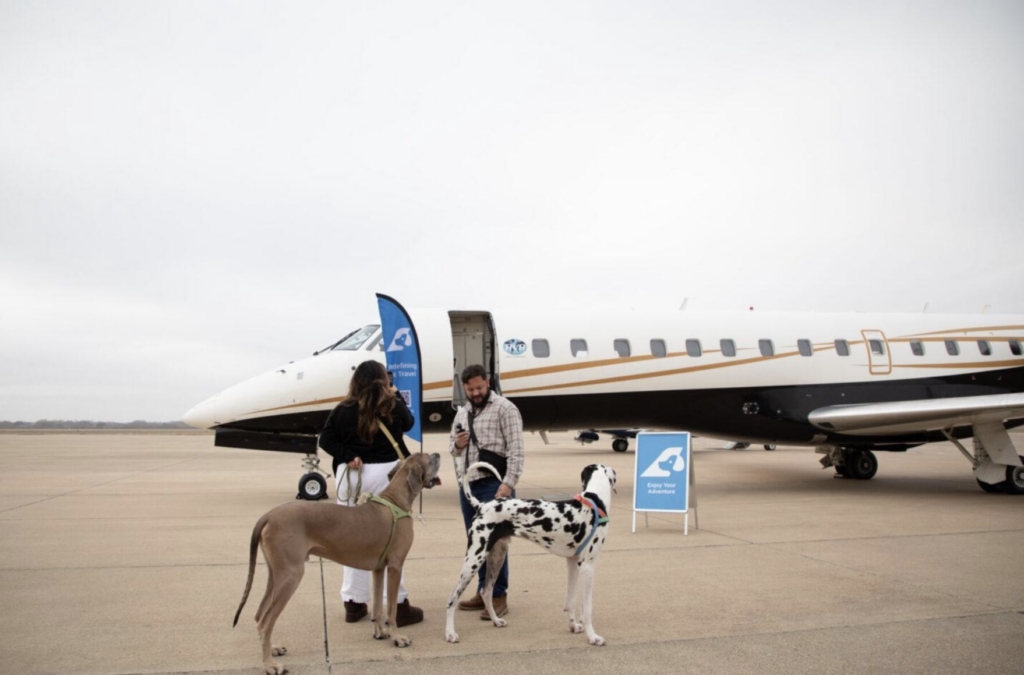
“You might say, why would you pick a flight that’s stopping twice if you don’t need to?” Williams said. “But because we’re flying out of private terminals, people use that opportunity to have their dogs go out and relieve themselves.”
The charter service has ground facilities to support this. “We’ve got a grassy area for them to do their business and then hop back on the plane.”
Williams tells AGN that RetrievAir’s customers aren’t merely tolerating the stops, they’re embracing them.
“Every customer we’ve had so far has chosen to get off, have the dog relieve themselves,” Williams said. “And it seems to be something that people actually like as part of the service.”
This model also supports RetrievAir’s effort to keep fares within reach of more travellers.
“By doing that and being able to combine different city pairs,” Williams said, “it allows us to sell more seats and bring the cost down.”
Pet-first boarding and cabin management: Private terminals, controlled flow, and built-in harnesses
RetrievAir puts one of its biggest stress-reduction strategies on the ground: avoiding busy public terminals.
“We fly to private terminals,” Williams said. “So, you’re avoiding the big terminals. [Customers are] basically going right onto the tarmac where the private aircraft are going.”
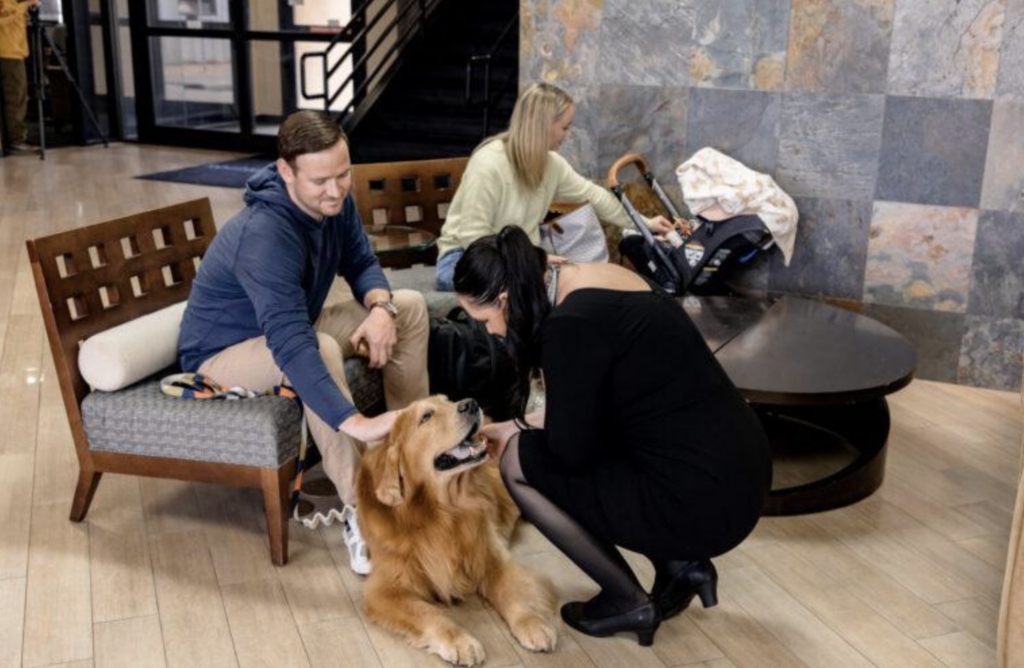
RetrievAir’s seating policy also prioritises pet needs.
“You don’t have to buy a seat for your dog,” Williams said. “Some people choose to, and you might be required to if the dog’s over 75 pounds.”
If a dog has a purchased seat, RetrievAir assigns the arrangement to keep the owner adjacent and to give the pup more privacy, with a view.
“Your pet gets the window seat, and you get the aisle seat,” Williams said.
RetrievAir also tries to limit how much dogs interact with unfamiliar animals in close quarters.
“We board back to front,” Williams said, “so we try and have as little interaction on board with the dogs as we can.” Once the flight arrives, “we unload from front to back.”
Inside the cabin, RetrievAir uses harnesses attached to the seat frame that tether dogs securely while preventing them from entering the aisle.
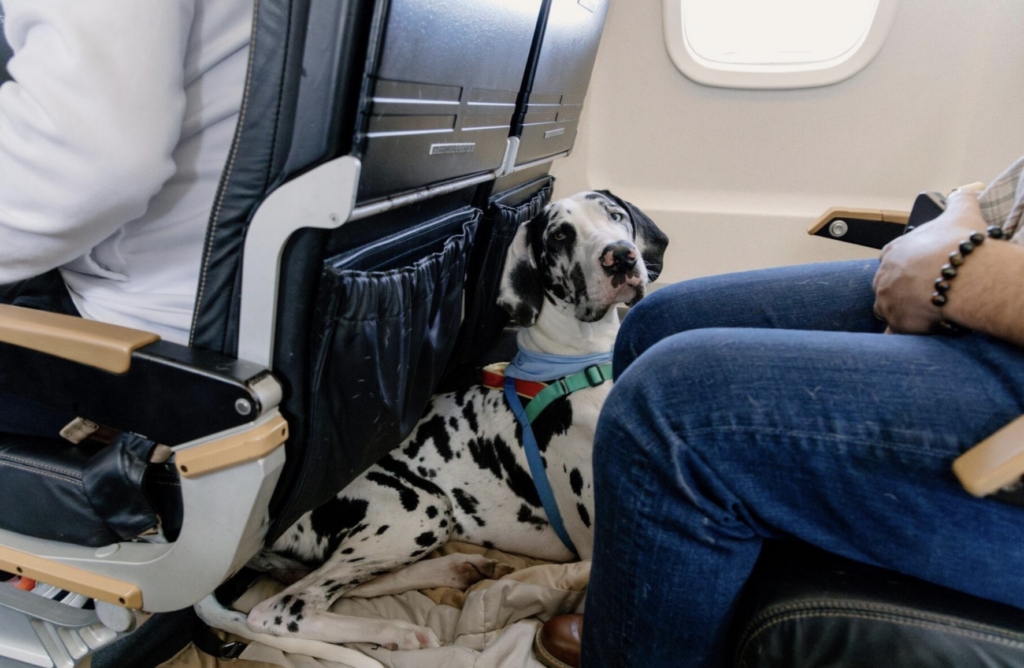
“The dog’s got room to move around within the seats, but can’t get into the aisle,” Williams said. The harnesses also allow pet parents to move around the cabin without worrying that their pet might stray while they’re in the lavatory.
Unique seat assignments: Customers don’t choose seats — pets do (based on temperament)
One of RetrievAir’s most unusual practices is its policy of not allowing passengers to select their own seats.
“We don’t allow people to seat themselves,” Williams noted. “We do the seating.”
Rather than choosing a seat based on human preferences, RetrievAir assigns seats based on the temperament and needs of the dog.
“When people make the booking, they give us their pet temperament,” Williams explained. “They can say not too friendly, kind of friendly, very friendly.”
RetrievAir then builds a seating plan designed to reduce stress and limit conflict triggers.
“We use that and then the size of the dog to make [the cabin] as stress-free as possible,” Williams said, adding that seat assignments are completed “a few days in advance.”
There are seats on board that are human-only, allowing friends and family members who won’t be seated with the dog.
“It’s a 30-seat aircraft, but there are no dogs allowed in the exit row,” Williams said. “So, we’re limited to selling 27 seats [for dogs].”
The services’ current load factors also keep the cabin calm.
“We’re in the 65–70% load factor range,” he said. “It’s actually a better experience if there are a few less people on the flight as well, and able to spread out.”
He said the in-flight atmosphere is calmer than many passengers expect.
“Generally, it’s a combination of the vibration of the engines and the noise,” Williams said. “The dogs all fall asleep. It’s a very peaceful experience, very quiet and calm.”
Treats and onboard service: ‘Doggy champagne’ and rescue-linked partnerships
RetrievAir’s onboard service is explicitly pet-forward — even in the order of service.
“We serve treats to the dogs. We have water bowls for the dogs,” Williams said. “The dogs get their treats first before the humans do.”
The charter service’s treat partnerships are evolving into a broader brand strategy, according to Delvecchio-Williams, who leads the air service’s sponsorship efforts.
“Our main treat provider is Kismmet,” he said, which provides a tasty treat called “Nugs.”
RetrievAir is also building a network of local artisan partners in its destination markets to supply in-flight pet snacks. Some offerings are a special treat for the VIPs (very important pets) onboard.
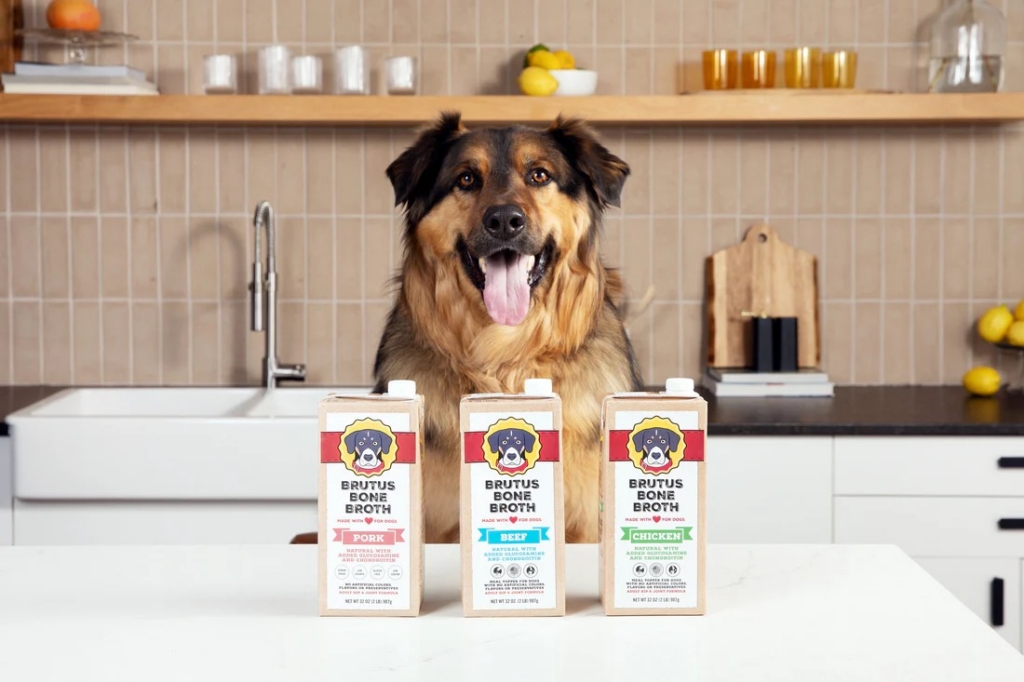
“Coming soon, we’re going to have Brutus broth on board,” Delvecchio-Williams said. Customers can mix it with water, “and your dog can enjoy some doggy champagne (as we’re calling it) on the flight.”
For human beverages, RetrievAir has also established a pet-friendly brand partnership.
“They have a white wine called Puppy Love where the proceeds go towards animal rescue efforts,” Delvecchio-Williams said, adding that RetrievAir is dedicated to pet welfare initiatives. “We also have a very robust animal rescue side,” he said.
He pointed to recent outreach work in Los Angeles: “We did an event with Guide Dogs for the Blind to help train dogs, getting used to being on an aeroplane.”
Cats can fly on RetrievAir, too — but only in carriers
RetrievAir is primarily designed for dogs, but cats are welcome as well.
“We do take cats, too,” Williams said, while acknowledging, “The service is obviously more set up for dog owners than cat owners.”
There are feline-specific requirements to keep the peace: kitties must travel in carriers.
RetrievAir adds routes and plans expansion
RetrievAir currently operates a small but growing fleet, with expansion focused on frequency rather than aircraft count.
The pet-first air service, which launched with flights to key markets in Chicago, Dallas-Fort Worth, Denver, Fort Lauderdale, Los Angeles, and New York, is expanding its domestic network with new routes aimed at high-demand leisure and “snowbird” markets.
“Our new routes are Atlanta, San Francisco, Scottsdale, Arizona, Seattle, Tampa Bay, and Washington DC,” Delvecchio-Williams said.
He highlighted early momentum for Scottsdale: “Our first flight to Scottsdale on February 15th is fully sold out,” adding that it was “very heavily requested from a lot of West Coast snowbirds.”
AGN asked Williams when RetrievAir might actually help his dog avoid the three-day drive from Canada to their winter home in Florida. He said that international flying is on the roadmap, but paperwork is a significant barrier.
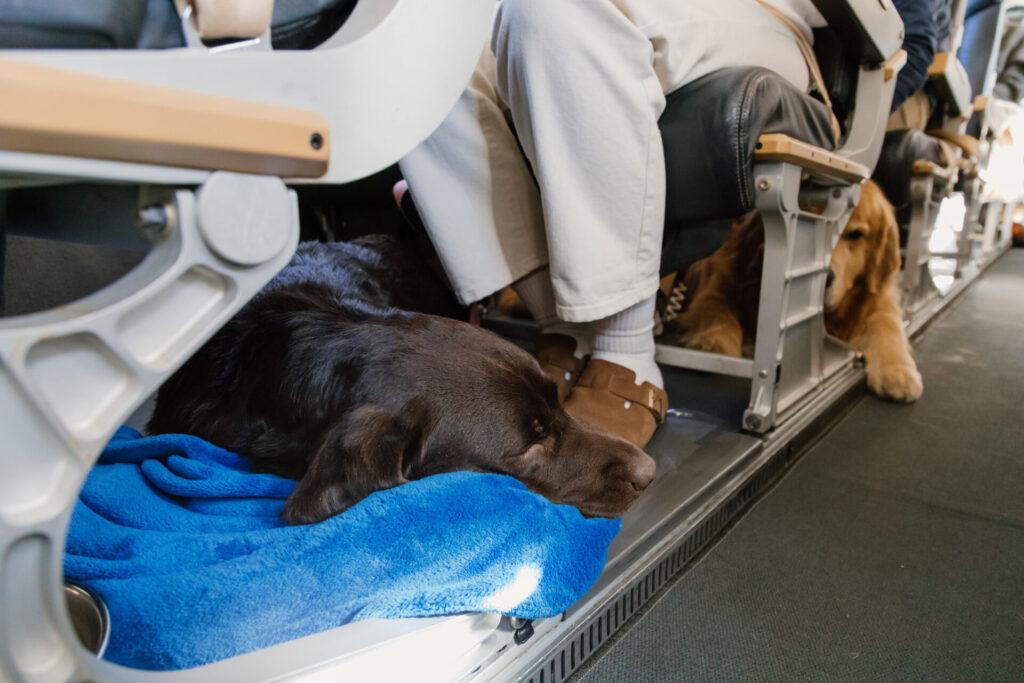
“Toronto and Vancouver are up there in the top 10 of requests,” Williams said. “It’s just a little more challenging from a regulatory perspective [and] there’s a lot more paperwork for the dogs.”
Even so, he said international destinations remain under consideration: “We’re also looking at London and Paris as markets that we think could use our service.”
But whatever comes next, Williams said the RetrievAir concept is now proven.
“We started flying in May. We’ve absolutely proven the concept…over December and January, the flights were completely sold out,” he said.
The company’s next wave of growth may also become more structured. “We’re looking at introducing a frequent flyer program and referral programs,” Williams said. “Most of our growth has been just organic word of mouth.”
Featured Image: RetrievAir

