Schoolchildren in Altay, northwest China’s Xinjiang Uygur Autonomous Region, are spending this week on the ski slopes as the region has launched a nine-day “snow holiday” for primary and junior high school students.
Since Saturday, large numbers of children have flocked to ski resorts in Altay, including the General Mountain International Ski Resort, accompanied by family members.
“I basically go skiing every year. I think the snow break is really great. Skiing with good friends is delightful, and we’ve planned to come every day during this holiday,” said Dong Qiye, a fourth-grade student at Altay Experimental Primary School.
As one of China’s most popular winter destinations, Altay offers student-exclusive discounts at four major ski resorts, cultural venues, and hotels, including free admission to ski resorts, 15 percent off dining at resorts, and 20 percent off ski lessons. Several resorts also provide free half-hour beginner classes to help children get started.
“The demand for ice and snow experiences from students will attract parents to travel with them. It can boost local weekend tourism and draw wider attention to Altay’s winter resources and services. This will drive spending on skiing, lodging, dining and cultural products,” said Delida Nabi, head of the region’s culture, sports, broadcasting and tourism bureau.
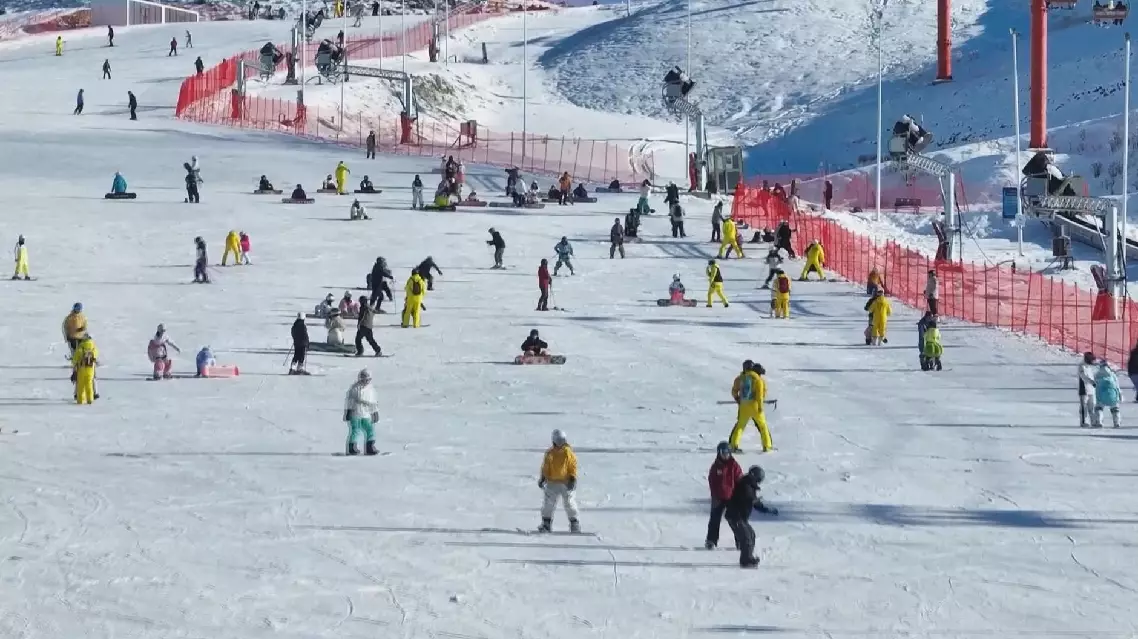
Altay in China’s Xinjiang launches nine‑day “snow holiday” for students
A futuristic robot traffic officer has been deployed on duty in the eastern Chinese tech hub of Hangzhou City, directing pedestrians and vehicles using artificial intelligence-powered operations.
The AI traffic management robot “Hangxing No.1,” developed under the leadership of Hangzhou Traffic Police Tactical Unit (TPTU), made its debut on the streets of the capital city of Zhejiang Province, on Tuesday, marking the start of its trial run.
The robot is equipped with high-definition cameras and sensors, capable of capturing common traffic violations in real time and reminding pedestrians and non-motorized vehicles passing by to abide by traffic rules through an intelligent voice system.
“I just crossed the line less than half a meter when it alerted me. It responded promptly,” said a pedestrian.
“When you see it, you will subconsciously stop at the waiting line like this. I think it’s quite useful. It can save some police force costs. I believe it will be a trend in the future,” a motorcyclist said.
Beyond identifying traffic violations, the Hangxing No. 1 can also synchronize with the signal lights to assist human officers in traffic guidance and order maintenance. Its flexible mobility enables rapid deployment across different intersections, enhancing traffic management efficiency.
“It now operates in two modes — directing in the middle of the road and guiding at intersections,” said Zhang Wanzhe, a police officer.
Currently, the AI traffic management robot is in the pilot phase. In the future, it is expected to be equipped with a large language model to provide convenient services such as voice interaction and command control.
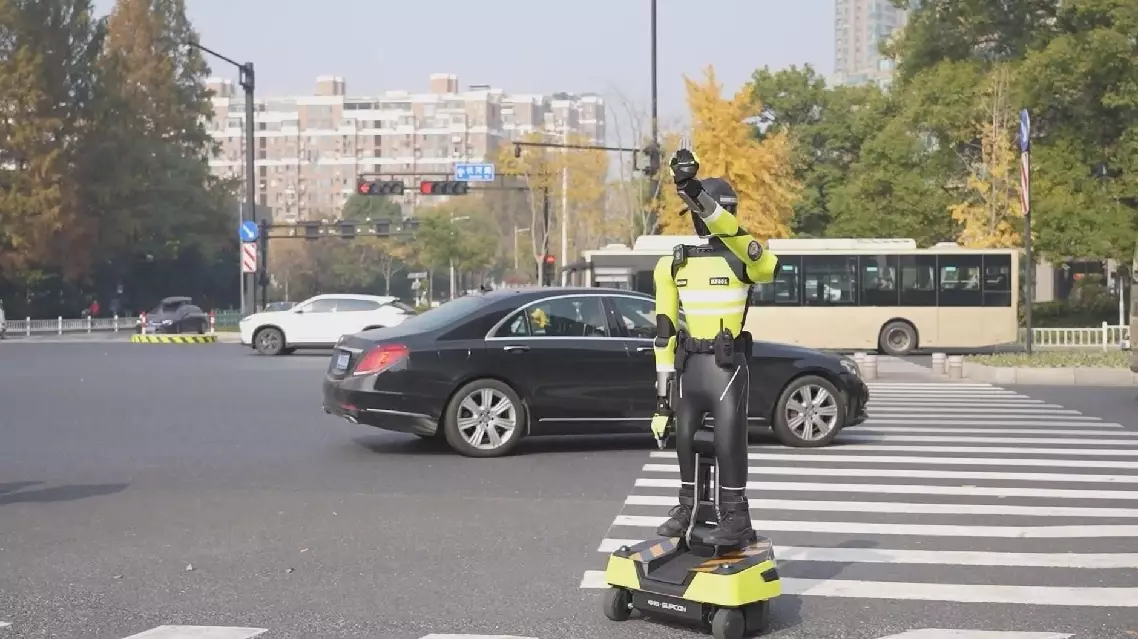
Robot traffic officer goes on duty in China’s Zhejiang