
NDOLA, Zambia—In the latest bizarre twist in a bizarre story, fans of the late Zambian President Edgar Lungu have appropriated an English soccer ditty to advocate for the return of his body to the southern African country.
Zambia’s current president, Hakainde Hichilema, wants Lungu—who died in June while seeking medical treatment in South Africa—buried in Zambia. Lungu’s family says he despised Hichilema so much that he barred his political rival from his funeral. They want to keep even more distance between the two men, burying Lungu in Johannesburg. The two sides are fighting it out in court and, now, in bars and on the airwaves.
“Three Lions”—written for despondent English soccer fans ahead of the (failed) 1996 Euro campaign—has been co-opted by the side that wants Lungu brought back to Zambia. Radios blare it. Zambians dance to it at nightclubs. And on social media, Hichilema supporters share it to celebrate a recent South African court ruling ordering Lungu’s remains to be sent home.
Why? Because the most ear-wormy line in the ear-wormy song is, “It’s coming home.”
The line originally referred to the Euro tournament, but evolved over time to signify any soccer trophy that England could conceivably win after the long drought that followed its 1966 World Cup victory. The lyrics are so firmly embedded in the wounded psyches of fans that David Baddiel, the comedian who co-wrote them, just refers to the key phrase as “ICH.”
In Zambia, Lungu’s mortal remains are the trophy.
“The reach of this particular phrase is kind of extraordinary,” said Baddiel. “I have seen a fair few unexpected uses of ICH but this may be the most bizarro one yet.”
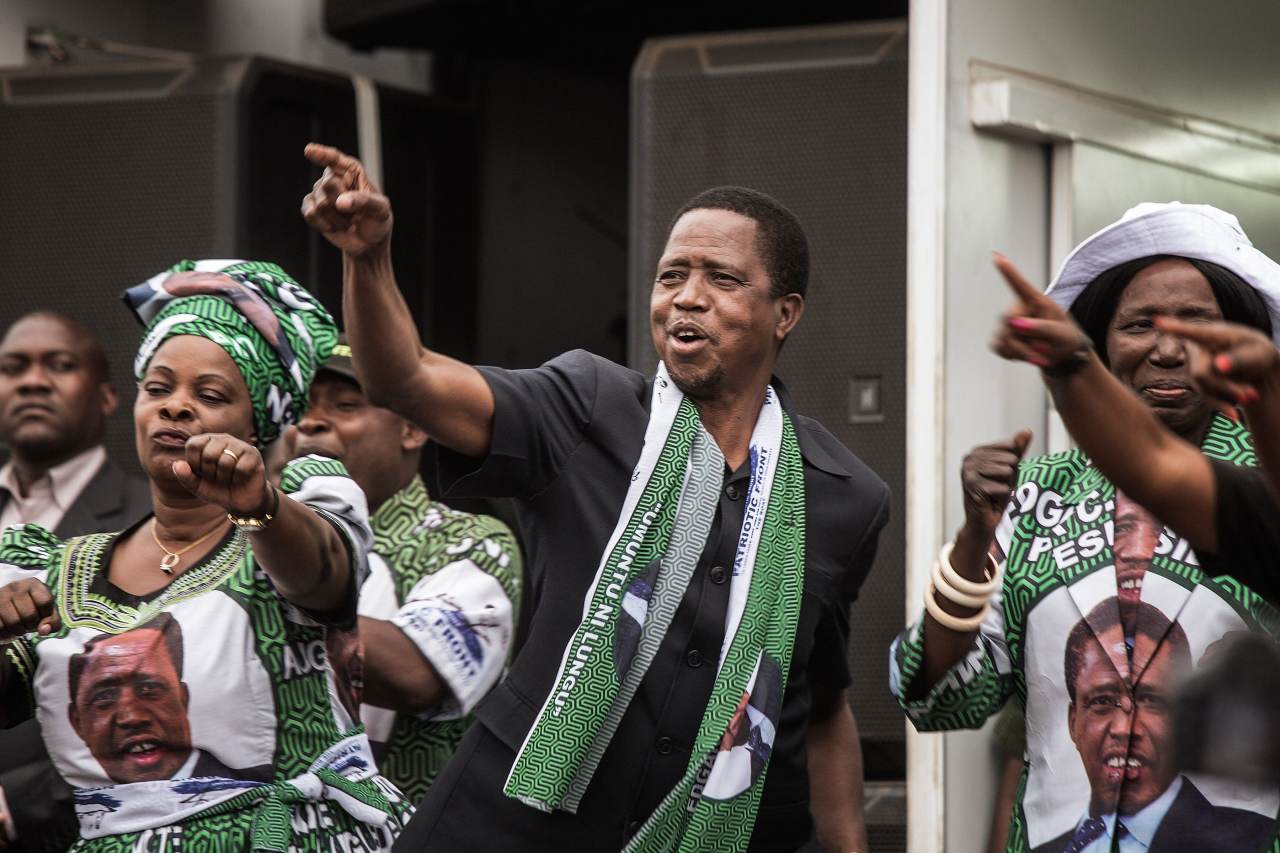
In office from 2015 to 2021, Lungu staked out a spot on the populist end of the Zambian political spectrum. After he lost to Hichilema, he routinely jogged through the streets of Lusaka, trailed by hordes of supporters until the authorities banned his runs. He remained a symbol of resistance to Hichilema’s austerity measures—one reason there’s a metaphorical match being played over his literal legacy.
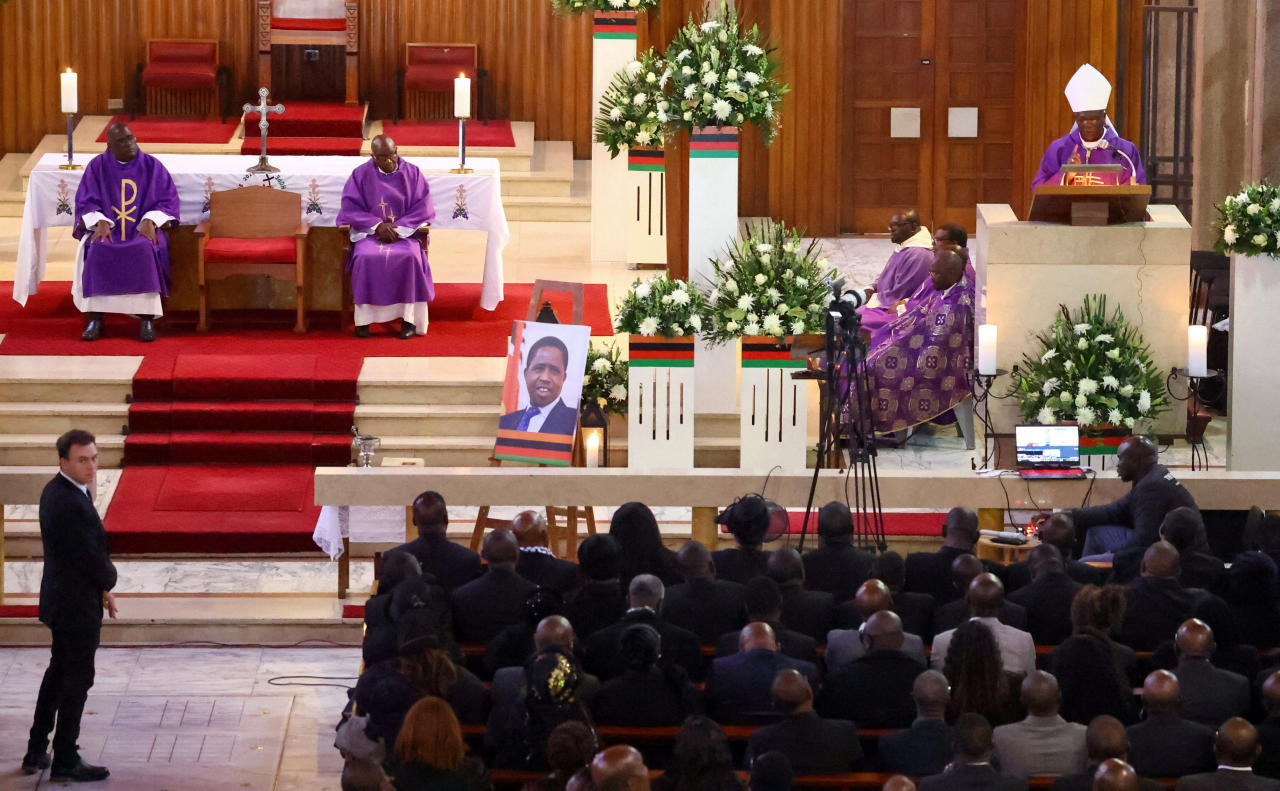
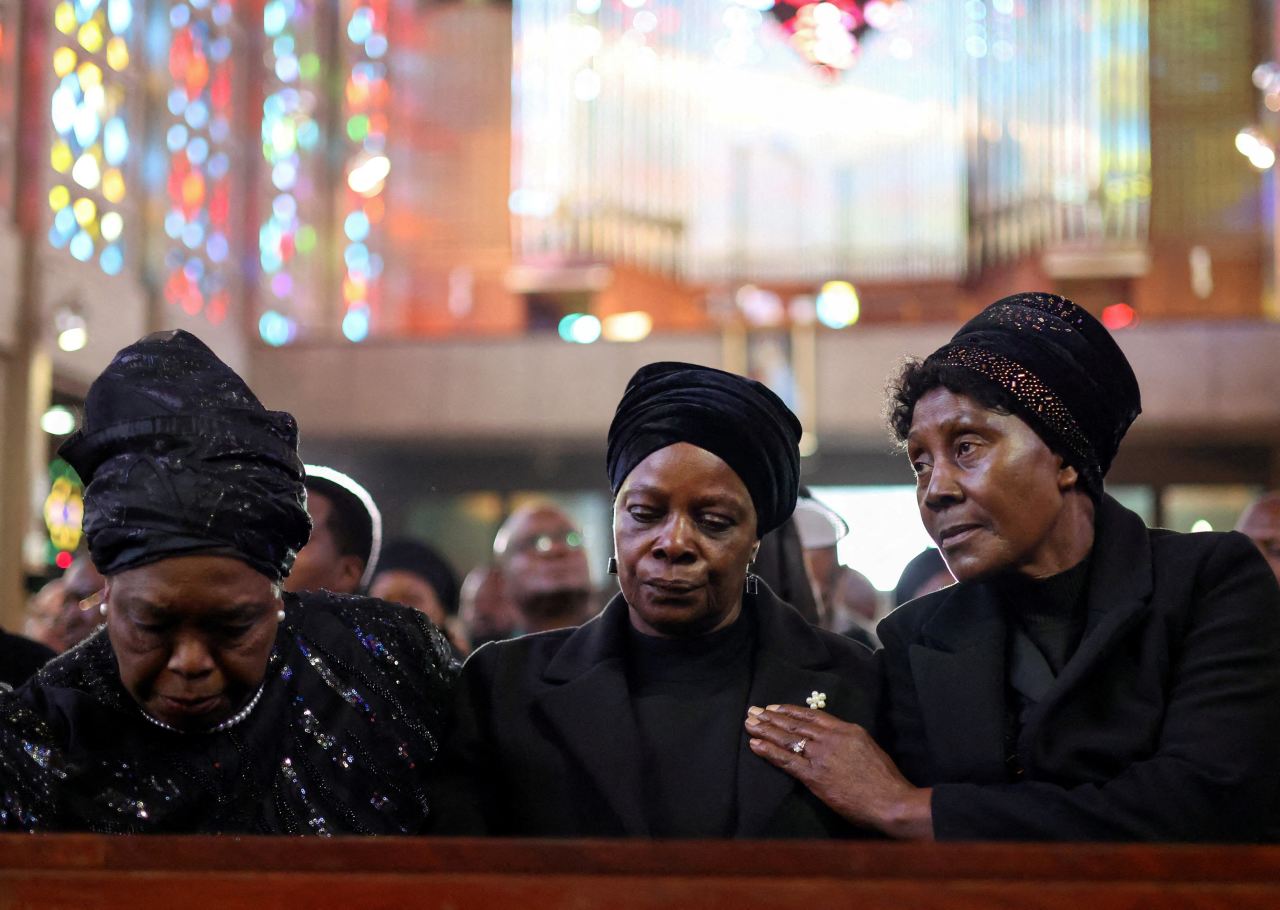
The bring-it-home camp seems to have the upper hand. On a recent day in mid-September, mourners huddled outside a Johannesburg, South Africa, cathedral in anticipation of a private send-off. Meantime, 30 miles away in Pretoria, Zambian Attorney General Mulilo Kabesha was in court asking a judge to prohibit the family from proceeding with the funeral.
The court ruled in Kabesha’s favor, allowing the government to repatriate Lungu’s remains to Zambia. Officials in Lusaka, the capital city, planned to bury him at Embassy Park alongside other late heads of state. The court also ordered the Lungu family to pay the legal costs associated with the failed suit.
Outside the court, Kabesha told supporters there would be no “celebrations or a winner.” But back home, supporters celebrated the win nonetheless.
“Confirmed, it’s coming home! Lungu to be buried in Zambia,” the city of Chipata exulted on social media. Locals have a particular affinity for Lungu, who elevated Chipata from municipality to city.
One of Zambia’s most-popular radio stations, Sun FM Zambia, played “Three Lions” when news broke that a judge had dismissed the Lungu family’s initial appeal.
“It’s an inspirational song that gives hope to the supporters of our beloved leader,” said Chama Penelope, a Lungu supporter in Zambia’s Copperbelt Province. “We all want him buried with dignity in his homeland.”
The DJ at a nightclub outside of Ndola city played the song while whipping up the crowd with its famous ICH catchphrase.
The crowd responded, “Kumushi,” the equivalent of home in the local Bemba dialect.
The government says Lungu would have wanted a proper, pomp-filled burial at the presidential cemetery. His family says he ended his life as a private citizen whose dying wish—literally from his deathbed—was that Hichilema not even be allowed near his casket.
The family is negotiating with Zambian authorities. But the dispute is so bitter that the government has threatened to bury Lungu without the family’s involvement. Lungu’s remains remain at a Pretoria morgue while the family appeals the verdict to the South African constitutional court.
“There is no reason for the state to interfere with the burial—it’s heart-wrenching,” his widow, Esther Lungu, told reporters in August. “His wish was to be buried in South Africa.”
Conspiracy theories about Lungu have spread across Zambia—from suggestions he isn’t really dead to rumors that Hichilema wants the corpse for witchcraft purposes.
In September, a private investigator allegedly hired by the Zambian government visited the morgue and demanded to see the deceased, according to family spokesman Makebi Zulu.
“The said government investigator declined to speak to the family,” Zulu said. “While the family has been engaging in good faith, the government appears to have been conducting parallel activities to access the body for reasons that remain unknown.”
Hichilema’s push to take charge of Lungu’s final journey could be a calculated move to boost his presidential re-election bid next year, said Louw Nel, an analyst with Oxford Economics Africa.
“Lungu’s death has worsened the divisions within his party, especially efforts to choose his successor,” he said. “The Hichilema administration is well aware of this weakness, and it is playing it up as the fight for his burial continues.”
Write to Nicholas Bariyo at nicholas.bariyo@wsj.com

