I don’t normally discuss the market’s sentiment profile in depth, especially since sentiment is more a concern for short-term traders than for long-term investors. But I think the present case provides for an exception.
Now, to an extent, sentiment is a concern for even longer-term-oriented turnaround investors like us. After all, we like to know when a particularly attractive company is so undervalued and overlooked that it merits our attention; hence, the sentiment angle. But what I’m referring to here are various bull/bear ratios and other indicators that concern broad market sentiment.
Why Market Sentiment Matters
The reason I believe this is so important in the present environment is that it will undoubtedly affect capital allocation to various market sectors in the coming months. And that, in turn, could have an impact on turnaround-focused stocks across various sectors.
Specifically, we want to know how investor sentiment will play into the ongoing AI infrastructure buildout—particularly for a couple of the AI-related stocks in the Cabot Turnaround Letter portfolio—and whether the recent correction in those areas of the market will fully reverse course. It would also be helpful to discern whether sentiment is strong enough to support continued strength in the semiconductors and other related areas of the heavy-lifting tech sector.
Aside from equity market sentiment, I think it’s also prudent that we keep an eye on sentiment for both the gold/silver and bond markets, since those areas not only have a direct influence on some of our portfolio holdings, but also on the broader economic outlook.
[text_ad]
So, with that said, let’s turn our attention to some of the more commonly discussed sentiment indicators for further insights.
The State of Market Sentiment Today
Stock Market Sentiment
As it concerns the stock market, my own perception is that sentiment among individual investors is trending toward bearish. Although a relatively neutral profile was in force for much of the summer, in recent weeks, we’re witnessing an increase in pessimism toward equities as reflected in the leading sentiment gauges.
For instance, although the widely followed (and generally accurate) AAII Sentiment Survey has been more or less balanced between bulls and bears in recent months, it’s now showing that 53% of respondents are bearish, while just 29% are bullish (as of September 17). That’s a fairly significant deterioration from the complacency that prevailed during July and much of August.
From a contrarian standpoint, the current AAII sentiment readings are favorable for the market since they suggest short interest is building up… which in turn could quickly be ignited in the form of a short-covering rally.
Gold Sentiment
Of special interest to me is gold market sentiment, which has been frustratingly neutral to bullish most of the last several months. On this score, an indicator I look at each day is the J.M. Bullion Fear and Greed Index for gold. That particular sentiment measure had been stuck at around 50% (out of a possible 100%), meaning that gold investors remained solidly neutral on the gold price outlook for most of summer.
But as of late September, gold market sentiment as measured by this indicator has been trending bullish. As of September 22, the gold Fear and Greed Index was reading 68%, which in my view reflects too much optimism among retail investors toward the yellow metal. And while I’m not expecting a major decline in gold prices from here, the currently elevated sentiment readings suggest gold will likely face some headwinds in the near term.
That said, the increased enthusiasm for a defensive asset like gold can also be interpreted as a positive omen for stock investors. I interpret this to mean there’s enough uncertainty over the broader financial outlook among participants to further support short-covering rallies for equities in the coming weeks.
Bond Sentiment
Concerning the bond market outlook, U.S. bond ETFs have attracted net inflows for the last several months as investors seek to lock in the highest yields available in years. While this isn’t necessarily a sign that participants are outright bullish on Treasuries, it does suggest a willingness to maintain or increase exposure to U.S. government bonds despite persistent inflation pressures and elevated long-term yields.
The implication here is that continued demand for high-quality government debt is a sign that a growing number of investors remain cautious about equities at current valuations. From a contrarian perspective, that can prove to be supportive for the stock market’s uptrend—especially if it persists into the fourth quarter.
Crypto Sentiment
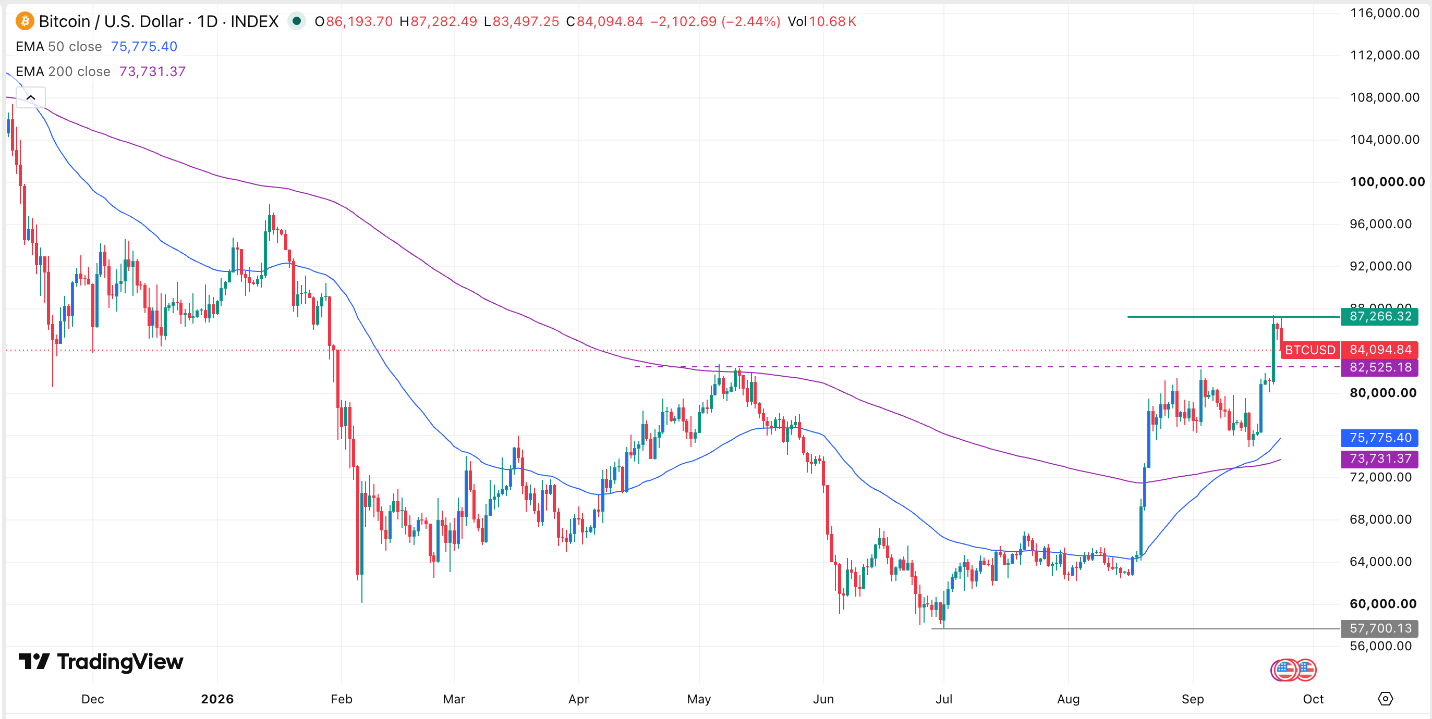
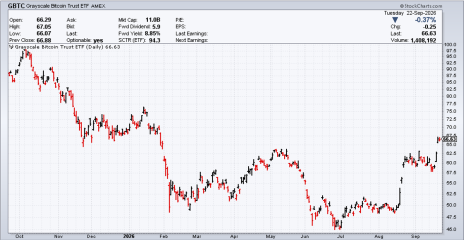
Finally, I think it’s worth noting that after a tumultuous stretch from last October until this past August, cryptocurrencies like bitcoin are starting to show strength once again. The recent rally in the Grayscale Bitcoin Trust (GBTC), for instance, can be viewed as a sign that speculative sentiment is returning—and that has generally been a favorable leading indicator for stocks.
Market Sentiment Isn’t Pointing to “Dangerous” Territory
In summary, what this broad psychological backdrop of core markets tells me is that stocks in particular aren’t in what I regard as “dangerous” territory in terms of investor sentiment. In fact, the current sentiment profile for equities suggests there’s not enough optimism to warrant a major bear raid right now, with defensive positioning in gold and bonds providing a measure of contrarian support, while the latest strength in crypto markets could be a sign that a much broader speculative interest in stocks could be on the immediate horizon.
As such, my best guess is that stocks maintain a relatively even keel during the rest of the historically weak month of September (temporary bouts of higher volatility notwithstanding). And if the market’s seasonal tendencies play out this year, we should see strength returning across stocks, and possibly gold—driven by typical Q4 jewelry demand, portfolio rebalancing and other historical patterns—later this fall.
[author_ad]