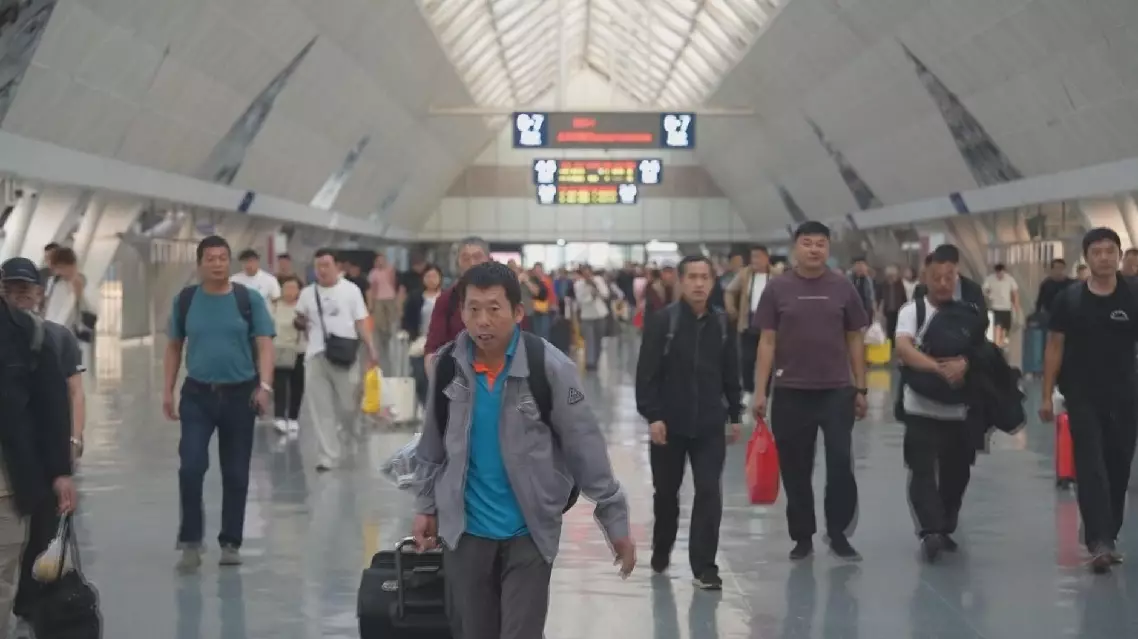
China’s 16-day railway transport period for the 2026 Mid-Autumn Festival and National Day holiday officially kicked off on Wednesday and will run through October 8. As the holiday approaches, the China Railway Lanzhou Bureau Group is expected to handle 5 million passenger trips during the period, with the Yinchuan Railway Station in northwest China’s Ningxia Hui Autonomous Region alone forecast to see 878,600 passenger trips. The peak of passenger flow is expected to occur on Oct 1, the first day of this year’s week-long National Day holiday.
According to the Lanzhou railway authorities, holiday travel will be dominated by tourism and family visits, with popular destinations including Shanghai, Guangdong, Beijing, Shaanxi and Sichuan.
To meet the surge in demand, the railway operators will add temporary passenger trains and overnight high-speed rail services to accommodate travelers as much as possible.
As of 08:00 Wednesday, the 12306 railway ticketing platform had sold a total of 96.21 million tickets for the holiday travel period.
According to advance ticket sales, passenger flows are concentrated on routes such as Beijing to Zhengzhou, Shanghai to Beijing, Guangzhou to Nanning, Guangzhou to Guigang, Beijing to Shanghai, Beijing to Taiyuan, Beijing to Shenyang, Beijing to Xi’an, and Beijing to Jinan.
The Mid-Autumn Festival, a traditional Chinese holiday, is celebrated on the 15th day of the eighth month of the Chinese lunar calendar. Across the country, people mark the occasion by gathering to gaze at the moon, eat mooncakes, and light colorful lanterns. This year, the festival falls on Friday.
China’s National Day holiday, typically an annual seven-day public holiday from Oct 1 to Oct 7, is known as the Golden Week, during which large numbers of Chinese people travel across the country.
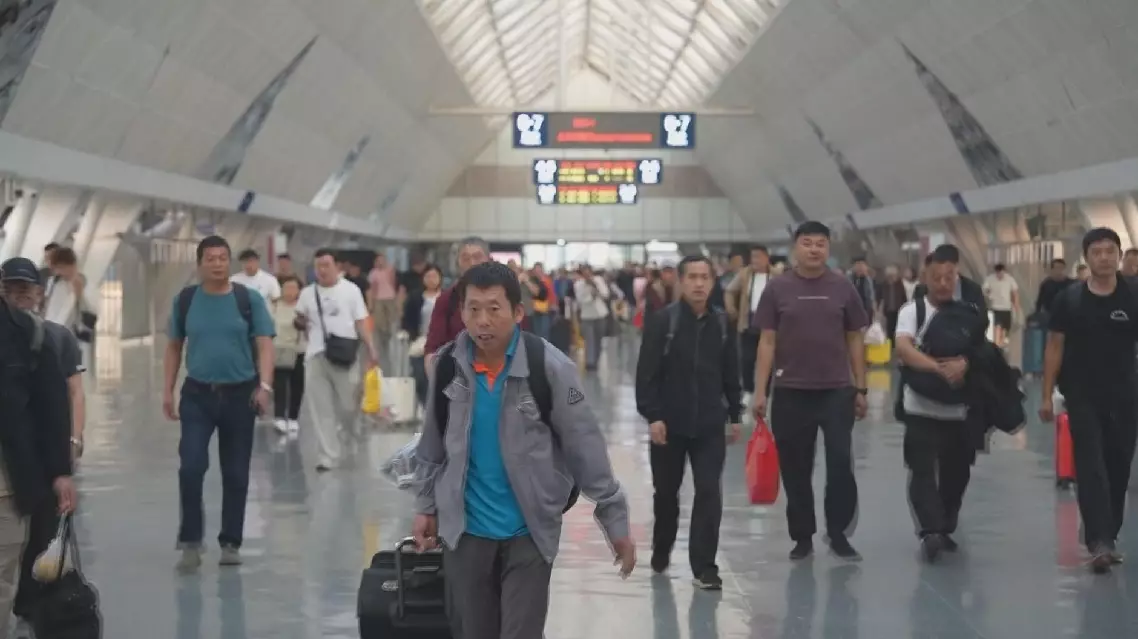
China’s 16-day railway transport for 2026 Mid-Autumn Festival, National Day holiday begins
Human rights action plans must roll out in diverse, context-specific pathways according to the needs of each country, experts stressed at a side event on Tuesday held at the Palais des Nations in Geneva during the 63rd session of the United Nations Human Rights Council (UNHRC).
Titled “Diverse Pathways of National Human Rights Action Plans,” the event convened researchers, scholars, and civil society representatives from multiple countries to hold in-depth discussions on the formulation and execution of national human rights strategies.
Participants reached a broad consensus on the need to deepen international dialogue and mutual learning to jointly advance the healthy development of the global human rights endeavor.
At the event, Chinese experts provided a systematic overview of China’s National Human Rights Action Plan, which was released in June this year.
Mao Junxiang, executive director of the Human Rights Center at Central South University in central China’s Changsha City, highlighted that the action plan is closely aligned with the country’s 15th Five-Year Plan (2026-2030) for national economic and social development. He outlined five defining characteristics of the plan, noting that it is grounded in reality, people-centered, keeps pace with the times, maintains a global vision, and focuses on action. Mao noted that this approach has enabled China to forge a distinct path of human rights development centered on strategic planning and concrete implementation.
Li Juan, a Chinese researcher at the same center, focused on the protection of digital rights. She introduced China’s tangible achievements in bridging the digital divide through robust network infrastructure, leveraging digital and intelligent technologies to empower public services, healthcare, education, and livelihoods, and establishing sound ethical frameworks for artificial intelligence.
A representative from the China Ethnic Minorities’ Association for External Exchanges detailed the country’s practices in forging a strong sense of community for the Chinese nation, promoting common prosperity and development and safeguarding the equal rights of all ethnic groups.
International comparison and theoretical reflection were another key focus of the event. Peter Herrmann, a member of the European Academy of Sciences and Arts, pointed out existing shortcomings in some European countries regarding the protection of immigrants’ rights and basic social welfare.
Meanwhile, Efe Can Gurcan, a Turkish scholar and researcher at the Human Rights Center of Central South University, drew upon the Vienna Declaration and Program of Action to compare the different pathways of human rights governance between China and the United States, elaborating on how diverse cultural and political contexts shape human rights practices.
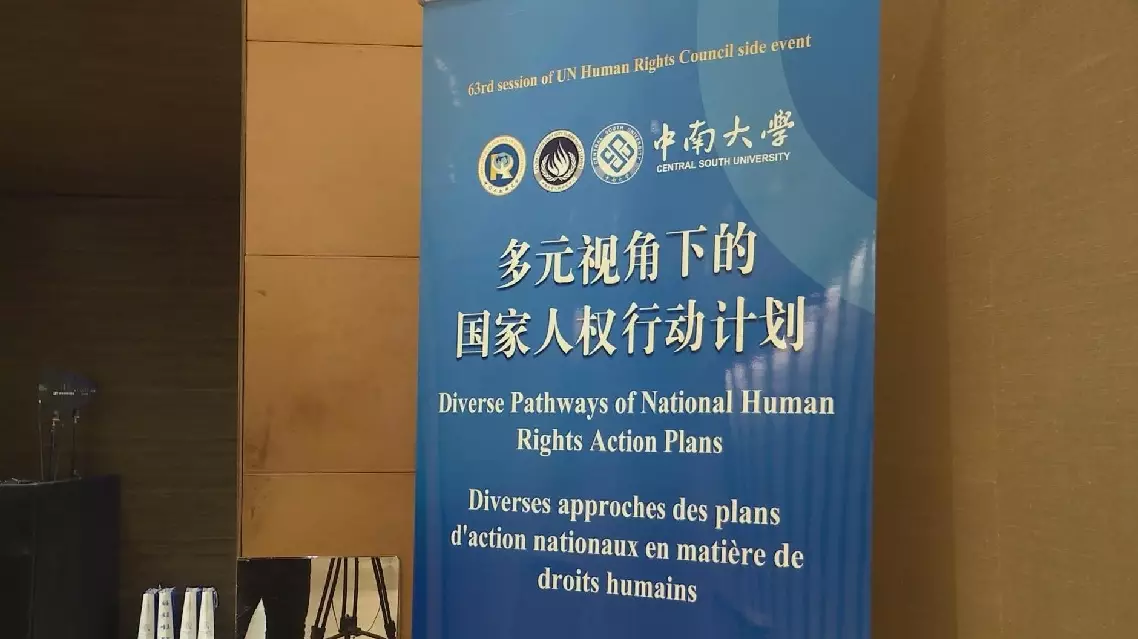
UN side event highlights diverse pathways for national human rights plans