An earthquake of magnitude 5.1 struck Tibet on Thursday, according to the United States Geological Survey (USGS).
The quake occurred at a depth of 10 km (6.21 miles), according to GFZ, Reuters reported.
It came a week after a massive ice, rock and mud avalanche in the Himalayas triggered a devastating flash flood across parts of Nepal and Tibet.
The death toll from the August 26 disaster has climbed to 1,273, with at least 1,252 people killed in Nepal and 21 in Tibet, according to figures cited by authorities and Chinese state media. More than 4,700 people remain missing across the two countries.
In Nepal, 4,216 people are still unaccounted for, while China has reported 541 missing in Tibet.
What caused the Nepal floods?
The disaster began high in the Himalayas on August 26 when a huge section of glacier and underlying rock collapsed, sending an avalanche of ice, rock and sediment down the mountain.
The avalanche struck the Lhende Khola river system near the Nepal-China border. The debris temporarily blocked the river, creating a natural dam before the accumulated water and material surged downstream. The resulting flood entered the Bhote Koshi and Trishuli river systems, devastating settlements in Nepal’s Rasuwa district and areas farther downstream.
Initial reports had suggested that an earthquake triggered the disaster. However, subsequent analysis by the US Geological Survey indicated that the seismic signal was generated by the massive landslide itself. The collapse registered as a seismic event of about magnitude 5.2.
The latest magnitude-5 earthquake reported by GFZ on Thursday is therefore a separate seismic event from the seismic signal associated with last week’s glacier collapse.
The disaster struck without significant rainfall in some of the worst-hit areas, catching communities off guard. The force of the flood swept away homes, vehicles, roads and bridges and severely damaged hydropower infrastructure.
Thousands still missing
The scale of the destruction has made it difficult for rescue teams to establish the fate of thousands of people.
Nearly 600 foreign nationals from more than 30 countries are also missing, with Indians among the largest groups. The US State Department said on Wednesday that around 75 Americans remained unaccounted for.
In Kathmandu, relatives of missing foreigners have been visiting hospitals and morgues in the hope of finding information about their loved ones.
Also Read: Trump shut down project to track natural disasters in Nepal a year before deadly floods came: Report
“I feel desperate, it’s been so many days,” 53-year-old American Sanjeev Rai said after travelling to Nepal when he learned that his wife could not be traced.
Many of those caught up in the disaster were tourists, trekkers and pilgrims travelling towards Tibet, including people heading towards Mount Kailash and Lake Mansarovar.
Roads, bridges destroyed; aid delivery difficult
The floods and landslides have devastated the region’s transport network, cutting off communities and complicating relief operations. Roads and bridges were washed away while power and communications infrastructure were also damaged.
With some of the worst-hit mountain districts difficult to reach, aid agencies are considering using traditional porters to carry supplies into isolated areas.
“We’ve been discussing with the government how also to use helicopters, cargo drones to be able to deliver aid,” UN Resident Coordinator for Nepal Lila Pieters Yahia told reporters in Kathmandu.
Also Read: ‘Don’t eat, buy or sell fish caught in Nepal floodwaters’: Bihar warns citizens
“The beauty of your country (is) you have porters. So we have to go back into also those very simple means to bring the aid as soon as possible.”
Porters, who have long been central to Nepal’s trekking and mountaineering industry, are accustomed to carrying heavy loads for days across steep and difficult Himalayan trails.
Search continues inside hydropower tunnels
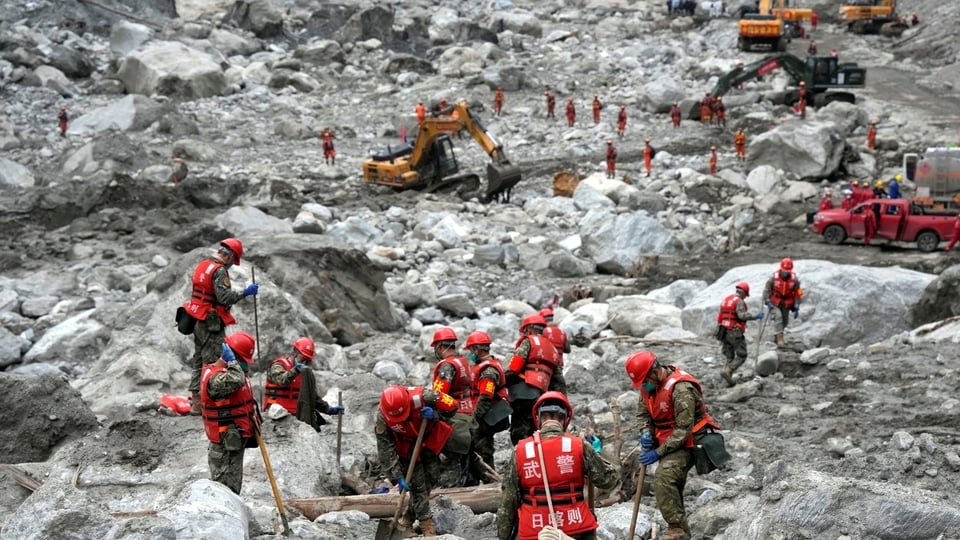
Nepal’s army and rescue teams, including foreign specialists, are continuing searches at several hydropower projects where workers are feared to be trapped inside tunnels.
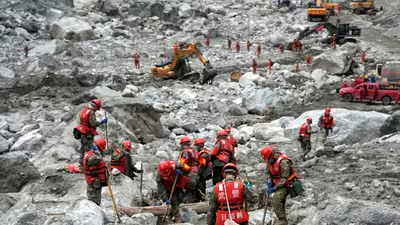
Excavators and other heavy machinery are being used to clear mud and debris as rescuers look for signs of survivors. The tunnels have become among the most challenging sites in the ongoing operation, with access hampered by the destruction of roads and surrounding infrastructure.