As China and Türkiye mark the 55th anniversary of diplomatic relations, the partnership is evolving from one centered on trade into a broader strategic relationship driven by infrastructure, green technology, digital transformation and closer political coordination, a Chinese expert said.
“Today, China-Türkiye relations are not merely transactional; they are strategic and structural,” said Hou Na, an anchor of state-owned Chinese broadcaster CGTN, in an exclusive interview with Daily Sabah.
China is one of Türkiye’s largest trading partners, with bilateral trade increasing fortyfold over the past two decades, Hou said. Yet the relationship is increasingly moving beyond a simple exchange of goods toward deeper economic interdependence, with the two countries expanding co-investment in infrastructure, clean energy and advanced manufacturing, from battery production lines to grid-scale energy storage projects.
The evolution of China-Türkiye relations from a traditional trade mindset toward co-investment could be seen as both a result and a reflection of the convergence of the two countries’ development visions. “The synergy between China’s Belt and Road Initiative (BRI) and Türkiye’s Middle Corridor is not just a diplomatic talking point,” Hou said. “It is being operationalized through transport corridors, logistics hubs and enhanced rail-sea connectivity.”
The connection is rooted in the two initiatives’ shared focus on linking Asian and European markets. The Trans-Caspian East-West-Middle Corridor, known as the Middle Corridor, is a multimodal trade route running from China through Central Asia and the Caspian Sea, then through Azerbaijan, Georgia and Türkiye to Europe, according to information obtained from Türkiye’s Ministry of Foreign Affairs. The ministry describes it as a key component of efforts to revitalize the ancient Silk Road. The corridor is seen as complementary to China’s Belt and Road Initiative, which seeks to strengthen connectivity between East and West.
For Hou, that alignment reflects a shared belief that connectivity itself can be an engine of prosperity.
Toward deeper ties
However, economic ties tell only part of the story. While co-investment is bringing the two economies closer, lasting partnerships are ultimately built not only through trade and investment, but also through mutual understanding between societies. The social dimension of the relationship is already taking shape in several areas, from tourism and education to cultural exchange, Hou said. Yet she believes these connections have significant room to deepen.
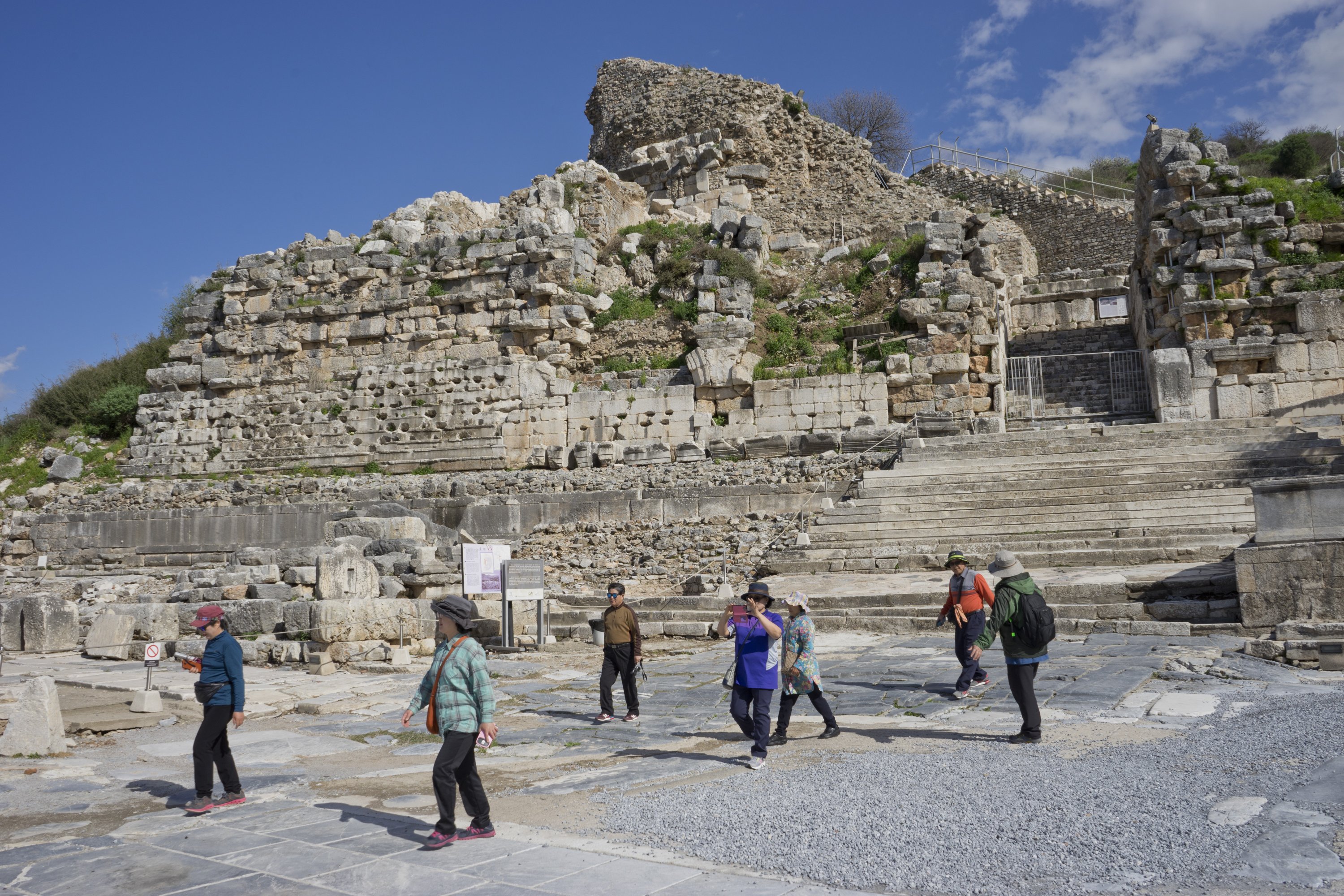
Tourism offers one of the most visible areas for closer interaction. Turkish Airlines (THY) has expanded its China schedule, with its Istanbul-Shanghai route operating up to 11 weekly flights during the peak season, Hou said. Beyond connecting two destinations, she said, these flights bring together businesspeople, students and first-time visitors, “who return home as informal ambassadors.”
Education and academic exchange offer another, potentially longer-lasting, channel for mutual understanding. More Turkish students are studying at Chinese universities, while interest in Mandarin and China studies is growing in Türkiye, Hou said. At the same time, Chinese students are drawn to Türkiye’s rich history and its role as a crossroads of civilizations. Such exchanges, she argued, “weave a fabric of long-term understanding” that cannot be built through government programs alone.
“Culturally, both nations represent ancient civilizations with deep reservoirs of art, philosophy and craftsmanship,” Hou said. For her, that shared heritage offers a foundation for dialogue that extends beyond formal diplomacy. Recent efforts to promote Chinese governance literature in Ankara, including an event attended by senior Turkish officials, are one example of this growing intellectual exchange.
Still, Hou believes the relationship could reach further into the lives of people in both countries. More co-produced documentaries, joint reporting projects and other forms of storytelling, she said, could help people in China and Türkiye see each other beyond politics and gain a better understanding of everyday life in the other country.
That broader understanding, Hou suggested, would also require looking beyond the countries’ major political and economic centers. While China-Türkiye relations are often viewed through Beijing-Ankara or Istanbul-Shanghai ties, second-tier cities could develop their own connections through culture, sports and gastronomy. Chengdu and Izmir or Xi’an and Bursa, could offer examples of how such links might grow at the local level.
Such connections could extend to younger generations as well, whose lives are increasingly shaped by digital platforms. Virtual exchange programs, hackathons and startup competitions between Chinese and Turkish universities could give young people new ways to connect, collaborate and build relationships across borders, Hou said.
For all the weight carried by trade, investment and diplomacy, Hou believes the relationship is ultimately sustained by something less tangible: human connections. As she put it, “If trade builds the skeleton of our relationship, then people-to-people ties are the blood and tissue that keep it alive.”
Looking ahead
From the movement of goods and capital to the movement of people and ideas, China-Türkiye relations have steadily expanded into new territory. But that expansion is unfolding against a global landscape that is becoming more complex and uncertain. For Hou, sustaining the momentum will depend on keeping three elements in balance: political trust, practical cooperation and cultural empathy.
Economically, the relationship is likely to be shaped by two forces already transforming economies around the world: the green transition and digital transformation. Türkiye’s carbon- neutrality goals and China’s expertise in solar, wind and battery technologies could open new avenues for cooperation. “The joint ventures we are seeing today in lithium battery production and energy storage are just the beginning,” she said. “I expect to see cooperation expand into electric vehicle supply chains, smart grids and even joint R&D in critical minerals.”
Connectivity, meanwhile, is likely to move beyond infrastructure itself. As the alignment between the Middle Corridor and the Belt and Road Initiative develops, Hou expects greater focus on logistics and trade facilitation, including digital customs platforms and standardized rail tariffs.
Beyond the bilateral relationship itself lies a changing world. As the international landscape grows more complex and unpredictable, Hou sees “strategic patience and multilateral coordination” as increasingly important. “Whether it is within the G20, the Shanghai Cooperation Organization, or the U.N., China and Türkiye share an interest in a rules-based order that reflects the realities of the 21st century – not the 20th,” she said.
The challenge now is making those strands work together. Economic cooperation can create local employment and training opportunities, helping build social acceptance. Cultural exchanges can bring business communities closer to the human context of their deals, while political dialogue can keep the relationship oriented toward “a long-term partnership, not a tactical alignment.”
If these elements continue to complement one another, Hou believes “The next decade will not just be a continuation of the past 55 years. It will be a qualitative leap forward.”