Editor’s note: Seymur Mammadov is the editor-in-chief of News.Az and director of the international expert club EurAsiaAz. This article reflects the author’s personal views and does not necessarily represent those of News.Az.
Donald Trump’s newly announced phase of economic warfare against Iran appears, at first glance, to be aimed at Tehran. But if Washington truly intends to carry out its threat and cut Iran off from its remaining major trade channels and sources of foreign-currency revenue, then the main target of US pressure will inevitably become not Iran itself, but China.
Trump has effectively presented the international community with an ultimatum: countries and companies that continue to provide Iran with an economic “lifeline” risk facing consequences from the United States. Washington is looking at oil shipments, financial transfers, currency exchanges, shipping registries, intermediary structures, and other mechanisms that allow Tehran to circumvent restrictions.
The logic of the new strategy is clear. If military pressure fails to force Iran to accept US terms, the White House is seeking to shift the center of gravity of the confrontation from the battlefield to finance, trade, and energy.
Yet here the United States faces a fundamental problem: it is impossible to truly isolate the Iranian economy without affecting China.
In 2025, China bought more than 80 percent of Iran’s seaborne oil exports. At certain points, the share headed to the Chinese market was even higher. A significant portion of those shipments went to independent Chinese refineries, commonly known as “teapot” refineries. Over the past several years, these facilities have become one of the main mechanisms allowing Tehran to preserve oil revenues despite US sanctions.
Since the latest military escalation began, those volumes have changed. Logistical difficulties, the risk of secondary sanctions, and disruptions to shipping have reduced purchases. But the core reality remains unchanged: if Iran retains the ability to export significant volumes of oil, China remains its most important buyer.
That is why the question Trump is effectively putting to other countries is far harsher than Washington’s official rhetoric suggests: are they prepared to choose between economic relations with Iran and access to the US financial system?
For most countries, that choice is relatively straightforward. For China, it is not.
Washington has repeatedly imposed restrictions on Chinese companies, refineries, and intermediaries accused of participating in the purchase and transportation of Iranian oil. US authorities have also warned foreign financial institutions about the risk of secondary sanctions.
But sanctions against small Chinese refineries and sanctions against China’s largest banks are two fundamentally different levels of confrontation.
Many independent refiners have only limited exposure to the US financial system. Washington can cut them off from dollar transactions, make insurance and shipping more difficult, and complicate cooperation with Western companies. That is painful, but not necessarily fatal to their business.
A move against major Chinese banks or state-owned corporations deeply integrated into the global financial system would be a very different matter. This is precisely where the sanctions campaign against Iran could turn into a new phase of US-China economic confrontation.
And that confrontation has a much longer history than the current crisis surrounding Iran.
For more than four decades, Washington has tried to find an effective mechanism for exerting economic pressure on Beijing. What is striking is that nearly every US president has chosen a different model of dealing with China — from direct trade restrictions to attempts to integrate it into the global economy, and then back again to tariffs, technological controls, and financial pressure.
One particularly revealing episode occurred under Ronald Reagan.
In 1983, the US administration, concerned about the rapid growth of Chinese textile exports and the damage they could inflict on American industry, imposed unilateral restrictions on Chinese goods. Beijing’s response was strikingly similar to what China does today in trade disputes: it reduced purchases of US agricultural products.
For Washington, this was a painful signal. Prolonging the confrontation threatened American farmers with billions of dollars in lost sales. Eventually, the two sides moved toward negotiations and concluded an agreement regulating the growth of Chinese textile exports.
The mechanism that emerged more than 40 years ago has barely changed. The United States can use access to its enormous market as an economic weapon. But China can retaliate by striking politically sensitive sectors of the American economy.
Under Reagan, agriculture was one such sector. Today, the range of potential targets is far broader: agricultural products, aviation, electronics, rare earths, batteries, and vast global supply chains.
By the late 1980s, the Reagan administration was also imposing protective measures on certain strategically important Chinese goods, including tungsten products. Even then, Washington was beginning to see dependence on Chinese supplies not merely as a trade issue, but as a matter of national security.
Under Bill Clinton, however, US strategy shifted almost 180 degrees.

Photo: Getty Images
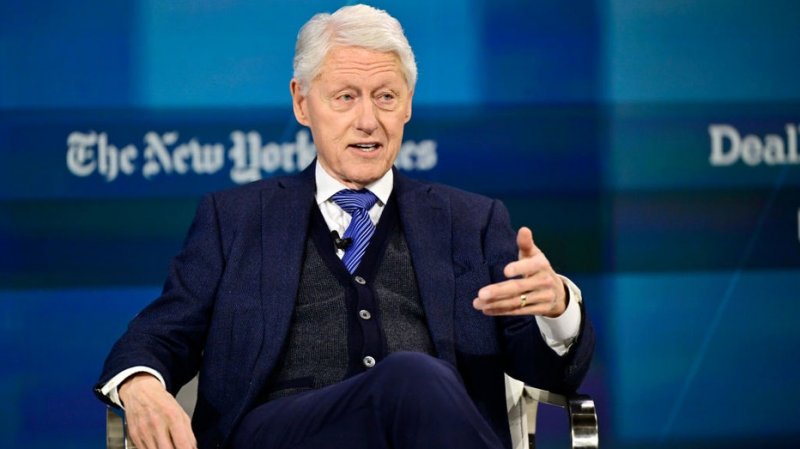
Clinton’s approach was based on the idea that China should not be isolated, but rather integrated more deeply into the global economic system. In 2000, Washington granted China permanent normal trade relations, paving the way for its accession to the World Trade Organization.
Viewed from today, the American logic of that era seems almost paradoxical. Washington believed that global trade and China’s participation in international institutions would gradually make its economy more open and encourage Beijing to follow the rules of the existing international system.
Yet within less than two decades, the mood in Washington had changed dramatically.
Under Barack Obama, China was increasingly viewed not simply as a trading partner, but as a competitor for the right to shape the rules of the global economy. His administration actively brought cases against China at the World Trade Organization and used special safeguard mechanisms against certain categories of Chinese imports.
Even more important was the idea behind the Trans-Pacific Partnership. Obama effectively argued that the rules of trade in the Asia-Pacific region should be written by the United States, not China. In other words, long before Trump’s tariff war, Washington was already seeking to limit Beijing’s economic influence through a trade architecture built around it.
Donald Trump’s first presidential term marked a turning point.
In 2018, the United States moved away from legal disputes and multilateral trade agreements toward direct tariff pressure. Washington imposed 25 percent duties on tens of billions of dollars’ worth of Chinese goods, and later expanded restrictions to cover hundreds of billions of dollars in imports.
The United States accused China of forced technology transfers, intellectual property violations, and the use of state industrial policy to gain unfair competitive advantages.
China responded with retaliatory tariffs.
That marked the beginning of the largest trade war between the world’s two biggest economies.
But an even more consequential shift came under Joe Biden.
Biden did not dismantle the system of pressure created by Trump. On the contrary, US-China competition moved beyond ordinary goods and into the technologies that will shape the future.
In 2022, the United States introduced sweeping restrictions on China’s access to advanced semiconductors, chipmaking equipment, and technologies linked to supercomputing and artificial intelligence.
For the first time, Washington was no longer merely trying to make Chinese imports more expensive. It was attempting to slow the technological development of a strategic competitor.
In 2024, Biden went further. Tariffs on Chinese electric vehicles were raised to 100 percent, duties on semiconductors and solar cells to 50 percent, while tariffs on batteries, critical minerals, and certain steel and aluminum products were increased to 25 percent.
In other words, Democratic President Joe Biden did not abandon the tariff strategy launched by Republican Donald Trump. He made it more targeted.

Photo: Getty Images
Reagan restricted Chinese goods. Clinton tried to change China through economic integration. Obama sought to constrain it through international rules and trade alliances. Trump, during his first term, attacked China with tariffs. Biden tried to block its access to critical technologies.
Now Trump’s second phase may add another instrument to that chain: using the US financial system to force China to alter its foreign policy.
This is where the current Iran crisis acquires particular significance.
A tariff war means that two countries make each other’s goods more expensive.
A technology war means attempting to slow a competitor’s development.
But secondary sanctions on major Chinese banks for doing business with Iran would mean something fundamentally different: an attempt to force the world’s second largest economy to comply with Washington’s foreign policy decisions toward a third country.
Beijing has repeatedly stated that it considers unilateral US restrictions on Chinese companies unlawful and has pledged to defend the interests of its businesses. It would therefore be simplistic to assume that China will simply comply with an American ultimatum and completely sever its economic ties with Iran.
At the same time, China’s position is hardly comfortable.
Iranian oil matters to Beijing primarily as a source of relatively cheap crude. But for the Chinese economy, the stability of the entire Middle East is far more important.
China remains the world’s largest oil importer, and a significant share of its energy supplies comes from Gulf states. Instability in the Strait of Hormuz therefore does not only hurt Europe or the United States. It poses a direct threat to China’s own energy security.
Recent events demonstrate this clearly.
Major Chinese shipping companies have become more cautious about using routes through Hormuz and other potentially dangerous maritime passages. Companies have been forced to reorganize logistics, use ship-to-ship transfers, and search for alternative routes.
This means China has no strategic interest in endless escalation around Iran.
Beijing wants to preserve its relationship with Tehran, but at the same time it needs open sea lanes, predictable oil prices, and stable relations with Saudi Arabia, the UAE, and other Gulf states.
The American strategy, therefore, may be aimed less at forcing China to abandon Iran completely than at sharply increasing the cost of maintaining that cooperation.
Washington wants to confront Beijing with a simple question: how much is China willing to pay to continue supporting Tehran?
But this strategy also carries serious risks for the United States itself.

Photo: Reuters
The more broadly Washington uses secondary sanctions against companies in third countries, the stronger the incentive becomes to create trade and financial mechanisms that are less dependent on the dollar.
Settlements in yuan, the use of small regional banks, intermediary structures, ship-to-ship oil transfers, and the so-called shadow fleet are already being used to circumvent restrictions.
The US Treasury is forced to constantly identify new companies, vessels, and intermediaries that emerge to replace those already sanctioned.
One channel is closed, and another appears.
Meanwhile, Iran’s room for maneuver is genuinely shrinking.
A particularly serious signal has been the decision by the United Arab Emirates to suspend certain trade, commercial, and financial operations with Iran following a sharp deterioration in the regional security environment.
The economic significance of such a step is difficult to overstate.
The UAE, and Dubai in particular, has for decades served as one of the most important transit, commercial, and financial hubs for Iranian businesses.
If that channel is seriously restricted, Tehran’s dependence on China will become even greater.
Beijing would then become not merely one of Iran’s partners, but effectively Tehran’s principal economic window to the outside world.
At the same time, the problem of the Strait of Hormuz remains unresolved.
The parties continue to issue contradictory statements about the state of navigation, but markets do not rely on political declarations. They watch the actual movement of tankers.
Flows through the strait remain well below pre-war levels, shipowners are facing higher insurance premiums, and some companies are avoiding the most dangerous routes.
Markets are gradually beginning to treat this crisis not as a short-term shock, but as a potentially new reality.
On the morning of August 20, Brent crude was trading at around $92 per barrel.
And this creates yet another fundamental contradiction in Washington’s strategy.
To economically suffocate Iran, the United States must reduce Iranian oil exports as much as possible.
But the more successful that pressure becomes, and the less stable shipping through Hormuz is, the greater the likelihood of a sustained rise in global oil prices.
Expensive oil means higher fuel prices, additional inflationary pressure, and growing problems for the US economy itself.
Trump is therefore trying to solve three extraordinarily difficult problems at the same time.
He wants to deprive Tehran of oil revenues without disrupting global energy flows.
He wants to force China to reduce its support for Iran without provoking a full-scale trade and financial war with Beijing.
And he wants to maintain maximum pressure on Iran without allowing oil prices to remain sustainably above $100 per barrel.
It is unclear whether all three objectives can be achieved simultaneously.
China, too, is approaching a moment of choice.
Beijing can continue buying Iranian oil through independent refineries, alternative financial channels, and complex logistical arrangements, testing the limits of the US sanctions system.
It can partially reduce cooperation with Iran while maintaining political ties and shielding its largest banks and state-owned corporations from US sanctions.
Or China can use its influence over Tehran to reduce tensions around Hormuz — not for Washington’s sake, but in defense of its own energy security.
Most likely, Beijing will try to combine all three approaches.
But history leaves Washington with an uncomfortable question.
If even the much weaker China of the Reagan era responded to American restrictions with its own economic countermeasures, what kind of response could China in 2026 produce if the United States genuinely tries to force it to abandon Iran?
The China facing Washington today is not the China of 1983, dependent on Western markets and only beginning its transformation into a global industrial power.
It is the world’s second-largest economy, the leading manufacturing center, a crucial buyer of commodities, the holder of vast foreign-exchange reserves, and a country occupying a central position in global supply chains.
That is why Trump’s economic campaign against Iran may become a test of a far broader order.
The issue is no longer only whether US sanctions can change Tehran’s behavior.
What is now being tested is Washington’s ability to force the world’s largest economies to comply with American restrictions when their own strategic interests point in the opposite direction.
If the United States limits itself to targeting small Chinese refineries and intermediaries, pressure on Iran will intensify, but its export channels are unlikely to disappear completely.
If Washington decides to target major Chinese banks, state-owned corporations, or key trade flows, however, the conflict will enter an entirely different phase.
Beijing could respond by restricting access to critical materials, putting pressure on US companies, reducing purchases of American goods, or accelerating the creation of financial infrastructure less dependent on the dollar.
In that scenario, the conflict surrounding Iran would gradually become something much larger than a confrontation between Washington and Tehran.
The central question would no longer be whether Iran can withstand US economic pressure.
It would be this: how far is the United States prepared to go in confronting the world’s second largest economy in order to force Iran to change its policies?
China, not Iran, may ultimately prove to be the real test of Donald Trump’s ultimatum.
(If you possess specialized knowledge and wish to contribute, please reach out to us at [email protected]).