Five years after La Liga approved its $2.4 billion private equity partnership with CVC Capital Partners, Spain’s women’s league are following a similar playbook.
On June 29, 12 of 16 clubs in Liga F voted to approve a $64.5 million (€55 million) investment from former NBA star Pau Gasol through his investment vehicle, Gasol16 Ventures, in partnership with Fortified Partners. The vote was conducted by secret ballot, and Liga F has not publicly disclosed how each club voted or released the full terms of the agreement, including what commercial rights or future revenues Gasol’s investment group will receive in return.
The required two-thirds majority was enough to pass the deal. Real Madrid later confirmed it was among the four clubs to reject the deal, arguing that exchanging a share of the league’s long-term commercial rights for an immediate cash injection may not be a sustainable strategy as women’s soccer continues to grow.
The opposition was hardly surprising. Real Madrid and FC Barcelona also declined to join CVC investment in LaLiga on the men’s side, reflecting their reluctance to trade future commercial rights for upfront capital. While Liga F’s deal sounds similar, according to Real Madrid, the terms of what clubs will receive versus what they have to give back are vastly different.
“Real Madrid believes that this agreement does not align with the growth model of women’s football, which is based on sustainability, transparency, and the full autonomy of the clubs,” the club said in a statement.
“Under this agreement, the affiliated clubs will receive 40 million euros collectively, and in exchange, they will forfeit a percentage of revenues for 25 years. Additionally, Liga F will receive 12 million euros, and another three million euros will be allocated for the acquisition of certain image rights of some players.”
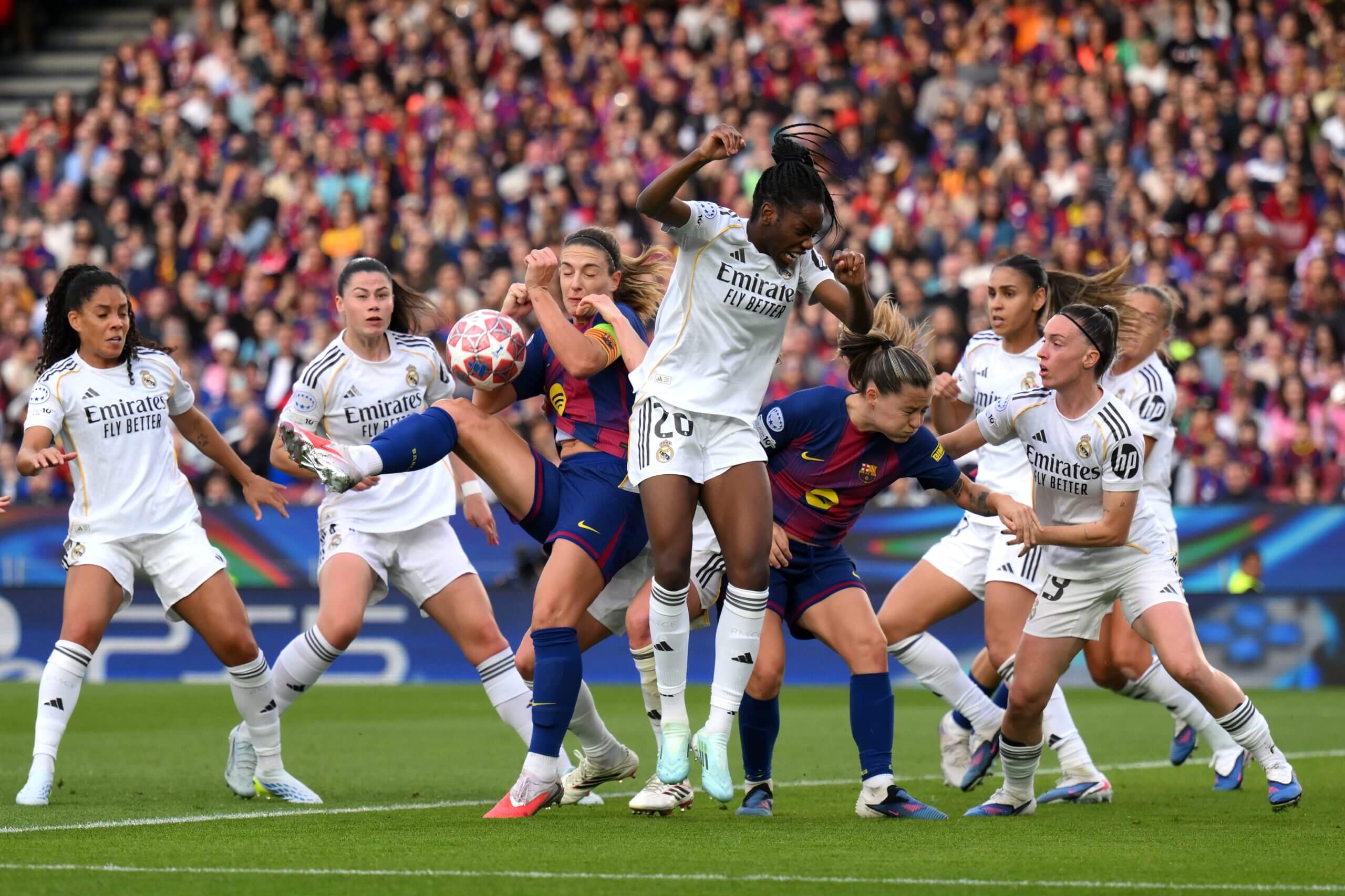
Real Madrid was one of the four clubs that rejected the deal with Gasol’s investment firm. (David Ramos / Getty Images)
According to Real Madrid’s statement, under the agreement, Gasol16 will receive between 35 percent and 49 percent of Liga F’s broadcast and sponsorship revenues over the next 25 years. So clubs who agreed would receive €3.3 million, but the league would share almost half of its commercial revenues with the investors until 2051.
Liga F declined to comment on the details of the agreement when The Athletic reached out for comment, but said in a statement that the capital will be used to strengthen the league’s commercial and operational structure, support the sustainable growth of its clubs and enhance the global profile of its players.
Real Madrid’s rivals and last year’s Liga F and UEFA Champions League winners, Barcelona, have taken a different approach. The club voted in favor of the investment agreement; however, they said in a statement that “voting in favor of the proposal does not mean it has formally joined the agreement.” Barcelona said it believes the proposal could strengthen Liga F’s commercial growth, attract top talent and create new revenue streams to support the long-term sustainability of its clubs. The club added that it will decide whether to formally join the agreement after reviewing the transaction’s terms and implications.
While the financial returns and implications of the agreement have evoked surprise, Gasol says the investment is less about revenues and more about doing the right thing.
“For me, this investment is about building something that lasts. Financial returns matter, and we’re confident they’ll come, but for me, that’s only one part of what makes this investment meaningful,” Gasol told The Athletic in an email shortly after the deal was approved. The NBA Hall of Famer has a history of backing women’s sports in the United States, including equity involvement in the National Women’s Soccer League (NWSL) franchise Bay FC and a $75 million capital raise in 2022 that acquired a 16 percent equity stake in the WNBA.
“Our investment philosophy at Gasol16 Ventures is not only based on the financial aspect of the business, but also on what we can bring to the table given the unique skill set and experience of our team,” Gasol said.

Pau Gasol during his official presentation as new player of FC Barcelona Bàsquet in March 2021. (Lluis Gene / AFP via Getty Images)
Despite those assurances, if Real Madrid’s account is correct, the terms could prove exceptionally favorable to Gasol, allowing his investment firm to benefit disproportionately if Liga succeeds in expanding its broadcast and sponsorship revenues.
“This looks to me like Gasol16 Ventures taking advantage of Liga F’s current predicament, rescuing it from short-term instability and uncertainty whilst securing a significant proportion of future revenue growth,” Simon Chadwick, professor of AfroEurasian Sport at Emlyon Business School, told The Athletic.
“Packaged as an investment in women’s sport, it is nevertheless primarily a financial move that also challenges the power of entities such as Real Madrid. One scenario is that all of this will result in Gasol16 Ventures becoming a more powerful member of the women’s football ecosystem, especially given the continuing preeminence of Spanish teams. The move may look honorable and smart, but this is tinged with a sense that the investment is opportunistic and cynical.”
But for smaller clubs, such as CD Tenerife Women in the Canary Islands, the investment has a different impact.
“It’s important to understand that this is not just about an injection of capital,” Sandro Arrufat, director of Tenerife, told The Athletic. “What truly matters is that this deal is backed by a project to strengthen Liga F commercially, improve its international positioning and create new revenue streams for all clubs. If the league grows, we all grow with it.
“Clubs with greater resources will continue developing ambitious projects, but for more modest organizations like ours, this investment provides tools to accelerate progress that would otherwise take many more years. It allows us to compete on better terms without losing our identity.”
The timing of the investment is difficult to ignore. The deal arrives just as Liga F faces critical questions about its commercial future, especially after losing some of its biggest stars and as it searches for a better broadcast deal.

Smaller clubs, like CD Tenerife Women, say Gasol’s investment helps raise the level for all teams. (Oscar J. Barroso / Europa Press via Getty Images)
When announcing the investment, Liga F also included its most recent broadcast ratings. After ending its original broadcast agreement with DAZN a year early, the league is preparing to launch negotiations for its next domestic and international media rights cycle in the coming weeks.
The league said cumulative television audiences reached 7.5 million viewers during the 2025-2026 season — an 11.2 percent increase from the previous year — and attendance has also improved, but remains modest. Although the investment announcement makes no mention of it, Liga F had already begun prioritizing audience growth. Last January, the league moved four matches per matchday to free-to-air television for the remainder of the season to expand the visibility and reach of women’s soccer.
Following the move, Liga F set a viewership record when Real Madrid’s match against Barcelona became the most-watched game in league history, averaging 685,335 viewers and reaching more than 2 million unique viewers across Teledeporte, TV3, DAZN and Movistar. The audience was 27 percent higher than the same fixture a year earlier.
Despite these efforts, the 2026-2027 season will be a difficult one for the league that just said goodbye to some of its biggest stars, including Alexia Putellas, Mapi León and Salma Paralluelo, who have moved to clubs abroad, underscoring the financial gap that still separates Spain’s top flight from England’s Women’s Super League and the National Women’s Soccer League.
Alexia Putellas on why she chose to leave Barcelona
Laia Cervelló Herrero and Lia Griffin
Beyond retaining elite talent, the league also faces a widening competitive imbalance between its handful of dominant clubs and the rest of the field, making the title race less compelling than in its rival leagues. Narrowing that gap was a central objective of La Liga’s partnership with CVC Capital Partners, which sought to help smaller men’s clubs invest in infrastructure and long-term growth.
Gasol, however, said the investment thesis behind Liga F’s deal is different.
“I understand the comparison but I think it’s important to differentiate it from the La Liga-CVC deal because the starting points are completely different,” Gasol said. “La Liga was already one of the world’s most established football competitions when that deal took place. Liga F is only four years old and is in a phase of building its product, growing its audience and expanding internationally.
“Our focus is on growth: strengthening clubs, investing in the league’s capabilities and increasing the visibility and commercial value of its players. That’s the rationale behind the investment.”

Alexia Putellas is one of several players to leave Barcelona after last season. (Manaure Quintero / AFP via Getty Images)
In 2022, 38 of the 42 clubs across Spanish soccer’s top two men’s divisions voted to approve a €2 billion ($2.4 billion at the time) investment from CVC. The agreement created a new commercial entity in which the private equity firm acquired a 10 percent stake of La Liga’s broadcast revenue for 50 years. While Spain’s three biggest clubs, FC Barcelona, Real Madrid CF and Athletic Club, opposed the deal, participating clubs who opted into the investment have since received funds and used them for infrastructure projects, technology upgrades and commercial initiatives. The deal prohibits clubs from using more than 15 percent of the funds for player transfers.
Across European soccer, leagues have increasingly looked to private capital not simply for cash but for expertise in areas such as international commercialization, digital strategy, fan engagement, and infrastructure investment to keep pace with the growth of the English Premier League.
In 2022, CVC Capital Partners acquired a 13 percent stake in Ligue 1’s commercial and media rights business through a €1.5 billion ($1.65 billion) investment in France. Meanwhile, before La Liga finalized its landmark agreement with CVC in 2021, Serie A had entered negotiations over a roughly $1 billion private equity investment. That deal ultimately fell apart after the league’s 20 clubs failed to reach a consensus.
While continental European leagues have been attracting league-wide private equity investments, both the WSL and the NWSL rely on club-by-club capital rather than centralized private equity or venture capital backing. In addition to deep-pocketed ownership groups, private equity found opportunities to invest in the NWSL, with the Bay FC franchise backed by an ownership group led by Sixth Street, while Seattle Reign was acquired in 2024 by an ownership group led by the Carlyle Group.
Last year, Reddit co-founder Alexis Ohanian purchased a 10 percent stake in Chelsea FC women with his venture firm Seven Seven Six, investing £20 million ($26.5 million). The agreement valued the reigning WSL champions at over £200 million and granted Ohanian a seat on the club’s board.

Women’s sports investor Alexis Ohanian acquired an eight percent stake in Chelsea Women last year. (Justin Tallis / Getty Images)
Last March, Mercury13, the multi-club ownership group focused on women’s soccer, acquired a majority stake in FC Badalona Women, becoming the first private fund to own such a stake in a Liga F team. As part of the investment, similar to what they have done with FC Como Women, the investors revamped the club’s branding and appearance and also moved the women’s team’s home matches to the renovated Estadi Municipal de Badalona beginning with the 2026-27 season.
“There is huge potential for growth, and we are seeing an increase in investment in many competitions,” Gasol said. “Liga F is precisely at that point where the work done over the past four years in the league has established a solid base and now is ready to scale. With our resources, which are not just economic but also in terms of expertise and our global network, we can truly develop a financially sustainable, elite-level competition where the best players from all over the world want to be.”
The deal represents not only the largest private investment ever made in Spain’s women’s competition, but also the biggest private capital commitment to a women’s professional league anywhere in Europe. It could lead to commercial growth the Spanish league is so desperately looking for.
“It would be easy to engage in short-term revenue harvesting, although there are grounds to suggest that greater value can be generated in the longer term through visionary leadership and strong management,” Chadwick said.
“If Gasol’s initially modest investment can be used to induce interest from other commercial entities — investors, sponsors, broadcasters and so forth — then it may help kickstart an ecosystem that transcends the club duopoly that has traditionally dominated (and constrained) Spanish men’s football.”