Published on
July 18, 2026
By: Tuhin Sarkar

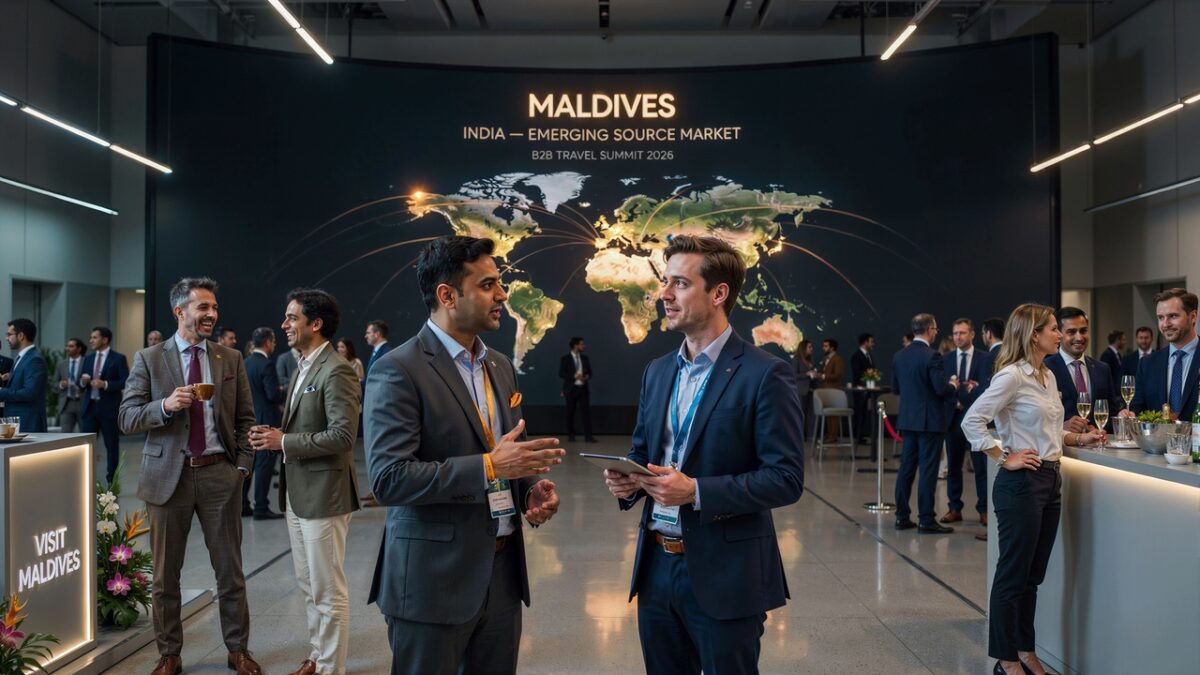
Image generated with Ai
Maldives spearheads Canada, United States, UK, Brazil and more than forty countries placing India at the centre of meetings and event industry tourism as the emerging source market reshapes global travel.
Maldives now spearheads Canada, United States, UK, Brazil and more than forty countries around the world that have placed India at the centre of their meetings and event industry tourism growth strategy because this country remains an emerging source market with enormous long-term potential. As global competition for high-value business and leisure travellers intensifies, destinations are expanding airline connectivity, strengthening partnerships with event organisers and launching dedicated campaigns targeting Indian corporate groups. Consequently, India’s expanding outbound travel market is reshaping international tourism priorities, while governments increasingly recognise its influence on MICE, luxury travel, destination weddings and year-round visitor growth.
India’s rapidly expanding outbound travel market has transformed the country’s position within global tourism. Rising disposable incomes, expanding international flight networks, increasing passport ownership and a growing appetite for international holidays have encouraged tourism boards across the world to invest heavily in attracting Indian visitors through customised campaigns, improved accessibility and targeted travel products.
Rather than focusing solely on luxury tourism, countries are increasingly promoting family holidays, adventure travel, wellness tourism, cruise holidays, destination weddings, educational travel, business tourism and cultural experiences specifically designed for Indian travellers. This diversification has positioned India among the world’s most valuable outbound tourism markets, with governments viewing the country as a long-term growth opportunity rather than a seasonal visitor source.
Advertisement
Advertisement
United Kingdom and Ireland Strengthen Their Indian Tourism Appeal
The United Kingdom continues regarding India as one of its most significant long-haul visitor markets by promoting shopping, heritage attractions, sporting events and family tourism. Strong cultural links and a large Indian diaspora further reinforce the UK’s tourism relationship with India.
Ireland has also increased tourism promotion within India by highlighting scenic landscapes, heritage attractions, educational travel and premium leisure experiences. Improved airline connectivity continues strengthening bilateral tourism growth.
Advertisement
Advertisement
United States, Canada and Latin America Expand Their Marketing Efforts
The United States considers India among its largest overseas visitor markets, particularly due to the high spending patterns of Indian travellers across leisure, education, business and family travel segments. Destination marketing organisations across multiple states continue investing heavily in attracting Indian tourists.
Canada similarly views India as a priority international market, driven by leisure tourism, visiting friends and relatives, educational travel and business visits. Mexico, Peru and Brazil have also begun increasing promotional efforts aimed at Indian travellers seeking cultural tourism, luxury holidays and adventure experiences.
Maldives Positions India Among Its Most Important Tourism Markets
The Maldives continues to regard India as one of its most valuable tourism source markets. Tourism authorities actively promote luxury resorts, local island experiences, wellness tourism, sustainable holidays, safari cruises, destination weddings and MICE travel while strengthening partnerships with Indian tour operators and airlines.
The island nation is also working to expand air connectivity from Indian cities and regularly organises marketing campaigns, familiarisation trips and trade events to sustain visitor growth. Affordable guesthouse accommodation has also become a major component of the Maldives’ strategy, helping broaden its appeal beyond honeymoon travellers.
The Maldives is reinforcing its commitment to the Indian travel market through stronger partnerships, targeted marketing campaigns, expanded connectivity discussions and a broader tourism strategy that extends beyond luxury holidays. Speaking to Travel And Tour World during SATTE 2026, Nasrulla Adam, Chief Commercial Officer of Visit Maldives, highlighted India’s growing importance as one of the country’s leading tourism source markets while outlining plans to attract more leisure travellers, wedding groups, MICE visitors and budget-conscious holidaymakers.
For the Maldives, India is no longer just a neighbouring market—it is a strategic partner that contributes across every segment of tourism. From high-end overwater villa holidays to local island experiences, wellness retreats and safari cruises, Indian travellers are increasingly exploring the diverse experiences the island nation has to offer.
Advertisement
Advertisement
SATTE Continues to Strengthen Tourism Partnerships
Adam described SATTE as one of India’s most significant travel trade exhibitions, bringing together resorts, guest houses, tour operators, travel agencies and buyers under one roof. According to him, the event continues to provide valuable opportunities for business development and partnership building between Indian and Maldivian tourism stakeholders.
He noted that the exhibition maintains a strong benchmark year after year, allowing Visit Maldives and private tourism operators to strengthen relationships with the Indian travel trade while promoting new tourism products.
India Remains a Key Tourism Source Market
India continues to rank among the Maldives’ most important international visitor markets. Adam revealed that approximately 130,000 Indian tourists visited the Maldives during the previous year, placing India among the country’s top ten source markets.
In 2026, India has climbed further and currently ranks among the top seven international source markets for the destination. This sustained demand reflects the wide appeal of the Maldives across multiple traveller segments.
Rather than relying solely on luxury tourism, Visit Maldives sees India as a market that embraces virtually every tourism product available across the islands. Indian visitors book luxury resorts, local island stays, safari cruises, wellness holidays, destination weddings and family group travel, making the market exceptionally diversified.
Sustainability and Wellness Becoming Major Priorities
One of the strongest emerging themes in Visit Maldives’ strategy is sustainable tourism.
Advertisement
Advertisement
Adam explained that sustainability has become a major focus alongside wellness tourism, both of which are receiving increasing attention from Indian travellers. Wellness holidays, nature-based experiences and environmentally responsible tourism are becoming increasingly important as travel preferences evolve.
The Maldives intends to continue promoting these experiences while encouraging visitors to explore destinations that combine luxury with responsible tourism practices.
Weddings, Family Groups and MICE Driving Growth
Destination weddings and group travel continue to represent important business opportunities.
Adam said that pre-wedding celebrations, post-wedding gatherings and family groups are generating growing interest from Indian travellers. These groups often seek unique island experiences that combine accommodation, leisure activities and memorable celebrations.
MICE tourism has also emerged as a priority.
Although the Maldives is widely recognised as a luxury honeymoon destination, Visit Maldives is actively working to expand its presence within the meetings, incentives, conferences and exhibitions sector. Incentive travel groups and corporate events represent an area of significant opportunity, particularly from India.
Advertisement
Advertisement
Adam noted that specialised MICE tour operators are welcomed and that India is expected to remain one of the most important markets for this segment.
Digital Marketing and Stronger Trade Relationships
To sustain growth from India, Visit Maldives is investing in extensive digital marketing initiatives throughout 2026.
Alongside online campaigns, the tourism board is strengthening collaboration with tour operators, travel agencies and tourism partners to improve product awareness and drive bookings.
The strategy combines consumer marketing with business-to-business engagement, ensuring that travel professionals remain well informed about the destination’s evolving offerings.
Europe Continues to Lead Global Arrivals
While India remains strategically important, Europe continues to be the Maldives’ largest tourism source region.
Adam also identified China as another major international market that continues to deliver strong visitor numbers.
Advertisement
Advertisement
Beyond these traditional markets, Visit Maldives is witnessing encouraging growth from North America, South America and the Gulf Cooperation Council (GCC) countries. These emerging markets will receive greater marketing attention during 2026 as part of the destination’s broader international expansion strategy.
Special marketing campaigns have already been planned specifically for the United States while also considering opportunities across both North and South America.
Global Trade Show Participation
Visit Maldives will maintain an active international promotional calendar throughout the year.
Adam confirmed participation in several major travel trade exhibitions, including Arabian Travel Market (ATM) in Dubai, MITT in Russia and World Travel Market (WTM).
In addition to these global exhibitions, Visit Maldives also organises “Visit Maldives Week” events in selected key markets, enabling closer engagement with travel partners and tourism professionals.
Familiarisation Trips Continue Throughout the Year
Media engagement and trade education remain essential elements of Visit Maldives’ marketing strategy.
Advertisement
Advertisement
Adam confirmed that press trips and familiarisation visits for major tour operators will continue throughout the year.
According to him, first-hand experience enables travel professionals to better understand and confidently sell the destination. Storytelling has also become increasingly important in destination marketing, making experiential visits valuable for journalists, influencers and travel advisors alike.
Beyond Luxury: Promoting Affordable Maldives Holidays
One of the strongest messages delivered during the interview was the effort to change long-standing perceptions that the Maldives is exclusively a luxury destination.
While luxury resorts remain an integral part of the country’s tourism identity, Adam stressed that travellers now have a much wider range of accommodation options.
Local islands across numerous atolls offer quality guest houses catering to more affordable budgets without compromising the overall visitor experience.
This allows travellers to choose holidays based on their financial preferences, whether they seek premium resorts, authentic local communities or mixed itineraries combining both.
Advertisement
Advertisement
Safari boats further expand these options by offering island-hopping experiences that showcase multiple atolls during a single holiday.
Airline Connectivity Remains a Priority
Improving accessibility remains another strategic objective.
Adam confirmed that Visit Maldives is working closely with airlines, the Ministry of Tourism, airport authorities and Maldivian Airlines to explore opportunities for increasing air connectivity between India and the Maldives.
Although expanding routes requires time and coordination, discussions remain ongoing, with optimism that additional connections from Indian cities can eventually be introduced.
Currently, the Maldives already benefits from connections to seven Indian cities, while future expansion will depend on market demand and consultation with tourism stakeholders.
Expanding Beyond Metro Cities
While existing air connectivity naturally drives promotion within connected cities, Visit Maldives is also exploring opportunities in emerging Indian markets.
Advertisement
Advertisement
The tourism board regularly consults tour operators, resorts and industry stakeholders before deciding where future promotional activities should be concentrated.
This collaborative approach allows marketing investments to reflect evolving travel demand rather than focusing exclusively on traditional metropolitan markets.
Cruise Tourism Shows Long-Term Potential
Cruise tourism represents another developing opportunity.
Adam revealed that several cruise ships have already visited the Maldives during the year, while discussions continue regarding future cruise development.
Safari cruises, however, already offer an established experience where groups of friends can explore multiple islands through organised island-hopping itineraries.
He suggested that combining a safari cruise with a luxury resort stay provides visitors with one of the most complete Maldivian holiday experiences.
Advertisement
Advertisement
A Diversified Tourism Strategy for Future Growth
The interview reflects a clear evolution in the Maldives’ tourism positioning. While luxury hospitality continues to define the destination internationally, Visit Maldives is actively broadening its appeal by promoting sustainability, wellness, affordable accommodation, MICE tourism, local island experiences, safari adventures and stronger airline connectivity.
For India, this diversified strategy is particularly significant. As Indian outbound travel continues to expand across multiple income segments and travel styles, the Maldives is positioning itself not merely as an exclusive honeymoon destination but as a year-round destination capable of serving families, corporate groups, wellness travellers, adventure seekers and budget-conscious visitors alike.
Thailand, Singapore, Malaysia and Indonesia Continue Expanding Their Indian Presence
Thailand remains one of the most popular international destinations for Indian travellers and continues introducing tourism initiatives that simplify travel while promoting leisure holidays, family vacations, luxury experiences and destination weddings. Singapore similarly considers India a priority market, investing heavily in entertainment tourism, shopping, family attractions and MICE events.
Malaysia has strengthened its appeal through visa facilitation, improved airline connectivity and destination promotions targeting Indian leisure travellers. Indonesia, particularly Bali, continues expanding marketing campaigns focused on honeymooners, families, adventure seekers and luxury holidaymakers while benefiting from increasing direct flights.
Vietnam, Sri Lanka, Nepal and Bhutan View India as a Strategic Neighbouring Market
Vietnam has emerged as one of Asia’s fastest-growing destinations for Indian tourists through expanded aviation links, competitive holiday packages and aggressive destination marketing. Sri Lanka also considers India among its largest tourism source markets and continues promoting leisure travel, heritage tourism and beach holidays as part of its tourism recovery strategy.
Nepal benefits from geographical proximity, religious tourism and adventure travel, making India one of its largest visitor markets throughout the year. Bhutan similarly regards Indian visitors as a cornerstone of its tourism industry, offering accessible travel and promoting sustainable tourism experiences.
Advertisement
Advertisement
United Arab Emirates and the Gulf Countries Continue Prioritising Indian Visitors
The United Arab Emirates remains one of the world’s strongest destinations for Indian outbound travellers, with Dubai and Abu Dhabi attracting millions through shopping, luxury hospitality, entertainment, business events and family tourism. Tourism authorities continue launching campaigns tailored specifically for Indian consumers while airlines maintain extensive connectivity.
Saudi Arabia has significantly increased its focus on Indian visitors under its Vision 2030 tourism strategy by promoting heritage tourism, religious travel, luxury resorts and entertainment destinations. Oman, Qatar and Bahrain have likewise intensified efforts to attract Indian leisure travellers through improved accessibility, premium hospitality and business tourism initiatives.
Mauritius, Seychelles and East Africa Expand Their Indian Tourism Strategy
Mauritius continues positioning itself as a preferred destination for Indian honeymooners, luxury travellers and destination weddings while leveraging strong cultural connections between the two nations. Seychelles has also accelerated promotional activities aimed at Indian visitors by highlighting luxury island experiences, nature tourism and high-end hospitality.
Kenya and Tanzania increasingly recognise India as a valuable source market for wildlife safaris, beach holidays and luxury travel. South Africa has similarly expanded its engagement with Indian travellers by promoting wildlife tourism, cultural experiences, sporting events and family holidays.
Australia and New Zealand Focus on High-Value Indian Travellers
Australia considers India among its fastest-growing international tourism markets and continues investing heavily in destination marketing, aviation partnerships and premium travel experiences. Adventure tourism, wildlife, education travel and luxury holidays remain central to Australia’s long-term strategy for Indian visitors.
New Zealand has also intensified its focus on India by promoting nature-based tourism, adventure holidays, premium experiences and sustainable travel. Tourism authorities increasingly view India as a strategic market capable of delivering long-term visitor growth.
Advertisement
Advertisement
Japan and South Korea Increase Their Investment in India
Japan has strengthened marketing campaigns promoting cultural tourism, heritage attractions, luxury travel and seasonal experiences specifically targeting Indian travellers. Improved air connectivity and easier travel planning continue supporting visitor growth from India.
South Korea has also recognised India’s expanding outbound tourism potential by promoting cultural tourism, K-pop experiences, shopping, entertainment and culinary travel. Increasing airline services have further enhanced accessibility between the two countries.
Türkiye, Azerbaijan, Georgia and Armenia Target Indian Expansion
Türkiye continues expanding its presence in the Indian market through destination marketing focused on heritage tourism, luxury holidays, weddings and cultural experiences. Improved flight connectivity has supported continued growth in Indian arrivals.
Azerbaijan, Georgia and Armenia have emerged as rapidly growing destinations for Indian travellers through simplified visa procedures, affordable travel experiences and increasing airline services. These countries are actively positioning themselves as attractive alternatives for short-haul international holidays.
Europe Intensifies Competition for Indian Visitors
Several European countries now classify India among their priority long-haul tourism markets as outbound travel from the country continues expanding. Switzerland promotes luxury rail journeys, alpine tourism and premium holidays, while France focuses on culture, gastronomy, shopping and heritage attractions.
Italy, Spain, Germany, Austria, Finland, Norway and Iceland have all expanded destination marketing initiatives targeting Indian travellers. These campaigns increasingly highlight experiential tourism, sustainable travel, cultural exploration and luxury accommodation while responding to growing demand from affluent Indian visitors.
Advertisement
Advertisement
Why India Has Become One of the World’s Most Important Outbound Tourism Markets
India’s growing middle class, expanding aviation network, rising international travel aspirations and increasing disposable incomes have fundamentally reshaped global tourism strategies. International tourism boards increasingly recognise that Indian travellers no longer represent a niche market but instead constitute one of the largest future sources of outbound tourism worldwide.
| Country | India’s Importance | Evidence |
|---|---|---|
| Maldives | Top source market; strategic priority | Dedicated India campaigns, airline expansion, trade shows, MICE and wedding focus. (Trade.gov) |
| Thailand | One of the largest international visitor markets | Visa relaxation, extensive marketing, weddings, luxury and leisure campaigns. (Trade.gov) |
| Singapore | Core outbound market | Tourism board invests heavily in family, MICE and entertainment promotions. (Trade.gov) |
| Malaysia | Key regional source market | Visa-free entry, aviation expansion and sustained marketing. (Trade.gov) |
| Indonesia | Strategic market, especially Bali | Direct flight expansion and destination marketing. (Trade.gov) |
| Vietnam | Fast-growing source market | Multiple new routes and destination promotions targeting Indians. (Trade.gov) |
| Sri Lanka | Largest or among largest source markets | Visa incentives and targeted recovery campaigns. (Reuters) |
| Nepal | One of the biggest inbound markets | Religious, leisure and cross-border tourism. (Trade.gov) |
| Bhutan | Priority neighbouring market | Sustainable tourism promotions and Indian-friendly policies. (Trade.gov) |
| Mauritius | Core long-haul market | Weddings, luxury holidays and diaspora links. (Trade.gov) |
| Seychelles | Strategic growth market | Government targets significant increase in Indian arrivals. (The Economic Times) |
| United Arab Emirates | Among the largest visitor markets | Dubai and Abu Dhabi depend heavily on Indian leisure and business travel. (Trade.gov) |
| Oman | Priority source market | Leisure and business promotions. (Trade.gov) |
| Qatar | Important visitor market | Sports, stopover and luxury campaigns. (Trade.gov) |
| Saudi Arabia | Rapidly growing source market | Vision 2030 tourism strategy includes India as a focus market. (Trade.gov) |
| Bahrain | Key regional market | Holiday and short-break promotions. (Trade.gov) |
| Egypt | Strategic Asian market | Direct flights and heritage tourism promotions. (Trade.gov) |
| Kenya | Major Asian source market | Safari and MICE promotions. (Trade.gov) |
| Tanzania | Important emerging market | Zanzibar and safari promotions. (Trade.gov) |
| South Africa | Priority long-haul market | Family travel, wildlife and cricket tourism. (Trade.gov) |
| Australia | One of Tourism Australia’s fastest-growing markets | Aviation expansion and premium travel marketing. (Trade.gov) |
| New Zealand | Strategic growth market | Nature, luxury and honeymoon campaigns. (Trade.gov) |
| Japan | Priority outbound market | Luxury, culture and FIT promotions. (Trade.gov) |
| South Korea | Growing source market | K-culture and aviation-led promotions. (Trade.gov) |
| Türkiye | Key Asian growth market | Destination marketing and expanded connectivity. (Trade.gov) |
| Azerbaijan | Increasingly important market | Visa-on-arrival and airline expansion. (Trade.gov) |
| Georgia | Fast-growing source market | Visa-friendly policies and direct flights. (Trade.gov) |
| Armenia | Emerging priority market | Cultural and leisure promotions. (Trade.gov) |
| Switzerland | One of Asia’s strongest source markets | Luxury, rail and winter tourism campaigns. (Trade.gov) |
| France | Priority long-haul market | Luxury, gastronomy and Olympics legacy promotions. (Trade.gov) |
| Italy | High-value outbound market | Luxury, weddings and heritage tourism. (Trade.gov) |
| Spain | Strategic growth market | Premium and experiential tourism campaigns. (Trade.gov) |
| Austria | Important premium market | Alpine tourism and culture promotions. (Trade.gov) |
| Germany | Priority long-haul market | Trade fairs, leisure and premium travel. (Trade.gov) |
| United Kingdom | One of VisitBritain’s priority markets | Shopping, heritage and VFR travel. (Trade.gov) |
| Ireland | Growing source market | Leisure, education and business travel. (Trade.gov) |
| Finland | Emerging Asian market | Northern Lights and winter tourism. (Trade.gov) |
| Norway | Premium outbound market | Fjords and adventure tourism. (Trade.gov) |
| Iceland | Growing niche market | Nature and adventure travel. (Trade.gov) |
| United States | India is among the largest overseas visitor markets | High spending visitors and extensive destination marketing. (Trade.gov) |
| Canada | Priority international market | Family, education and leisure travel. (Trade.gov) |
| Mexico | Emerging source market | Beach and cultural tourism campaigns. (Trade.gov) |
| Peru | Growing Asian market | Machu Picchu and cultural tourism promotions. (Trade.gov) |
| Brazil | Emerging outbound market | Trade and leisure travel promotion. (Trade.gov) |
Destinations are therefore competing not only through promotional campaigns but also by improving visa policies, introducing direct flights, creating Indian-friendly tourism products, expanding vegetarian dining options, strengthening wedding tourism infrastructure and developing customised travel experiences designed specifically for Indian visitors.
The Future of India’s Global Tourism Influence
Industry forecasts indicate that India’s outbound tourism will continue growing throughout the coming decade, making the country even more influential in shaping international travel demand. Governments, airlines, hotel groups and destination marketing organisations are expected to deepen their investments in India as competition for Indian travellers intensifies across every continent.
This evolution reflects a broader transformation within global tourism where India is increasingly viewed as a strategic, resilient and high-value source market capable of supporting sustainable visitor growth across both emerging and established destinations.
The primary reason behind this global shift is India’s rapid emergence as one of the world’s fastest-growing outbound travel markets, supported by rising disposable incomes, expanding international flight connectivity and increasing demand for business events and incentive travel. Consequently, countries are investing heavily in MICE infrastructure, trade partnerships and destination marketing to capture Indian corporate and leisure travellers. The Maldives has taken a leading role by promoting meetings, incentives, conferences, exhibitions, weddings and wellness tourism alongside luxury holidays. Therefore, India is no longer viewed only as a leisure market but as a strategic engine for sustained international tourism growth.
The Maldives has positioned itself at the forefront of a growing international movement that now includes Canada, the United States, the United Kingdom, Brazil and more than forty countries recognising India as a strategic tourism source market. This transformation reflects a broader change in global travel, where Indian outbound tourism is no longer driven solely by holidays but increasingly by meetings, incentives, conferences, exhibitions, corporate events and destination weddings.
Advertisement
Advertisement
As competition for high-spending international visitors intensifies, tourism boards are redesigning their strategies to attract Indian travellers through stronger airline connectivity, simplified visa procedures, customised marketing campaigns and partnerships with travel agencies, event organisers and hospitality companies. Many destinations are simultaneously expanding luxury offerings while also introducing affordable travel experiences, ensuring they appeal to a broader cross-section of Indian travellers.
The Maldives has emerged as a leading example by combining luxury tourism with wellness, sustainability, MICE travel, local island experiences and family holidays. Other destinations across Asia, Europe, the Middle East, Africa and the Americas are following similar approaches, recognising that India’s expanding middle class and corporate travel sector offer long-term opportunities for sustainable visitor growth.
Looking ahead, India’s influence on global tourism is expected to strengthen even further as outbound travel volumes continue rising. Countries that invest early in aviation partnerships, tourism infrastructure, event facilities and tailored visitor experiences are likely to secure a competitive advantage. The growing emphasis on India’s meetings and event industry demonstrates that the country’s role has evolved beyond that of a traditional leisure market. Instead, it has become one of the world’s most influential drivers of tourism investment, international business events and destination marketing, making India central to the future growth strategies of tourism economies worldwide.
Advertisement
Advertisement