Published on
July 18, 2026
By: Angana Dutta

Image generated with Ai
Beginning in 2026, travel to the Basilica of Saint Denis in France will provide an increasingly important experience, as Paris will incorporate more of its royal history and Gothic architecture and incorporate the basilica’s historic northern spire, which will be reconstructed. These developments are important as international visitors to France travel from the Untied States, the United Kingdom, Germany, and Italy, to take advantage of the great developments in air travel as they visit Paris to see more than the crowded center. The Basilica of Saint Denis is an excellent value as it is the royal necropolis of France, has over seventy funerary monuments and is a great example of a living-heritage work.
Saint-Denis Basilica Travel Reveals a Paris Landmark Hidden in Plain Sight
The Basilica Cathedral of Saint-Denis stands north of central Paris in the city of Saint-Denis. It is one of France’s most important religious, architectural and royal monuments.
However, many first-time visitors continue to prioritise the Eiffel Tower, the Louvre, Versailles and Notre-Dame. Saint-Denis often remains outside the standard Paris itinerary.
That gap creates its strongest travel angle. Visitors can experience the history of French monarchy and the development of Gothic architecture without simply repeating the capital’s most familiar sightseeing circuit.
The official Paris tourism organisation describes the basilica as a Gothic masterpiece and royal necropolis. It has also promoted a wider route from Montmartre to Saint-Denis, encouraging visitors to explore Greater Paris rather than remain within the historic centre.
Why Saint-Denis Basilica Travel Matters to History-Loving Visitors
Saint-Denis became the principal burial place of French monarchs over many centuries. According to the monument’s official history, the abbey received the burials of forty kings, twenty-six queens and around twelve royal servants.
Advertisement
Advertisement
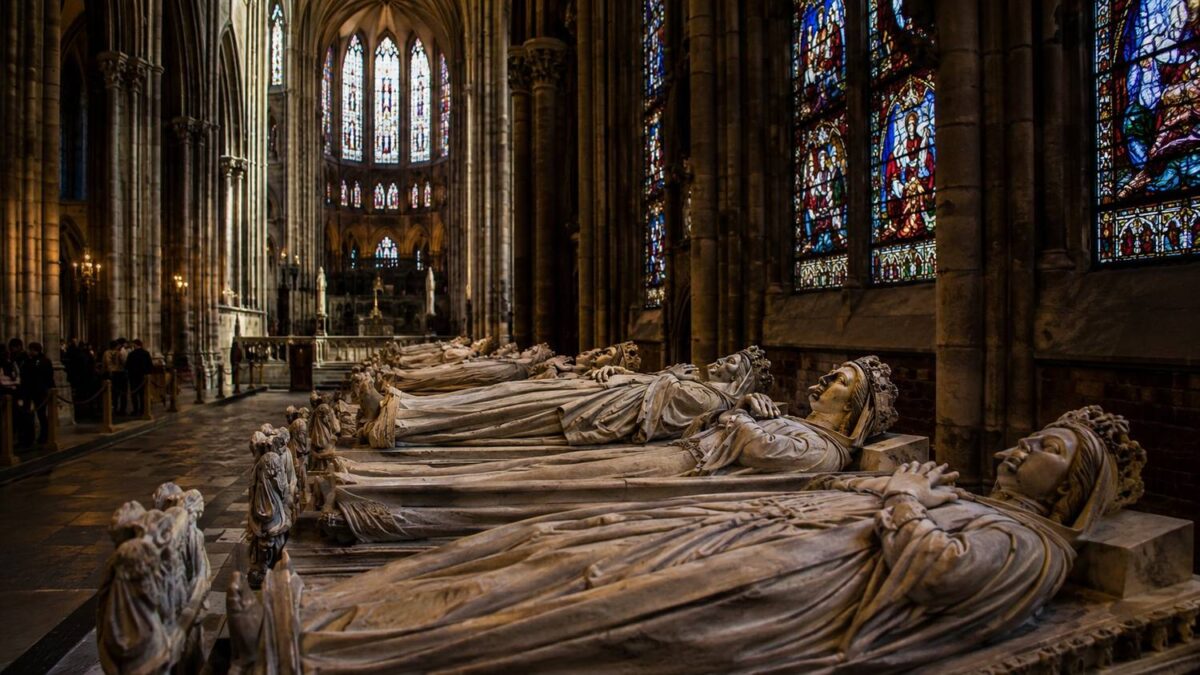
Today, visitors can view more than seventy recumbent effigies and funerary monuments. The collection includes works connected with rulers and royal figures from different periods of French history.
This distinction is important. The monument contains more than seventy tombs and recumbent figures, but that number should not be interpreted as seventy individually identified kings and queens.
The funerary sculptures form one of Europe’s most significant collections of royal memorial art from the twelfth to the sixteenth centuries. Visitors can study changes in clothing, religious symbolism, political identity and sculptural style across several eras.
The Birthplace of Gothic Architecture Gives Travellers a Powerful Reason to Visit
The basilica is widely regarded as one of the foundational monuments of Gothic architecture. Its twelfth-century rebuilding under Abbot Suger introduced a new architectural language based on height, light and structural innovation.
Pointed arches, ribbed vaulting and large stained-glass windows allowed builders to create interiors that felt taller and brighter than many earlier Romanesque churches.
These ideas influenced cathedral construction across France and Europe. Features now associated with major Gothic landmarks appeared at Saint-Denis during a decisive period of architectural change.
Advertisement
Advertisement
For travellers, this creates a clear reason to visit. Saint-Denis does not merely display Gothic design. It helps explain where the architectural revolution began and how it changed Europe’s religious buildings.
Historic North Spire Reconstruction Creates a Rare Living-Heritage Experience

Image generated with Ai
The biggest current tourism development is the reconstruction of the basilica’s north tower and spire. The historic structure was dismantled during the nineteenth century after damage and safety concerns.
The restoration project is now giving visitors a chance to follow a major heritage reconstruction while it develops. The monument presents the work as one of Europe’s largest heritage projects.
The associated Fabrique de la Flèche introduces visitors to the skills behind the reconstruction. It highlights traditional crafts linked to stone carving, metalwork and historic building methods.
This changes the visitor experience. Saint-Denis is no longer only a monument to the past. It is also a working heritage site where travellers can understand how historic architecture is researched, cut, assembled and restored.
That combination offers a stronger hook than a standard cathedral visit:
Advertisement
Advertisement
- Explore France’s royal necropolis
- See pioneering Gothic architecture
- Study more than seventy tombs and effigies
- Follow the rebuilding of a lost historic spire
- Learn how traditional crafts preserve national heritage
The reconstruction supports a growing form of tourism built around conservation, craftsmanship and behind-the-scenes access.
A New Exhibition Adds Art and Culture to the 2026 Visitor Experience
Saint-Denis is also expanding its cultural programme. The Voice of Light exhibition by artist Anne Slacik runs from 28 May to 20 September 2026.
The exhibition explores links between painting, music and poetry. Its setting inside a monument known for stained glass and architectural light strengthens the connection between contemporary art and medieval design.
For repeat visitors, temporary exhibitions provide a reason to return. For international travellers, they add another layer to a day trip focused on architecture and royal history.
The basilica’s programme also includes activities connected with the Fabrique de la Flèche, guided experiences and selected cultural events. Availability varies, so visitors should check the official programme before travelling.
Air France and Delta Strengthen Paris Access Without Serving Saint-Denis Directly
Air France and Delta are relevant because they connect international passengers with Paris. However, travellers should understand the relationship accurately.
Advertisement
Advertisement
Neither airline has announced a route to Saint-Denis or an official tourism partnership dedicated to the basilica. International passengers arrive through Paris airports and then continue by road, rail or metro.
Air France’s summer 2026 programme includes up to eleven daily flights between Paris-Charles de Gaulle and New York-area airports through its own services and its partnership with Delta Air Lines.
The schedule includes Air France flights to New York-JFK and Newark, alongside Delta-operated services within the transatlantic joint venture. This creates substantial access for travellers from the United States planning Paris and Greater Paris itineraries.
Country-Wise Travel Relevance and Airline Context
| Country | Travel relevance | Airline and access context | Why Saint-Denis may appeal |
|---|---|---|---|
| France | Domestic visitors can add Saint-Denis to a Paris cultural break or Greater Paris day trip. | Paris is connected by national rail, regional transport and the metropolitan network. | Royal heritage, architecture, school travel and cultural tourism |
| United States | US travellers form an important long-haul market for Paris holidays and heritage trips. | Air France and Delta offer extensive Paris–New York connectivity, including up to eleven daily summer services across JFK and Newark. | French monarchy, European history and alternatives to crowded central attractions |
| United Kingdom | Short travel times make Paris suitable for weekends and short cultural breaks. | Travellers can use air services or international rail connections before continuing to Saint-Denis. | Accessible heritage, Gothic architecture and royal history |
| Germany | Germany’s proximity supports rail, air and multi-city European travel. | Passengers can reach Paris through several transport options and use local connections for Saint-Denis. | Architecture, restoration, craftsmanship and educational tourism |
| Italy | Italian travellers can combine Paris with European cultural and religious itineraries. | Direct aviation and rail links provide access to Paris, followed by local public transport. | Sacred art, medieval heritage, funerary sculpture and cathedral design |
Paris Tourism Is Expanding Beyond Its Traditional Centre
The promotion of routes between Montmartre and Saint-Denis reflects a broader tourism strategy. It encourages visitors to explore districts and attractions across Greater Paris.
This can distribute tourism spending more widely. Local restaurants, shops, guides and cultural venues may benefit when visitors travel beyond the best-known central districts.
Saint-Denis also gives travellers a more layered view of the Paris region. The area combines medieval heritage, contemporary urban life, sporting infrastructure and the legacy of the Paris 2024 Olympic and Paralympic Games.
Advertisement
Advertisement
In August 2026, Saint-Denis will also host events connected with the European Swimming Championships at the Olympic Aquatic Centre. This creates opportunities to combine sporting events with cultural sightseeing.
Latest Metro Line Thirteen Closure Could Disrupt Saint-Denis Visits
Public transport planning will be particularly important during the peak summer period.
RATP has announced that Metro Line 13 will be suspended between Saint-Denis–Université and La Fourche from 31 July to 17 August 2026, inclusive. Replacement buses are planned.
The closure affects the section serving Basilique de Saint-Denis station, which is normally one of the most convenient access points for the monument.
Travellers visiting during this period should allow extra time. They should check live RATP information on the day of travel and consider alternative routes.
The disruption does not mean the basilica is closed. It means the usual metro journey may require replacement transport, additional connections or a longer walking route.
Advertisement
Advertisement
Essential Saint-Denis Basilica Visitor Information
The official monument information lists a standard admission price of €17. Eligible residents of European Union countries under twenty-six can receive free admission.
On Mondays, only the royal necropolis is normally accessible. The listed Monday price is €11.
Opening hours can change because Saint-Denis remains an active religious building. Services, ceremonies, exhibitions and restoration activity may affect visitor access.
Travellers should therefore confirm the schedule before departure, especially when visiting on Mondays, religious holidays or during major events.
What Travelers Should Do
Visitors can reduce delays and improve their experience by planning each part of the journey separately.
- Check airline status: Confirm flight times with Air France, Delta or the operating airline before leaving for the airport.
- Review rebooking rules: During a cancellation, use the airline’s official app or customer-service channel to review alternative flights.
- Understand refund rights: Eligibility depends on the operating carrier, ticket conditions and the cause of disruption.
- Check Metro Line 13: Travellers visiting between 31 July and 17 August 2026 should review replacement transport.
- Reserve enough time: Avoid placing a Saint-Denis visit immediately after an international arrival.
- Confirm monument access: Check opening hours, religious services and restoration-related restrictions.
- Book timed admission where available: Advance planning can reduce uncertainty during busy travel periods.
- Create a Greater Paris itinerary: Combine Saint-Denis with Montmartre, the Stade de France area or another northern Paris attraction.
- Respect the setting: The basilica is both a historic monument and a functioning place of worship.
Why Travellers Need to Know About Saint-Denis Now
The strongest reason is timing. Visitors can see an established royal monument while a significant chapter of its architectural history is actively being rebuilt.
Advertisement
Advertisement
Many European cathedrals offer history, sculpture and stained glass. Saint-Denis adds the rare opportunity to follow the reconstruction of a lost Gothic tower and spire.
It also offers a practical alternative for travellers seeking deeper cultural experiences beyond central Paris. The site can transform a standard city break into a journey through monarchy, medieval art, architecture and conservation.
Frequently Asked Questions
Why is the Saint-Denis Basilica famous?
The basilica is famous as the burial place of many French kings and queens and as a foundational monument of Gothic architecture. It contains more than seventy sculpted tombs and recumbent figures.
How can travellers reach the Saint-Denis Basilica from Paris?
The monument is normally accessible through Basilique de Saint-Denis station on Metro Line 13. However, planned works will interrupt part of the line from 31 July to 17 August 2026, so travellers should check replacement routes.
Are Air France and Delta launching flights to Saint-Denis?
No. Saint-Denis does not have a commercial airport served by these airlines. Air France and Delta connect international travellers with Paris, after which visitors use local transport to reach the basilica.
Author’s Observation
Saint-Denis deserves greater visibility, but it should not be promoted through exaggerated airline claims or misleading burial statistics. Its genuine strengths are already powerful: French royal history, pioneering Gothic design, remarkable funerary sculpture and a major living-heritage reconstruction. These qualities make it a credible addition to a modern Greater Paris itinerary.
Advertisement
Advertisement
Travellers planning Paris in 2026 should look beyond the standard checklist, verify transport changes and consider Saint-Denis while the historic spire project is unfolding. Plan the journey carefully, confirm current access and discover one of Greater Paris’s most consequential monuments.
Advertisement
Advertisement