Liz Earle has been talking about health and wellness since long before it turned into an extensive 14-step wind-down evening routine, a TikTok-approved peptide stack and some expensive salts stirred into a glass of water.
Over a career spanning more than three decades, the 63-year-old bestselling author and founder of Liz Earle Wellbeing has a simple (and, let’s be honest, totally refreshing) approach to food and healthy eating.
‘If we want to age well, maintain our energy, protect our muscles and keep our brain sharp, then what we put on our plate matters more than almost anything else,’ she tells viewers on her YouTube channel.
‘The good news,’ she adds, ‘is that we don’t need a complicated diet or a cupboard full of expensive supplements. In fact, when I’m building a meal, I focus on just six things.’
Interested? This is Liz Earle’s six-step guide to healthy eating.

Step 1: Start with protein
If there’s one nutrient we become more dependent on as we age, it’s protein, says Liz. ‘That’s because our muscles become less responsive to protein over time – a process known as anabolic resistance.’
In simple terms, this means we need more protein than we did in our younger years to maintain the muscle we already have. And muscle does more than keep us strong – as Liz points out, it’s also linked to our metabolism, balance, mobility, blood sugar control and, inevitably, healthy ageing.
So before she thinks about anything else on her plate, she asks herself one simple question: where’s the protein?
Liz suggests aiming for around 1.2g to 1.5g of protein per kilogram of body weight every day as a ‘sensible target’. Spread over three meals a day, that might work out at around 25g to 30g of protein per meal.
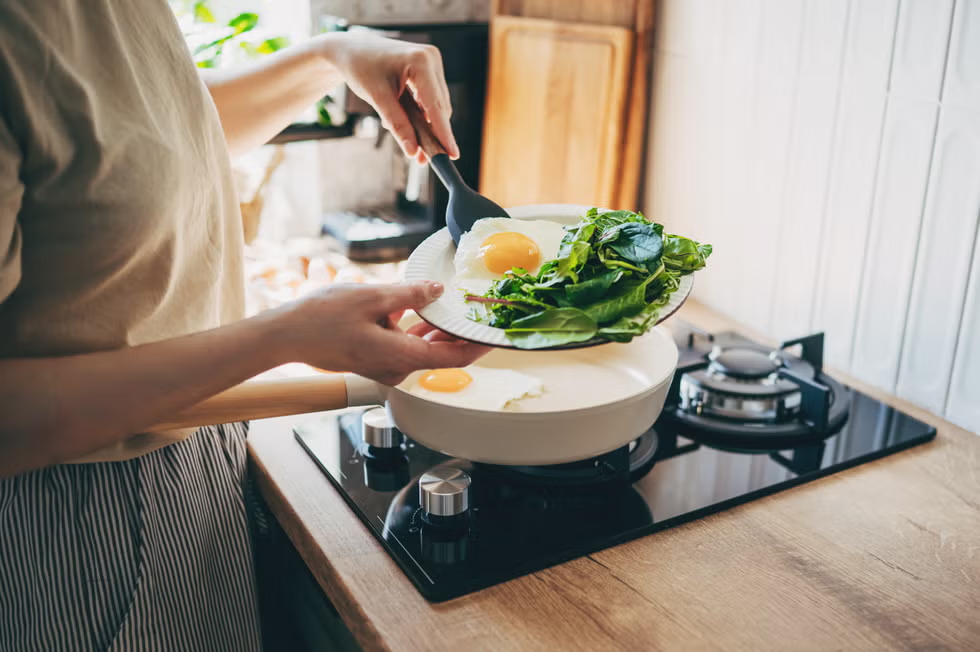
Some easy examples? Three eggs with greens or Greek yoghurt with berries for breakfast, chicken or fish with lentils for lunch, or salmon with greens and grains at dinner.
‘If you struggle to hit your protein target at meals, don’t forget that you can add some protein-rich snacks throughout the day. My go-tos are things like cottage cheese, boiled eggs and edamame beans,’ she says.
‘Protein really is the foundation of a healthy-ageing plate,’ she adds. ‘So that is where I always begin.’

Step 2: Add healthy fats
Next, Liz adds a source of healthy fats.
‘I’ve said it before: fat is not something to be feared. The right fats are some of our greatest allies when it comes to healthy ageing,’ she says.
Likening healthy fats to ‘the moisturiser for our cells,’ she explains that every cell membrane in our body is built from fat. Healthy fats are also needed for hormone production, brain function, nutrient absorption and cellular repair.
‘Omega-3 fats, in particular, help support heart and brain health and healthy inflammation levels throughout the whole body,’ she adds.
Some of Liz’s favourite sources include oily fish, such as salmon, sardines and mackerel, as well as extra-virgin olive oil, avocados, nuts, seeds and full-fat dairy.
‘A drizzle of olive oil, a handful of walnuts or half an avocado can literally transform a meal,’ she says.
Step 3: Choose your carbohydrates wisely
Rather than avoiding carbohydrates, Liz recommends being selective about the types you put on your plate.
‘As we age, the type of carbohydrate we eat becomes increasingly important. I like to think of carbohydrates as either working for us or against us,’ Liz explains.
‘The carbohydrates that work for us are rich in fibre. They digest slowly and help keep blood sugar levels stable. These foods also feed our beneficial gut bacteria and provide important vitamins, minerals and protective plant compounds.’
Some good choices? Lentils, beans, sweet potatoes, quinoa and berries. ‘These foods help support energy, appetite regulation, hormone balance and gut health,’ she says.
On the other hand, highly refined carbohydrates, including sugary drinks, cakes, biscuits and white bread, are more likely to cause sharper rises and falls in blood sugar, she notes.
Her advice? ‘When building your plate, choose carbohydrates that nourish rather than simply add volume.’

Step 4: Don’t forget your bone builders
After midlife, bone health becomes increasingly important, particularly for women after menopause, explains Liz.
Although calcium seems to get the most attention when we think about bones, it doesn’t work on its own. ‘To keep bones strong, we also need nutrients such as vitamin D, magnesium, vitamin K2, collagen and omega-3 fats,’ she says.
Liz turns to bone-building foods such as hard cheeses, oily fish, free-range organic eggs, sesame seeds, pumpkin seeds and dark leafy greens.
Step 5: Fuel your inner batteries
‘Nearly every cell in the body contains tiny structures called mitochondria. Think of them as our batteries, creating the energy we need to thrive. The healthier they are, the more efficiently our cells can produce energy,’ says Liz.
‘Many of the foods that support mitochondrial health are also some of the most colourful and nutrient-dense foods there are.’
Think berries, beetroot, dark leafy greens, and herbs and spices such as turmeric, ginger, rosemary, eggs, oily fish, broccoli and other cruciferous vegetables.
These foods provide antioxidants and nutrients that help protect our cells from oxidative stress and support healthy energy production, Liz explains.
Step 6: Add something fermented
Finally, Liz adds fermented foods. These contain microbes and compounds that may help support gut health, digestion and nutrient absorption. ‘This could be a spoonful of sauerkraut, a bowl of live yoghurt, a little kefir or a scoop of kimchi,’ suggests Liz.
‘What’s really fascinating is that the health of our gut influences almost every aspect of our wellbeing, including inflammation, immunity and even how efficiently our cells produce energy,’ she continues.
Her advice is to start small: ‘Even one serving a day can make a really meaningful difference over time.’
The verdict
Liz finishes off her video by reminding us that we don’t need to get it perfect at every single meal.
‘But, if we can tick most of those boxes most of the time, we’ll be giving ourselves some of the very best support for healthy, strong ageing,’ she says.