Details are surfacing about Elon Musk’s acquisition of a mobile gas turbine company — several weeks after the unpublicized deal itself went through. That’s Musk, who recently became the richest person in the world, buying the company as an individual, not acting on behalf of his companies like Tesla or SpaceX.
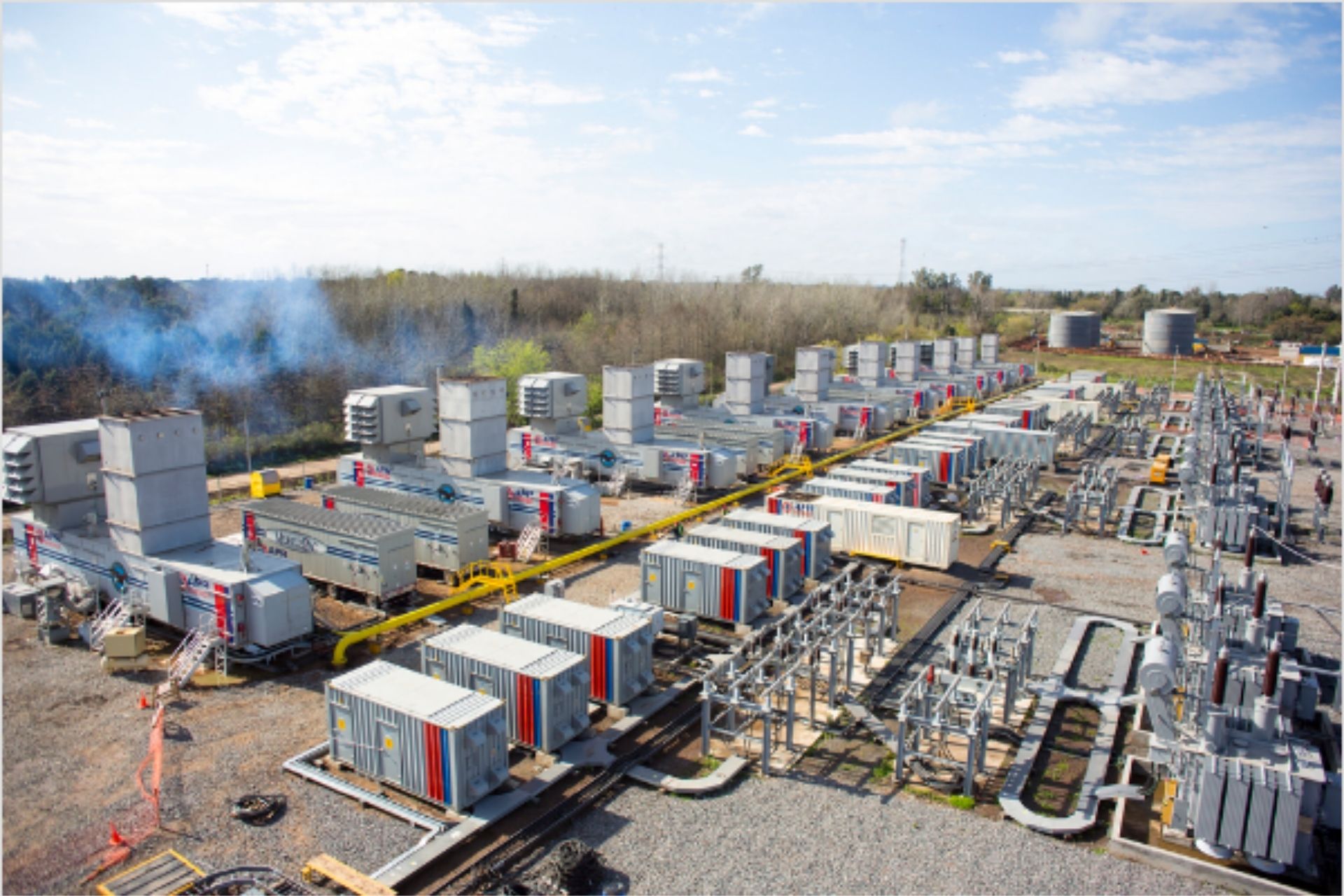
APR Energy, based in Jacksonville, Florida, owns and operates one of the world’s largest mobile gas turbine fleets, with more than a gigawatt of capacity. Those turbines, APR says, are modular, can run on a variety of fuels, and can be brought online in as little as 30 days to provide both bridge and long-term power, either behind-the-meter or grid-tied.
According to a Federal Trade Commission filing, the deal, with Musk as the named buyer, rather than any of his companies, went through in mid-May, after the FTC waived its merger-review waiting period and ended its federal antitrust review ahead of schedule.
Additional information stems from a June 8-K filing by Duos Technology Group, an AI and energy infrastructure company which held a 5% stake in APR’s parent company. According to that filing, and a statement Duos issued at the time, the company received around $50.4 million in net proceeds for its 5% of APR, which would put the total value of the acquisition around $1 billion.
The deal comes as the major hyperscalers are increasingly embracing off-grid gas in their quests for speed to power, often positioning those purchases as “bridge” solutions needed to get data centers online faster than grid connections are available.
APR itself was already in the business of powering data centers: According to a February 2025 press release, the company first deployed power for a U.S. data center early last year, installing four turbines totaling around 100 MW of behind-the-meter power to “a major U.S.-based AI hyperscaler.” That buyer remains unnamed.
In January, APR expanded its fleet to more than a gigawatt of turbines, adding eight additional units, a move it explicitly framed as a response to rising data center demand. The company’s website now states it supplied “375 MW to the largest AI training system in the U.S.”
Musk, for his part, has been leveraging modular turbines for his companies’ speed to power ambitions since well before the acquisition. SpaceX, which acquired xAI in February before it went public this summer via IPO, said in its federal filings it had committed to spending more than $2.8 billion on gas turbines to power data centers earlier in the year.
That’s even as xAI has faced controversy and legal challenges over its use of temporary, trailer-mounted gas-fired turbines to power one of its Colossus data centers. The company, which originally had an 8-MW grid connection when it began construction of Colossus, installed dozens of turbines throughout 2024 and 2025, a strategy that brought new computing power online in just 122 days — far faster than its peers.
This latest acquisition puts Musk, who initially made his fortune in electric vehicles, in the center of an emerging ecosystem of gas-powered data centers. He owns both an AI training customer, and now an off-grid power vendor, capable of rapidly deploying infrastructure where it’s needed.