Published on
July 15, 2026

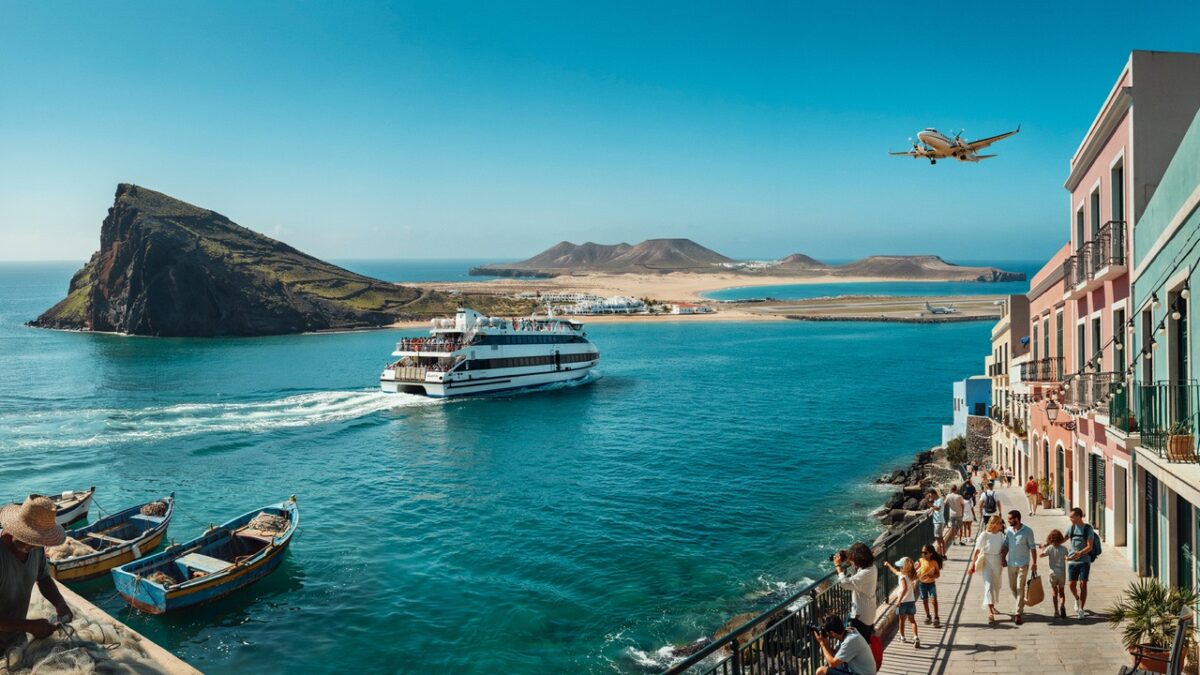
Image generated with Ai
Cabo Verde is strengthening its travel connections with Portugal, the United Kingdom, Germany, France, the Netherlands and other European markets as tourism drives another year of robust economic expansion. The island nation’s real gross domestic product reportedly grew by 6.3% in 2025, supported by record visitor demand, additional international flight capacity and stronger household spending. Tourism contributed approximately 4.1 percentage points to the overall increase, demonstrating how international travel has become central to employment, foreign-exchange earnings and business development across the West African archipelago.
However, the latest economic assessment shows that international tourism success has not produced equally strong connections between Cabo Verde’s islands. Unreliable domestic flights, expensive fares, irregular ferry services and ageing maritime infrastructure continue to limit multi-island travel. These difficulties concentrate tourism activity in Sal and Boa Vista, while Santiago, São Vicente, Santo Antão, Fogo, Maio and São Nicolau receive a smaller share of visitor spending. Transport reform has therefore become essential for expanding tourism opportunities, supporting local producers and creating a more balanced island economy.
Cabo Verde Records Strong Tourism-Led Economic Performance
Tourism remained Cabo Verde’s most influential growth engine during 2025. Rising arrivals from European countries supported hotels, restaurants, tour companies, airports, retailers and ground-transport providers. Private consumption contributed approximately two percentage points to economic growth as improving employment and tourism income encouraged household spending.
Unemployment reportedly declined to 6.2%, while the current account recorded a surplus equivalent to 3.6% of GDP. International reserves reached approximately €975 million, providing enough foreign currency to cover around 7.1 months of imports. These reserves are particularly important because Cabo Verde imports a substantial proportion of its food, fuel, machinery and consumer goods.
Advertisement
Advertisement
| Economic indicator | Reported 2025 result |
|---|---|
| Real GDP growth | 6.3% |
| Tourism contribution | 4.1 percentage points |
| Private spending contribution | About 2 percentage points |
| Unemployment | 6.2% |
| Current-account balance | 3.6% of GDP surplus |
| International reserves | €975 million |
| Import coverage | 7.1 months |
| Fiscal balance | 1% of GDP surplus |
| Public debt | 100.7% of GDP |
European Visitors Strengthen Cabo Verde Tourism
Approximately 93% of Cabo Verde’s international visitors reportedly originate in Europe. The United Kingdom, Portugal, Germany, France, the Netherlands and Belgium are among the destination’s most important markets. Direct and charter flights allow many travellers to reach Sal and Boa Vista without connecting through other islands.
The concentration creates both strength and vulnerability. Strong European demand delivers dependable visitor volumes during the winter-sun season, but economic weakness, aviation disruption or changing travel preferences in Europe could quickly affect Cabo Verde. Developing connections with additional markets and offering cultural, adventure, nature and culinary experiences could reduce this dependence.
Advertisement
Advertisement
Sal and Boa Vista dominate the resort sector because they offer extensive beaches, international airports and large accommodation inventories. Better domestic transport could encourage these visitors to extend their holidays through multi-island itineraries instead of remaining within a single resort destination.
Inter-Island Transport Emerges as the Critical Challenge
Cabo Verde’s geography makes reliable transport essential. The country contains ten islands, nine of which are inhabited, with communities separated by considerable stretches of the Atlantic Ocean. Domestic aviation and maritime services are therefore fundamental public infrastructure.
Advertisement
Advertisement
Travellers regularly face limited flight availability, expensive last-minute fares and changing domestic schedules. Maritime travel can also be affected by ageing vessels, weather conditions and inconsistent departure times. These obstacles discourage short island connections and make it difficult for international visitors to coordinate domestic services with their return flights.
Transport limitations also affect residents and businesses. Farmers, fishers, accommodation owners and small retailers need predictable freight services to move products between islands. When sailings are cancelled or delayed, supplies become more expensive and locally produced goods struggle to reach tourism businesses.
Transport Reform Could Spread Tourism Beyond Sal and Boa Vista
The proposed reforms include performance-based contracts for transport operators, transparent public subsidies, stronger competition and increased private-sector participation. Performance contracts could connect government payments with service reliability, completed journeys, passenger capacity and coverage of less-profitable routes.
| Destination | Potential benefit from improved connectivity |
|---|---|
| Praia, Santiago | Business, heritage and urban tourism growth |
| Mindelo, São Vicente | Cultural events, cruises and music tourism |
| Porto Novo, Santo Antão | Hiking, nature and rural travel expansion |
| São Filipe, Fogo | Volcano, wine and community tourism |
| Vila do Maio, Maio | Beach and low-density tourism development |
| Ribeira Brava, São Nicolau | Eco-tourism and local guesthouse demand |
| Sal Rei, Boa Vista | Easier connections with cultural islands |
| Santa Maria, Sal | Stronger multi-island holiday packages |
Reliable links would allow tour operators to combine beaches in Sal or Boa Vista with the cultural attractions of Mindelo, the mountain landscapes of Santo Antão, the volcanic environment of Fogo and the historical sites of Santiago. This could increase average visitor spending and distribute tourism revenue more widely.
Advertisement
Advertisement
Public Debt Remains a Significant Economic Risk
Cabo Verde reportedly achieved a fiscal surplus equivalent to 1% of GDP, its first since 2007. Strong tax revenue contributed to the improvement, although a one-time airport concession payment also supported the result. The surplus should therefore not be viewed entirely as a permanent change in government finances.
Public debt declined to approximately 100.7% of GDP but remains high. Debt servicing reportedly consumes 34.2% of government revenue, rising to 46.3% when obligations associated with state-owned enterprises are included. Financial support and guarantees connected with the national airline remain an important fiscal risk.
Reducing transport losses while maintaining essential island services will require careful policy choices. Completely commercial services may not be viable on every low-volume route, meaning transparent subsidies could remain necessary.
Cabo Verde Tourism Outlook for 2026
Economic growth is forecast to moderate to approximately 4.8% in 2026. This would remain a strong performance for a small island economy, although inflation, imported fuel costs, geopolitical instability and weaker European travel demand could create pressure.
The long-term opportunity lies in converting tourism growth into a more diversified visitor economy. Improved ferries, dependable domestic flights, resilient ports and transparent transport management could transform Cabo Verde from a two-island resort market into an integrated Atlantic destination.
Frequently Asked Questions
How much did Cabo Verde’s economy grow in 2025?
Advertisement
Advertisement
The economy reportedly expanded by 6.3%, with tourism and household spending providing most of the growth.
Why is tourism important to Cabo Verde?
Tourism supports employment, foreign-exchange earnings, hotels, aviation, restaurants, retail businesses and government revenue.
Which countries send the most visitors to Cabo Verde?
Important source markets include the United Kingdom, Portugal, Germany, France, the Netherlands and Belgium.
Which islands receive the most tourists?
Advertisement
Advertisement
Sal and Boa Vista dominate international resort tourism because of their beaches, airports and large hotels.
Why is inter-island travel difficult?
Travellers can encounter limited flights, high fares, irregular ferries, ageing vessels and changing schedules.
What transport reforms are proposed?
Recommendations include performance-based contracts, transparent subsidies, stronger competition and greater private investment.
Which destinations could benefit from better connections?
Advertisement
Advertisement
Santiago, São Vicente, Santo Antão, Fogo, Maio and São Nicolau could receive more visitors and tourism spending.
What is Cabo Verde’s 2026 growth forecast?
The economy is forecast to grow by approximately 4.8%, although external risks remain.
Is Cabo Verde’s public debt still high?
Yes. Public debt reportedly stands at approximately 100.7% of GDP despite recent fiscal improvement.
How could travellers benefit from the reforms?
More reliable flights and ferries could make multi-island holidays easier, safer and more predictable
Advertisement
Advertisement