
China said on Wednesday it “firmly opposes” a sanctions bill proposed by US senators and supported by President Donald Trump that targets countries buying Russian energy.
The bipartisan legislation could potentially clear the way for the US to exert stronger pressure on Russia over its war in Ukraine.
US senators spearheading the bill said in a joint statement last week that they expected to unveil the updated legislation “very soon”.
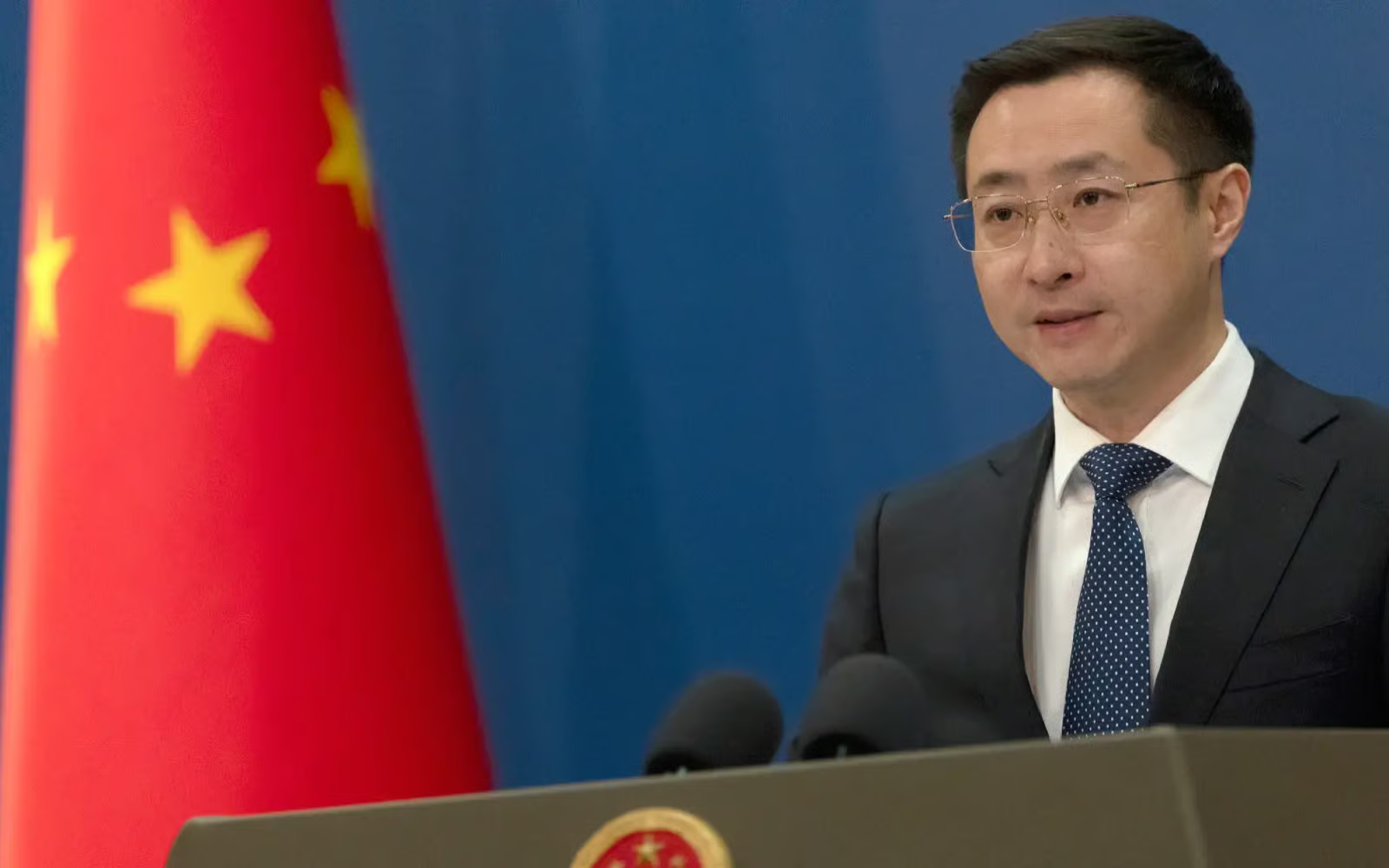
China, among the biggest buyers of Russian oil, hit back on Wednesday, accusing Washington of using “double standards and coercion”.
“China firmly opposes illegal unilateral sanctions that have no basis in international law and are not authorised by the UN Security Council,” foreign ministry spokesperson Lin Jian told a news briefing.
“China will take all necessary measures to resolutely safeguard the legitimate rights and interests of its enterprises and citizens,” he said.
The legislation would give the president authority to impose tariffs and sanctions on countries that continue purchasing Russian energy, a crucial source of revenue for Moscow’s war effort.
The US senators have not released details of the latest version of the bill, which they said on Friday had been agreed with Trump.
An earlier proposal envisioned tariffs of up to 500% on imports from countries purchasing Russian oil, gas, uranium and other products.
The agreement follows signs that Trump has become increasingly frustrated with Moscow’s failure to negotiate an end to the conflict, which began with Russia’s full-scale invasion of Ukraine in February 2022.
But administration support could remove the most significant political obstacle to a bill that has been under negotiation for months and has attracted backing from lawmakers in both parties – though its swift passage is not guaranteed.
Among the bill’s supporters were the late Lindsey Graham, who was a staunch supporter of Ukraine in its fight against Russia, as well as Republicans Roger Wicker and Democrats Richard Blumenthal and Jeanne Shaheen.
The White House did not immediately comment publicly on the agreement.