Published on
July 15, 2026

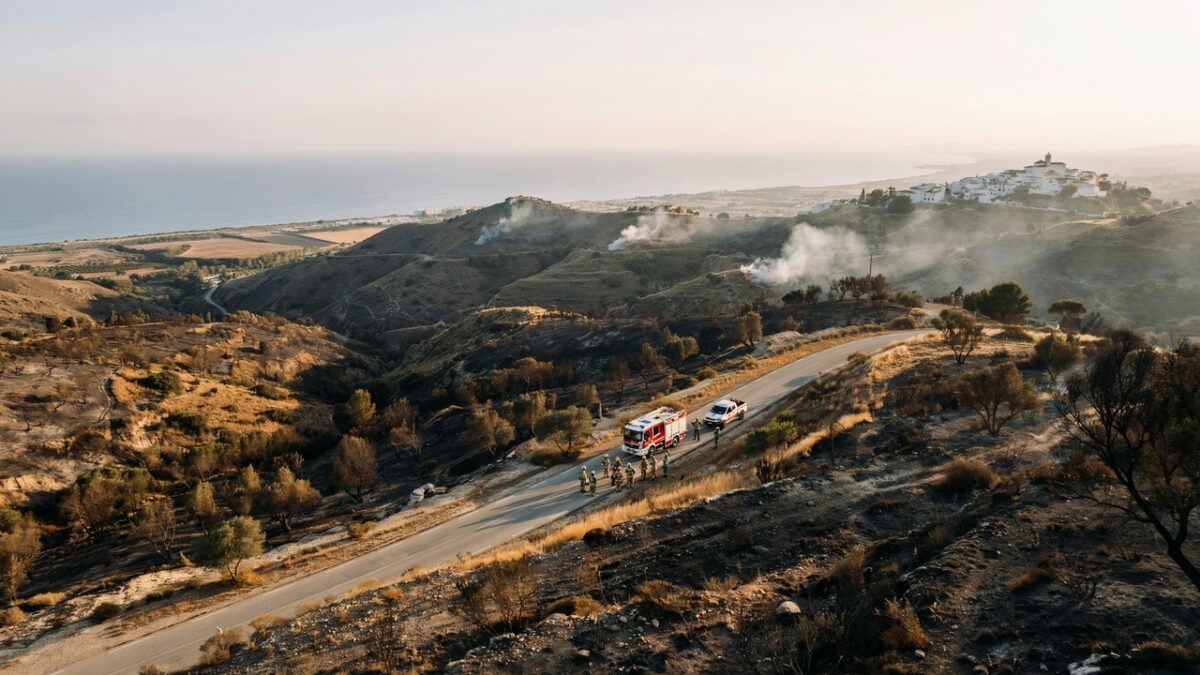
Image generated with Ai
Spain is coordinating with the United Kingdom, Belgium, France and the United States following the identification of 12 foreign nationals among 13 people killed by the devastating Los Gallardos wildfire in Almería. The victims included seven British citizens, three Belgians, one French national, one American and one Spaniard. The tragedy, which unfolded near Bédar during an intense period of summer heat, has placed international attention on emergency communication, consular assistance and wildfire preparedness in destinations containing large expatriate communities. Authorities completed the difficult identification process using DNA supplied by relatives, including samples obtained through international cooperation.
The disaster does not represent a nationwide interruption to tourism in Spain, but it carries important implications for travellers visiting eastern Andalucía. Los Gallardos lies inland from popular Mediterranean destinations such as Mojácar and Garrucha, where summer populations rise substantially. British authorities continue to advise visitors to avoid travelling into or through the affected locality, monitor emergency updates and follow evacuation or shelter instructions. The wildfire has been controlled, residents have started returning and no general warning against visiting Spain or Andalucía has been issued. Nevertheless, local access, air quality and infrastructure conditions can change quickly throughout the wildfire season.
Los Gallardos Wildfire Leaves Thirteen Dead and Thousands Displaced
The fire began at approximately 4.30pm on 9 July 2026 near Almocaízar, a small settlement within Los Gallardos municipality. Strong winds, high temperatures, dry vegetation and rugged terrain propelled the flames towards Bédar and the Sierra Cabrera area.
At its most dangerous stage, officials estimated that the fire advanced by more than 100 metres per minute. Roads, rural tracks and dry watercourses became hazardous as smoke reduced visibility and flames crossed possible escape routes.
| Key wildfire detail | Confirmed information |
|---|---|
| Fatalities | 13 adults |
| Foreign nationals killed | 12 |
| Area burned | Approximately 7,000 hectares |
| Peak evacuations | Around 1,400 to 1,500 people |
| Initial injuries | Eight, including four serious cases |
| Fire status | Controlled on 13 July |
| Emergency number | 112 |
Twelve victims died within the fire zone, while a 93-year-old British woman later died in hospital. Eight women and five men were among the final casualty total. Ground searches concluded without the discovery of further victims.
British, Belgian, French and American Families Receive Consular Assistance
The Tribunal Superior de Justicia de Andalucía confirmed that forensic teams had completed the identification of every victim. The condition of the remains prevented conventional recognition, requiring genetic profiles to be compared with biological samples from relatives.
Advertisement
Advertisement
Spanish authorities worked with overseas agencies to facilitate missing-person reports and collect DNA from family members outside the country. Guardia Civil officers, accompanied by psychologists, personally informed the families after the identifications were verified.
Early reports describing 23 people as missing created uncertainty, but this number referred largely to people whom relatives or neighbours could not immediately contact. It was not a confirmed additional casualty count. Twelve formal disappearance reports ultimately corresponded to those who died at the scene.
The nationality breakdown should not be interpreted as evidence that all the victims were tourists. Bédar has a substantial expatriate population, particularly residents originating from Britain and Belgium. Several of those affected were known to live locally, although authorities have not published the residency status of every victim.
Localised Travel Warning Remains in Place for Eastern Almería
The United Kingdom’s Foreign, Commonwealth and Development Office advises people in the affected area to obey emergency instructions, avoid travelling into or through restricted locations and call 112 during an emergency. An English-language family-support service has also been established.
This remains a local warning rather than advice against travelling to Spain, Andalucía or the wider Costa de Almería. There has been no announced closure of Andalucía to international visitors, while the principal coastal tourism centres continue operating.
Travellers approaching Los Gallardos, Bédar, Lubrín or rural routes from Mojácar should check official traffic information before departure. Accommodation providers can offer the most accurate information about local accessibility, smoke conditions and utility services.
Advertisement
Advertisement
Visitors should never enter a restricted area to inspect property or retrieve belongings. During a fast-moving wildfire, driving without an authorised route can place travellers directly in the fire’s path. Depending on local conditions, emergency personnel may order one community to evacuate while instructing another to remain sheltered.
Electrical Infrastructure Investigated as Possible Ignition Source
A fallen electrical pole or cable remains the leading hypothesis concerning the fire’s origin. Witnesses reported sparks near an old private electricity line shortly before the flames accelerated through surrounding vegetation.
However, the cause has not been officially determined. Endesa disputed suggestions that an active section of its network started the fire, stating that the inspected line was not carrying electricity and was not under its responsibility. A judicial investigation is examining the infrastructure, witness accounts and ignition site.
Heat, strong wind and dry vegetation explain the fire’s extraordinary development but do not establish its initial cause. Responsible travel reporting should therefore describe the electrical cable as an investigative hypothesis rather than a confirmed conclusion.
Emergency Alert Decision Faces Further Examination
Andalusian authorities did not activate the ES-Alert mass mobile notification system. Officials argued that different communities required contrasting instructions and that one broad message could have caused confusion. Police, mayors and emergency personnel instead used telephone calls, sirens and door-to-door warnings.
Some survivors and relatives have questioned whether information reached every isolated household. Regional officials maintain that several victims left despite instructions to shelter and travelled along an unauthorised route. Because these accounts remain contested, the circumstances should not be presented as settled. Andalucía’s emergency leadership is expected to explain the communication strategy before the regional parliament.
Advertisement
Advertisement
Tourism and Insurance Lessons from the Almería Disaster
The tragedy demonstrates why travellers should monitor weather warnings even when staying outside major resorts. Rural villas, holiday homes, campsites and mountain roads may face greater exposure than urban hotels because emergency access and mobile coverage can be limited.
Travellers with affected reservations should contact their provider before cancelling. Insurance protection for evacuation, alternative accommodation, curtailment or cancellation varies between policies. Maintaining receipts, official notices and written communication can support a later claim.
Frequently Asked Questions
Where did the deadly Spanish wildfire occur?
It occurred around Los Gallardos and Bédar in Almería province, within Spain’s southern autonomous region of Andalucía.
How many people died in the Los Gallardos fire?
Thirteen adults died, including 12 at the scene and one British woman who subsequently died in hospital.
Which foreign nationalities were represented among the victims?
The victims included seven British citizens, three Belgians, one French national and one American, alongside one Spaniard.
Were all the foreign victims tourists?
No such conclusion has been confirmed. Several victims were residents of an area known for its substantial expatriate population.
Advertisement
Advertisement
How much land was destroyed?
Approximately 7,000 hectares, equivalent to about 70 square kilometres or 17,300 acres, were affected.
Is the Almería wildfire still active?
The fire was declared controlled on 13 July, although monitoring and work on hotspots may continue after that designation.
Is Andalucía closed to international travellers?
No. The warning is localised, and there is no general advisory against visiting Andalucía or Spain because of this incident.
What should travellers do near Los Gallardos?
They should avoid restricted areas, monitor official emergency and traffic information, contact accommodation providers and follow local instructions.
What caused the wildfire?
A fallen private electrical cable is the leading hypothesis, but the judicial investigation has not established a final cause.
What number should travellers call during an emergency in Spain?
Travellers should call 112, the general emergency number operating throughout Spain and the European Union.
Advertisement
Advertisement