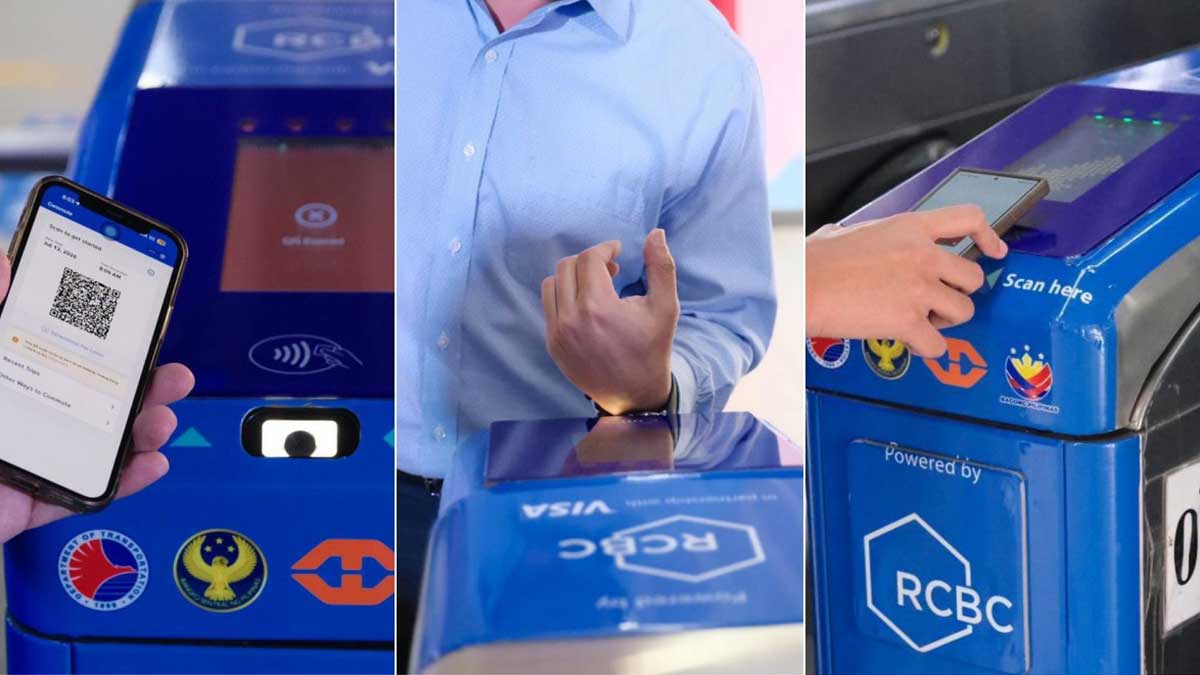

MANILA, Philippines — Commuters on the Light Rail Transit Line 2 (LRT-2) can now pay their fares using contactless bank cards, mobile phones, wearable devices and other digital payment options after the Department of Transportation (DOTr) on Monday launched a cashless fare payment system across the railway.
The rollout expands payment options for passengers, who may now use Visa and Mastercard credit and debit cards, NFC-enabled mobile phones and wearable devices, and the GCash Commute QR feature at designated fare gates.
READ: GCash, Visa, Mastercard eye PH fare system concession
The DOTr said the initiative is part of the government’s ongoing efforts to expand digital payment systems in public transportation, following the introduction of a similar system at Metro Rail Transit Line 3 (MRT-3) in 2025.
More payment options for commuters
Transportation Secretary Giovanni Lopez said the cashless payment system is intended to make fare transactions more convenient by allowing passengers to bypass ticket counters.
He noted that the system could particularly benefit students, as LRT-2 serves several universities along the University Belt.
“This is a big help for our passengers on the LRT-2 line, especially students now that the school year has started. Commuting will be easier because we now have a digital payment system. We know that LRT-2 passes through the University Belt, so this is particularly convenient for our student passengers,” Lopez said.
The DOTr said President Ferdinand Marcos Jr. had directed the agency to roll out digital payment systems across rail lines to make fare transactions more accessible and convenient.
The agency added that the LRT-2 project was implemented through a partnership among the DOTr, the Light Rail Transit Authority (LRTA), Rizal Commercial Banking Corporation (RCBC), and the Bangko Sentral ng Pilipinas (BSP).
Under the Automated Fare Collection System (AFCS), commuters can pay directly at designated RCBC fare gates using EMV contactless bank cards, NFC-enabled mobile phones and wearable devices, or the GCash Commute QR feature.
READ: Cashless payments, free Wi-Fi now available at MRT-3
Passengers must tap their chosen payment method upon entering the station and again at RCBC-enabled exit gates when leaving.

Addressing card shortages
Transportation Undersecretary for Railways Timothy John Batan said the additional payment options are also expected to lessen dependence on stored-value cards, which have faced supply shortages in the past.
“What we are doing today is adding more options—to give our LRT-2 commuters more choices. This is also to ensure that the problems we experienced in the past, when we ran out of cards and chips, will not happen again. Goodbye to card shortages; that is one of the promises of this proof of concept,” Batan said.
READ: From 1% to 60%: The Philippine surge in digital payments
Batan also said digital payments could provide the government with real-time travel data that may help transport agencies identify areas where additional train trips, routes or rail investments are needed.
“Because of what we are doing now, it will be easier for the government, the DOTr, and our other government agencies to determine where our commuters are coming from and where they are going. With real-time data, we will be able to identify where additional train trips are needed, where more routes should be added, and where further investments in the railway system are necessary,” he said.
During the launch, Finance Secretary Frederick Go announced RCBC’s Piso Fare Cashback Promo, which will run from July 13 to July 31, 2026.
Under the promo, commuters using the MySSS Card Powered by RCBC DiskarTech will pay P1 for qualified LRT-2 rides, while the remaining fare will be credited back to their accounts within three banking days. The offer is valid for up to eight qualified rides per day.
“The President instructed us to find ways to make life easier, more affordable, and more convenient for our people. If you have an SSS card, it’s easy to use, and more importantly, you can avail yourself of a P1 fare for the next two weeks when you use it,” Go said.
Whole-of-government initiative
Information and Communications Technology Secretary Henry Aguda said the launch was the result of coordination among government agencies and private sector partners involved in the project.
“As you can see, digital payments will not only make transactions more convenient. Secretary Go also mentioned earlier where we now stand with regard to InstaPay and PESONet fees. This is a whole-of-government approach involving the DOTr, the SSS, the PPP Center, everyone who participated in this initiative, the BSP, and our private sector partners,” Aguda said. /cb