Key Points
-
AI capital expenditures in 2026 will be 61% higher than Goldman Sachs’ initial estimates.
-
Micron Technology has been one of the biggest winners from all of the spending.
-
Taiwan Semiconductor benefits no matter which AI hyperscalers win the AI race.
- 10 stocks we like better than Micron Technology ›
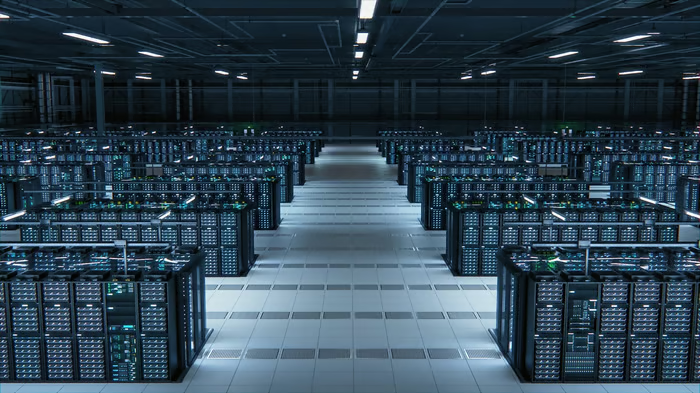
In the third quarter of 2025, Goldman Sachs analysts were trying to estimate just how much the technology hyperscalers (Alphabet, Meta, Amazon, Microsoft, and others) would spend in 2026 to build out data centers.
Their estimate at the time: $465 billion.
Where to invest $1,000 right now? Our analyst team just revealed what they believe are the 10 best stocks to buy right now, when you join Stock Advisor. See the stocks »
That was supposed to account for all the monumental spending on artificial intelligence(AI) infrastructure. But even after they revised their estimate to $527 billion just three months later, they still missed the mark.
Hyperscalers now are forecast to devote about $750 billion to capital expenditures (capex) this year — and the number could go higher next year.
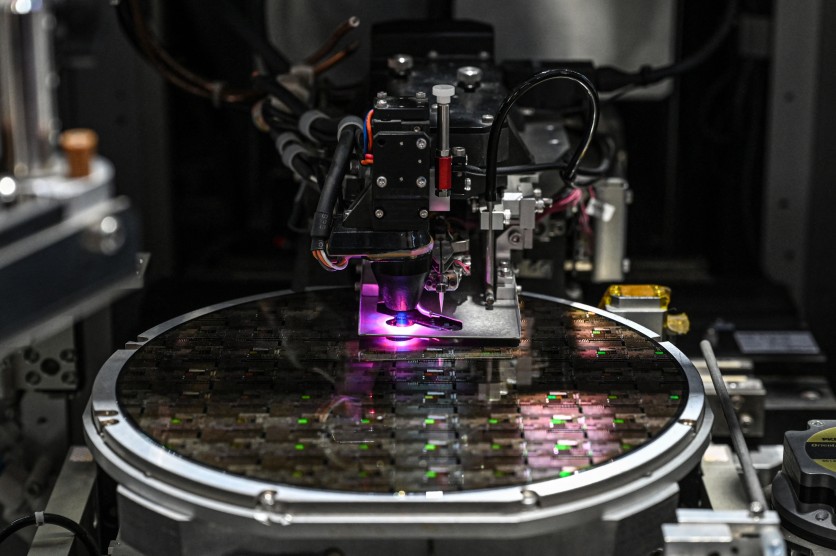
That’s fantastic news for Micron Technology (NASDAQ: MU) and Taiwan Semiconductor Manufacturing (NYSE: TSM), also called TSMC. These two companies are leading pick-and-shovel investments in the enormous AI data center build-out that’s currently underway, and they could benefit for years to come. Here’s why.
Image source: Getty Images.
Hyperscalers can’t get enough of Micron Technology’s memory
So called pick-and-shovel companies benefit from selling the tools that help other companies build what they need. In the current AI gold rush, Micron is a great pick-and-shovel play because it sells much-needed memory chips to tech companies.
With AI data center spending surging, hyperscalers are buying up as many memory processors as they can get. Artificial intelligence uses a lot of it, and that’s driving memory prices higher and leading to much higher profits for Micron.
Consider that in the third quarter of fiscal 2026 (ended May 28), Micron’s sales jumped 345% to $41.5 billion, and adjusted earnings per share spiked more than 1,300% to $24.67. The company’s management believes this growth isn’t anywhere near finished yet. Just read what Micron Chief Executive Officer Sanjay Mehrotra said on the Q3 earnings call: “The memory industry has been structurally transformed by the proliferation of AI. We are only in the early innings of the significant innovation and productivity that can be unleashed in every part of the global economy over time.”
And the company likely isn’t exaggerating the shift toward long-term memory demand. Alphabet‘s capex spending will reach as much as $190 billion this year, and management said that next year’s spending is likely to “significantly increase.” In short, AI spending is still accelerating.
That’s one of the reasons three analysts recently raised their price target for Micron stock to $1,500, representing a 51% increase from its current price.
Taiwan Semiconductor could be the ultimate pick-and-shovel AI play
As the world’s leading semiconductor manufacturer, TSMC is arguably one of the best ways for investors to play long-term demand in AI data center infrastructure. The company makes an estimated 70% of the world’s processors and 90% of the most advanced processors (including those for AI).
This means that no matter which company leads the AI gold rush, TSMC benefits. If Nvidia loses ground to a competitor, Taiwan Semiconductor still wins. If Alphabet outpaces OpenAI and Anthropic to take the crown for the top AI model, TSMC still wins as long as they all need lots of processors.
And they all need lots of processors.
TSMC’s revenue jumped about 41% in the first quarter to nearly $36 billion, and adjusted earnings (not in accordance with generally accepted accounting principles, or GAAP) popped 58% to $3.49 per American depositary receipt (ADR). It’s worth mentioning that TSMC’s gross margin is very impressive, too, reaching 66% in the quarter and helping the company’s bottom-line growth as processor demand heats up.
And more growth is likely on the way. Taiwan Semiconductor Chief Executive Officer C.C. Wei said on the first-quarter earnings call: “The shift from generative AI and the query mode to agentic AI and the command and action mode is leading to another step up in the amount of tokens being consumed. This is driving the need for more and more computation, which supports the robust demand for leading-edge silicon.”
For investors looking to tap into the AI data center boom and benefit regardless of which hyperscaler leads the pack, Micron Technology and Taiwan Semiconductor are two fantastic choices right now.
Should you buy stock in Micron Technology right now?
Before you buy stock in Micron Technology, consider this:
The Motley Fool Stock Advisor analyst team just identified what they believe are the 10 best stocks for investors to buy now… and Micron Technology wasn’t one of them. The 10 stocks that made the cut could produce monster returns in the coming years.
Consider when Netflix made this list on December 17, 2004… if you invested $1,000 at the time of our recommendation, you’d have $395,679!* Or when Nvidia made this list on April 15, 2005… if you invested $1,000 at the time of our recommendation, you’d have $1,294,805!*
Now, it’s worth noting Stock Advisor’s total average return is 929% — a market-crushing outperformance compared to 211% for the S&P 500. Don’t miss the latest top 10 list, available with Stock Advisor, and join an investing community built by individual investors for individual investors.
*Stock Advisor returns as of July 13, 2026.
Chris Neiger has no position in any of the stocks mentioned. The Motley Fool has positions in and recommends Alphabet, Amazon, Goldman Sachs Group, Meta Platforms, Micron Technology, Microsoft, Nvidia, and Taiwan Semiconductor Manufacturing. The Motley Fool has a disclosure policy.
The views and opinions expressed herein are the views and opinions of the author and do not necessarily reflect those of Nasdaq, Inc.