July 13, 2026
Mark Carney’s recent trip to Saudi Arabia has aroused a fresh debate about Canada’s foreign policy, and whether this prime minister is straying too far from its longstanding international relations norms.
While this concern is understandable as a response to the speed with which developments are unfolding and the transformative change Mr. Carney is implementing, it negates the overwhelming role of context in these events.
The world is evolving faster than at any previous point in history. The answer, however, is not to retreat from engagement. Values are rarely advanced through isolation. Influence requires presence, relationships, credibility and economic leverage.
Canada’s traditional middle-power diplomacy developed within an international order underwritten by American economic and military power. The United States provided much of the security, market access and institutional leadership that allowed countries such as Canada to specialize in mediation, peacekeeping, humanitarian engagement and the promotion of international law.
That order was neither perfect nor universally accepted. But it created space for Canada to exercise influence through diplomacy and soft power without having to generate all the material capabilities that sustained the wider system.
Today, the United States is itself disrupting that order, reassessing its alliances and transforming its commercial relationships. Power is more dispersed. International institutions are weaker. Great-power rivalry is intensifying, and economic interdependence is increasingly used as an instrument of coercion and leverage.
The wider postwar order is unravelling. Pretending otherwise does not make Canada more principled. It makes us less relevant to the world as it actually exists.
A fair reading of Mark Carney’s diplomacy — per his peripatetic travel schedule, his Davos address, his recent joint-bylined essay with Finnish President Alexander Stubb in The Economist and his public statements — shows that his response is not to abandon internationalism, human rights or the rule of law. It is to ask how Canada can continue advancing them when the power structures that once supported them are disappearing.
In their Economist essay, Carney and Stubb reject both “wishful multilateralism” and cold realpolitik in favour of what they call values-based realism: a foreign policy that remains committed to freedom, human rights, sustainability and solidarity, while recognizing that not every country with which Canada must work will share all of those values.
This is not an abandonment of the moral leadership Canada aspired to and sometimes achieved within the longstanding power arrangements of postwar multilateralism. Nor is it a reduction of Canadian foreign policy to trade promotion.
It is an effort to construct a new foreign policy framework for the world now taking shape, or, to coin a phrase, building the foreign policy while engaging in it. The prime minister is arguing that the emerging order will not be organized around one dominant power or one universal institution.
Canada’s task is to define its interests, identify the strategic capabilities it needs, and assemble the partnerships required to advance them, per his concept of “variable geometry”.
This represents a shift from a foreign policy of alignment to one of strategic autonomy and agency and potentially a more ambitious role for Canada on the world stage, not, as some have argued, a smaller one.
The Saudi visit should be understood within that larger project.
Commercial agreements were indeed central to the visit. But, as Donald Trump’s presidency has proven, foreign policy and economic policy can no longer be separated, to the extent that they ever could.
While retreating from hyper-globalization, the global economy is being reorganized around resilience, security, standards and political alignment. Supply chains have become strategic terrain, and governments are once again using industrial policy, regulation and capital to shape economic outcomes.
Energy systems, critical-mineral supply chains, artificial intelligence, data infrastructure, defence production, food security and access to capital are now sources of national power. Building relationships in these areas is not merely commercial promotion, it is economic statecraft. It is about ensuring that Canadian resources, technologies, firms and capital occupy consequential positions in the industrial ecosystems on which other countries depend.
Canada will gain leverage not simply by selling energy or critical minerals, but by helping shape the infrastructure, processing capacity, technical standards, financing arrangements and trusted supply chains surrounding them.
The objective should be to translate Canadian strengths in energy, critical minerals, artificial intelligence, quantum technology, agriculture and finance into durable relationships and greater strategic indispensability.
Soft power matters. But soft power is not a substitute for capability. It is often the product of credibility, competence and contribution.
Seen through that lens, the presence of pension fund executives on Carney’s delegation or his focus on investment roundtables on trips around the world takes on a different meaning. In the emerging economic order, capital is not merely money seeking a return.
Deployed with strategic purpose and without compromising fiduciary obligations, it can lower risk, make essential projects viable, connect Canadian capabilities with foreign demand and help build the economic architecture of new partnerships.
Saudi Arabia has capital, energy influence, technological ambitions and significant regional weight. Canada will not agree with its government on many issues. But disagreement does not make disengagement a viable strategy. It makes calibrated engagement a necessity.
The nature of Carney’s wider NATO swing reinforced these points. In Türkiye, Canada strengthened its NATO commitments, expanded support for Ukraine, pursued new defence-industrial partnerships and advanced the Canadian-led Defence, Security and Resilience Bank, an initiative intended to mobilize capital for collective security.
These efforts combine diplomacy, institution-building, economic capacity and security policy rather than treating them as separate spheres or diplomatic silos.
Carney’s statement that lecturing countries from afar is often ineffective should not be read as an alibi for silence. Canada must continue to speak plainly about human rights, raise difficult consular cases and establish clear limits around sensitive partnerships.
Values-based realism must contain both parts of the phrase. I have made this argument in the context of Canada’s renewed engagement with China: the more extensive the engagement, the stronger the guardrails must be. The same standard should apply to Saudi Arabia and every other consequential and imperfect partner.
This is also why Carney is right to connect Canada’s strength at home with its credibility abroad. A country that cannot build infrastructure, develop its resources, commercialize its technologies, defend its territory or deliver on its international commitments will not remain influential simply because it invokes a distinguished diplomatic history.
Soft power matters. But soft power is not a substitute for capability. It is often the product of credibility, competence and contribution. A stronger and more diversified Canadian economy is what will make sustained international engagement possible. To adapt another flying metaphor, a country must secure its own economic oxygen mask before it can reliably assist — or influence — others.
In his critique of the Saudi Arabia trip, former Foreign Affairs Minister Lloyd Axworthy was correct in saying that Canada needs greater diplomatic capacity, deeper regional expertise, stronger humanitarian instruments and a serious commitment to conflict resolution.
Prime Minister Carney’s approach should incorporate those tools. Canada should invest in its diplomatic network and use its expanding relationships to support mediation, humanitarian access and institutional reform where it can make a meaningful contribution. But this is an argument for strengthening Canada’s emerging foreign policy approach, not for returning to the foreign policy of a quarter-century ago.
Values-based realism is a promising intellectual framework for a world in flux, but it is not yet a complete foreign-policy doctrine.
It must now be expanded, sharpened and tested. Canada needs greater clarity about the interests it must protect, the values it will not compromise, and what should happen when the two collide. It must distinguish more clearly among allies, aligned partners, transactional partners and strategic competitors. It must define the principles and guardrails that will govern engagement with countries that do not share our values so that Canadians don’t feel blindsided by that engagement when it departs from longstanding foreign policy norms and optics.
There are also harder strategic questions to answer.
Which elements of the rules-based order can still be defended through universal institutions? Which will depend on smaller, purpose-built coalitions? Where does Canada have the capabilities and credibility to lead rather than merely participate? How do we ensure that realism does not become a rationale for expediency and principle a substitute for effective action?
The hardest test, as always, will be execution. Canada will need the infrastructure, diplomatic reach, defence capacity, economic strength, regulatory speed, institutional competence and political discipline to translate a more ambitious foreign-policy vision into results.
The responsibility of Canada’s foreign-policy community should go beyond merely endorsing or condemning Carney’s approach to helping develop and refine it: clarifying its principles, exposing its contradictions, identifying both its limitations and the capabilities needed to make it credible.
That conversation must extend beyond government to Parliament, business, to civil society, to universities and to Canadians more broadly.
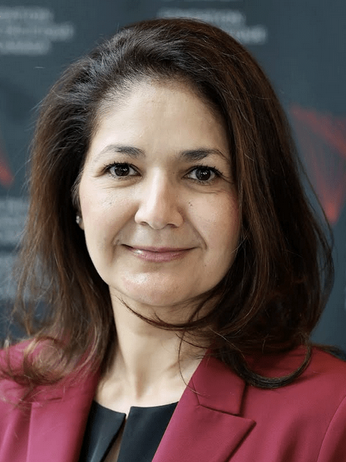
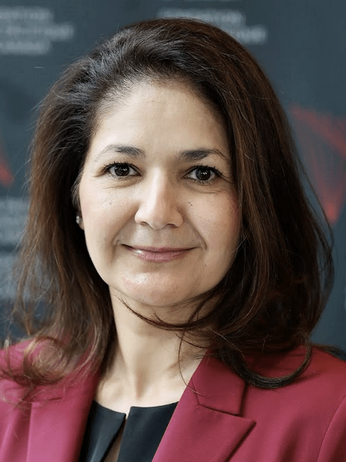
Policy Contributing Writer Vina Nadjibulla is Vice President of Research & Strategy at the Asia Pacific Foundation of Canada.