Solid-state battery manufacturing lines in China face an immediate operational division following the official implementation of the new national standard on July 1, 2026. This regulatory framework establishes precise classification rules that eliminate vague semi-solid-state (also known as liquid-solid-state) promotional labels across the automotive sector. Major electric vehicle brands must now demonstrate actual factory readiness rather than relying on unverified cell performance claims.
The technical baseline requires automotive cells to undergo a vacuum chamber test at 120°C for 6 hours to measure volatile mass loss. To secure an official all-solid-state designation, the remaining liquid electrolyte mass must be less than 5% of the total cell weight. This certification clarifies true manufacturing timelines for upcoming passenger vehicle platforms.
Factory floor gaps
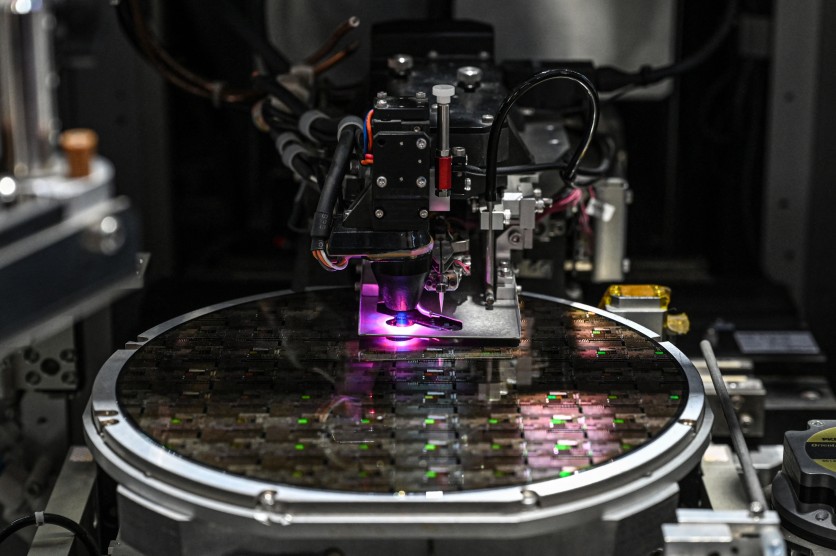
Doctex has commissioned a GWh-scale manufacturing facility in Tianjin that produces certified solid-state cells with an energy density of 350 Wh/kg. These production cells can go straight into production vehicles, bypassing the usual prototype phase to support immediate deliveries. The new cells hold significantly more energy than traditional liquid batteries, extending driving range by approximately 15% to 20% without modifying pack dimensions.
Saike Power remains in the primary facility construction phase for its open-source 0.1 GWh sulfide pilot line in Yibin. Construction work continues at the site, pushing machine testing to the final months of 2026. This timeline gap highlights how battery suppliers are moving at different speeds while chasing the same EV market segments.
Automaker deployment schedules
Dongfeng Motor is advancing its own 0.2 GWh manufacturing plant to prepare for vehicle integration during the second half of 2026. The state-backed automaker confirmed via an operational progress filing that its oxide-polymer hybrid cells achieved an energy density of 350 Wh/kg, enabling driving ranges up to 1,000 km. These cells successfully maintained structural integrity during high-temperature 170°C oven bake evaluations and low-temperature winter testing in Mohe, where energy capacity retention reached 72%.
This progress builds directly upon a previous Dongfeng production timeline targeting high-range vehicle rollouts. The company plans to deploy 100 demonstration vehicles across Hubei province to gather operational datasets before expanding commercial options. Concurrently, Changan and Geely are tracking to complete full vehicle validation and pack layout integration by the third quarter of 2026.
Supply chain localization
Gotion High-Tech successfully completed its pilot verification, using 100% locally manufactured machinery to eliminate its reliance on international procurement entirely. This equipment architecture encompasses domestic slot-die coaters and high-pressure rollers, reducing upcoming factory expansion costs for the brand. Such localised supply networks help insulate domestic manufacturers from overseas logistics bottlenecks and geopolitical shifts.
Market scaling challenges remain prominent across the tier-one supply sector despite localised machinery achievements. Industry analysts note that upgrading current production lines will significantly reduce the expected total equipment bill of 59.2 billion yuan (8.73 billion USD). This shifts initial factory budgets, which were previously estimated to spend between 400 million yuan (59 million USD) and 500 million yuan (74 million USD) per GWh.
Widespread commercialisation will likely remain restricted until 2030 due to anomalies in solid-interface resistance, according to a CATL corporate review. These chemical constraints mean that conventional liquid setups will continue to anchor high-volume delivery records for the foreseeable future. The combination of localised equipment engineering and targeted pilot fleets represents the true path toward long-term solid-state market integration.