Published on
July 11, 2026
By: Angana Dutta

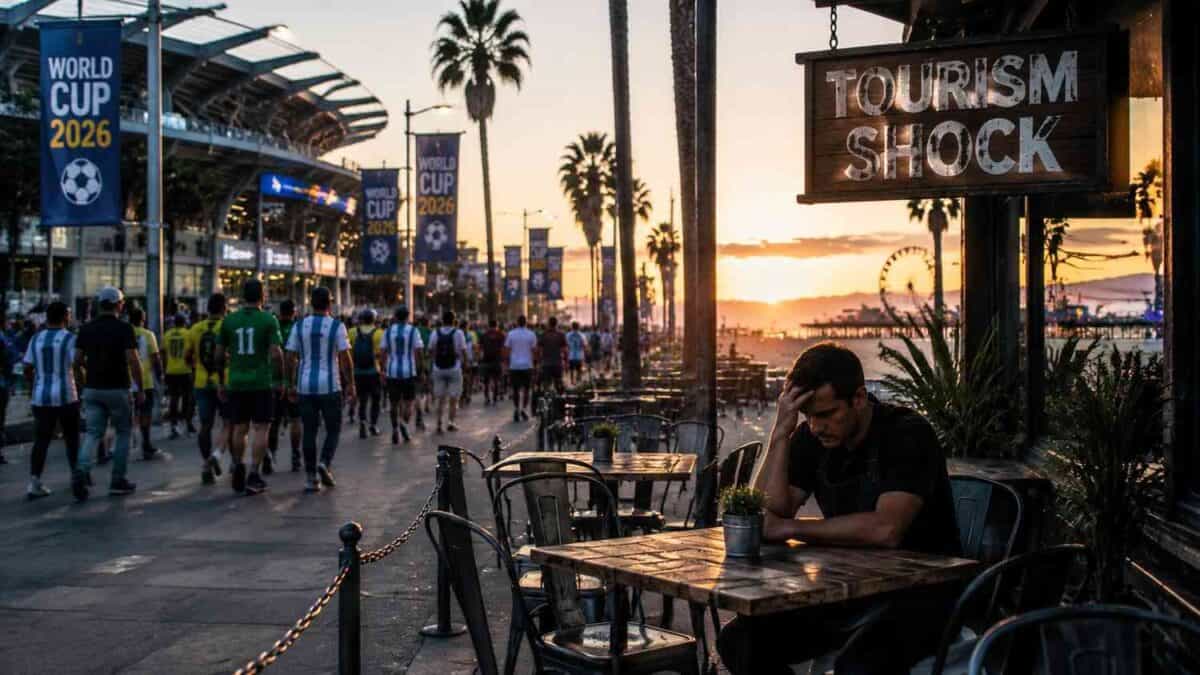
Image generated with Ai
World Cup 2026-related tourism will be a big focus for the travel industry as the FIFA tournament will mean millions of international football travelers coming to the USA, Canada, and Mexico. Even as the hosting cities of the World Cup like Seattle, LA, and Santa Monica are getting significant worldwide media exposure, the latest research shows increased visitors in the hosting cities is not consistent for all the West Coast cities or their businesses. The impact of the evolving travel behavior will be seen by the tourists, airlines, and hospitality businesses, as it will show the travel preferences of the fans and how the destinations will handle the travel demands. Additionally, the research will explain the reasons for the limited tourism growth even though mega-events are being hosted.
World Cup 2026 Tourism Impact Reveals Unexpected Travel Divide Across America’s West Coast
The United States, alongside Canada and Mexico, is hosting the expanded FIFA World Cup 2026, featuring 48 teams, 104 matches and 16 host cities across North America. Seattle became one of the key venues, with six matches scheduled at Lumen Field, bringing international visitors, football supporters and global media attention to Washington state.
However, the latest tourism discussion highlights a major question for travellers and destinations: does hosting a global event automatically create a tourism boom for every city and business?
Seattle Tourism 2026 Faces Reality Check Despite Global Football Fans
Seattle was expected to experience a significant rise in visitor activity because of its World Cup hosting role. The city prepared transportation networks, fan experiences and hospitality services to welcome international travellers.
Advertisement
Advertisement
Lumen Field hosted six World Cup matches, including group-stage fixtures and knockout games, placing Seattle among the most important football destinations on the US West Coast during the tournament.
However, the Seattle tourism 2026 story has become more complicated. While stadium areas and football-focused venues benefited from matchday crowds, some smaller businesses reported that the wider economic impact was weaker than expected.
Advertisement
Advertisement
Local businesses highlighted several challenges:
- Visitors often concentrated around official fan zones and stadium areas.
- Smaller neighbourhood businesses struggled to attract international visitors.
- Some travellers avoided crowded areas during match periods.
- Expected spending did not spread evenly across the city. (The Guardian)
The situation demonstrates a key travel industry lesson: large-scale events create visitor numbers, but destinations must have strong tourism strategies to distribute spending.
Advertisement
Advertisement
Why Travellers Should Know About Uneven World Cup Travel Benefits
For international football travellers, the experience extends beyond stadium visits. Tourists usually expect host cities to offer restaurants, attractions, shopping districts and cultural experiences.
However, the World Cup 2026 travel trends show that visitor behaviour can be highly concentrated.
Many travellers follow routes based on:
- Match schedules
- Stadium locations
- Fan celebrations
- Transport convenience
- Hotel availability
This means destinations with strong visitor planning can capture more tourism spending, while areas without clear connections between attractions and fan movement may see limited benefits.
Advertisement
Advertisement
For travellers, this creates an opportunity to explore beyond traditional match locations and discover local communities, cultural districts and smaller businesses.
United States World Cup Tourism Growth Creates Mixed Results Across Host Destinations
The United States remains the largest host country for the tournament, with 11 host cities participating. The travel impact varies significantly depending on destination readiness, visitor demand and local tourism infrastructure.
| Country | Travel Impact | Key Tourism Angle |
|---|---|---|
| United States | Largest World Cup host nation with major stadiums and international gateways | Strong international arrivals but uneven local business benefits |
| Canada | Co-host nation with major cities participating | Increased global visibility and sports tourism opportunities |
| Mexico | Co-host nation with deep football culture | Strong domestic and international football travel appeal |
| Belgium | International team presence increased fan travel interest | European football supporters contribute to visitor demand |
| Spain | Strong football tourism market | International fan movement increases travel interest |
Seattle, Los Angeles and Santa Monica Show Different West Coast Tourism Stories

Image generated with Ai
Seattle: Major Matches but Uneven Local Spending
Seattle’s position as a World Cup host city created worldwide visibility. The city welcomed football supporters from multiple countries, with Lumen Field becoming a major international travel attraction. (FIFA)
Yet, smaller businesses reported that visitor spending did not reach all neighbourhoods equally. The result has become a case study in how major sporting events need stronger links between visitors and local economies. (The US Sun)
California: Santa Monica Sees Visitor Momentum
Santa Monica experienced a more positive tourism response during the tournament period, with increased visitor activity reported around popular areas. However, the destination also continued working towards full recovery from previous tourism challenges. (The US Sun)
The California travel market continues to benefit from:
Advertisement
Advertisement
- International recognition
- Beach tourism demand
- Entertainment attractions
- Strong airport connectivity
Los Angeles: Global Sports Tourism Hub
Los Angeles remains one of the world’s most recognised travel destinations and hosted World Cup activity through the Los Angeles area.
The city’s tourism strength comes from:
- International airport connectivity
- Luxury hospitality capacity
- Entertainment attractions
- Diverse cultural experiences
The World Cup further strengthens Los Angeles’ position as a global sports tourism destination.
Airlines Supporting World Cup 2026 Travel Connectivity
Although the business impact discussion focuses mainly on destinations, airlines remain essential in moving international travellers between continents and host cities.
Major carriers supporting US travel connectivity include:
| Airline | Travel Importance |
|---|---|
| Delta Air Lines | Strong US domestic network and international connections |
| United Airlines | Major global carrier connecting international visitors with US destinations |
| Alaska Airlines | Important Pacific Northwest carrier supporting Seattle connectivity |
| American Airlines | Extensive domestic and international network |
Air connectivity plays a major role in determining how easily football supporters reach host cities and explore surrounding destinations.
Advertisement
Advertisement
What Travelers Should Do Before Visiting World Cup 2026 Host Cities
Travellers attending major sporting events should plan beyond match tickets.
Important travel steps include:
- Check flight status regularly before airport arrival.
- Book accommodation early in high-demand host cities.
- Compare transport options between airports, hotels and stadiums.
- Understand local payment customs, including tipping expectations.
- Plan extra time for security checks and matchday crowds.
- Explore local attractions outside stadium zones to experience authentic destinations.
Travellers should also monitor airline updates, especially during peak tournament periods when demand can affect schedules.
World Cup 2026 Travel Trends Show Mega Events Need Smarter Tourism Planning
The biggest lesson from the West Coast experience is that visitor numbers alone do not guarantee tourism success.
The future of sports tourism depends on:
- Better destination marketing
- Stronger small business partnerships
- Improved visitor distribution
- Clear travel information
- Community involvement
The World Cup continues to create historic travel opportunities, but the economic benefits depend on how effectively destinations connect global visitors with local experiences.
Advertisement
Advertisement
Frequently Asked Questions About World Cup 2026 Tourism Impact
Why are some Seattle businesses struggling during World Cup 2026?
Some Seattle businesses reported that visitors were concentrated around stadiums and official areas rather than spreading across neighbourhood businesses. This created uneven tourism benefits.
Which West Coast cities are affected by World Cup 2026 tourism trends?
Seattle, Los Angeles and Santa Monica are among the major West Coast destinations connected with World Cup travel activity. Their experiences show different levels of visitor growth and economic impact.
How can travellers make the most of World Cup 2026 host cities?
Travellers should plan accommodation early, check transport options, explore local attractions and avoid limiting their experience only to stadium areas.
Author’s Observation
The World Cup 2026 tourism story highlights a crucial shift in global travel. Major events can attract millions of visitors, but successful tourism depends on how destinations transform attention into meaningful experiences and sustainable local benefits. The strongest winners will be cities that connect international travellers with their communities, culture and businesses beyond the stadium.
Advertisement
Advertisement