The Italia football world is still searching for a new head coach and sporting director for the national team, yet the real issue on the table does not concern the Azzurri’s dugout. The coaching crisis that has emerged in recent years is, in fact, a reflection of deeper-rooted problems: the fragility of the youth academies, the lack of infrastructure and an economic model that struggles to redistribute resources throughout the entire football ecosystem.
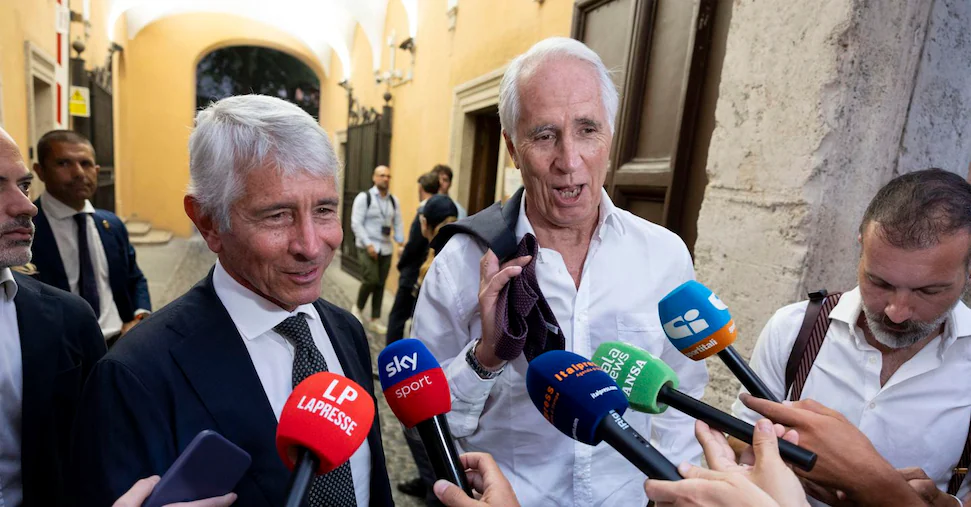
The hearings before the Chamber of Deputies’ Culture Committee and the statements by the Minister for Sport, Andrea Abodi, and the President of the FIGC, Giovanni Malagò, provide a clear picture of this phase. Behind the dispute over the 1 per cent share of football’s mutuality lies, in reality, a strategic question: who will finance the future of Italian football?
The significance of that 1%
The decision by the Government and the Minister for Sport and Youth, Andrea Abodi, to allocate – under the so-called ‘Sport Decree’ (Decree-Law 108), passed on 16 June – 1 per cent of the funds provided for under the Melandri Law on TV revenue to the professional women’s Serie A has sparked a dispute between the Government, the FIGC and Lega Pro. Although this share may appear marginal, it is worth millions of euros and, above all, represents a key driver for the development of young players.
Matteo Marani, president of Lega Pro, has called for that percentage to be allocated directly to Serie C, subject to one specific condition: supporting youth academies. It is hard to argue with this reasoning. If Serie A is the pinnacle of the pyramid, Serie C represents one of the main gateways to professional football for thousands of young Italian footballers.
It is no coincidence that Marani pointed out how a large part of these resources – around 8 million a year – has so far been used to fund the ‘Zola reform’, the project designed to encourage the recruitment and development of young players and the relevant facilities in third-tier clubs. In a system that imports talent from abroad and produces fewer and fewer players for the national team, investment in youth development cannot be regarded as a minor budget item.